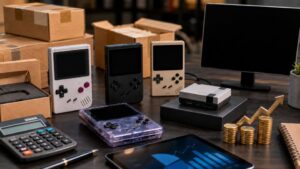
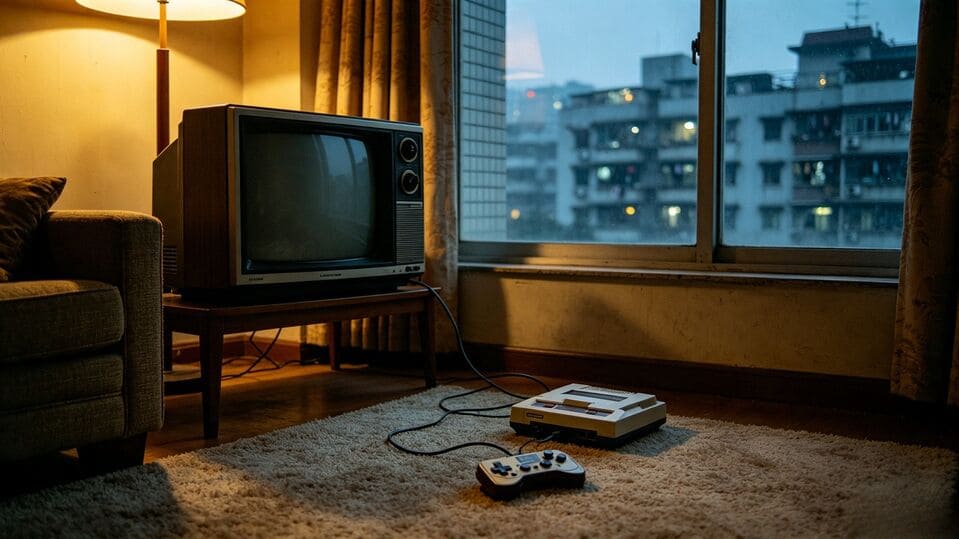

The console ban in China confused many global buyers because China was already making game consoles for the world. The problem was not factory capability. The tension was between youth protection, market control, and fast-growing demand. To understand today’s retro gaming supply chain, I think this history matters.
China banned most video game console sales in 2000 because regulators were concerned about the impact of gaming on young people. The ban limited domestic console sales, but it did not stop console manufacturing for export. In 2015, China fully lifted the console ban, opening the market again.
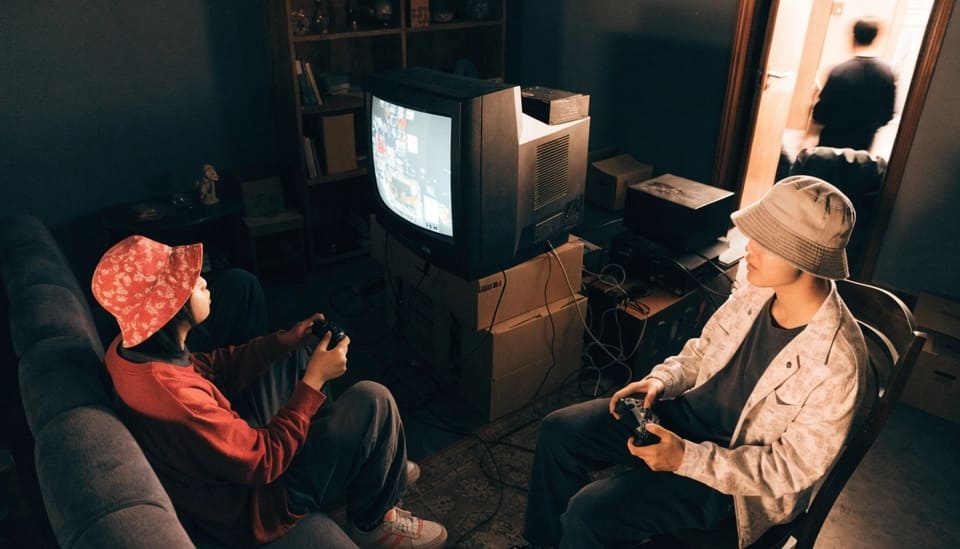
The interesting part is what happened during those 15 years. From my factory-side view, the console ban did not kill gaming demand. It changed the route of the industry. China moved from restricted console sales to becoming one of the world’s key gaming hardware manufacturing centers.
Why Were Consoles Banned in China?
Many people think the console ban was only about stopping games. That is too simple. The real issue was social concern, market supervision, and the fast rise of entertainment technology. The ban created a strange situation: consoles were made in China, but not officially sold to most Chinese consumers.
China banned console sales in 2000 mainly because officials worried that video games could affect young people’s study habits and mental health. The rule restricted domestic sales of major consoles, but factories could still manufacture gaming devices for overseas brands and export markets.
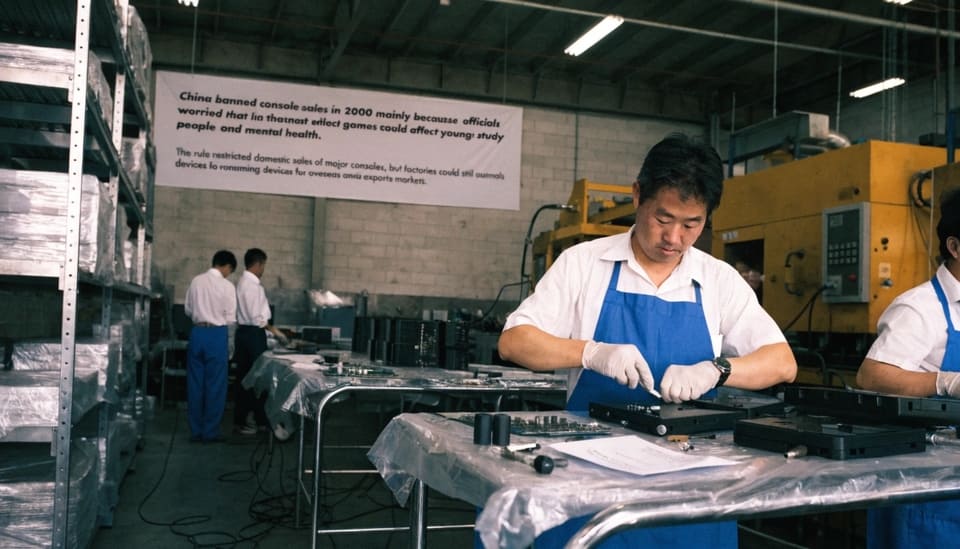
From a business angle, this policy created a very unusual supply chain. A PlayStation, Xbox, or Nintendo-related product could be assembled in China, shipped abroad, and sold in Europe or North America. But the same type of device faced restrictions in the domestic market.
For manufacturers, this meant one thing: export capability became more important than local sales.
During this period, factories in Shenzhen, Dongguan, and other electronics hubs built strong experience in:
- Plastic injection molding
- PCB assembly
- Screen sourcing
- Battery integration
- Button and joystick testing
- Firmware loading
- Packaging for export markets
- International quality inspection standards
I often describe this as a “hidden training period” for Chinese gaming hardware suppliers. The console ban limited official domestic demand, but factories still learned from global orders.
For buyers today, this background matters. When you evaluate a Chinese gaming console manufacturer, you are not only looking at price. You are also checking whether the supplier has real assembly experience, stable sourcing channels, and quality control habits built through years of export production.
How Did Chinese Gamers Play Games During the Console Ban?
The console ban did not remove gaming culture in China. It pushed gamers toward other channels. People played on PCs, internet cafés, mobile phones, imported consoles, gray-market devices, and later handheld emulation products.
During the ban, Chinese gamers still played games through PC gaming, online games, mobile games, and imported hardware. The demand stayed strong, but it moved away from official console retail channels. This helped China’s PC and mobile gaming markets grow faster.
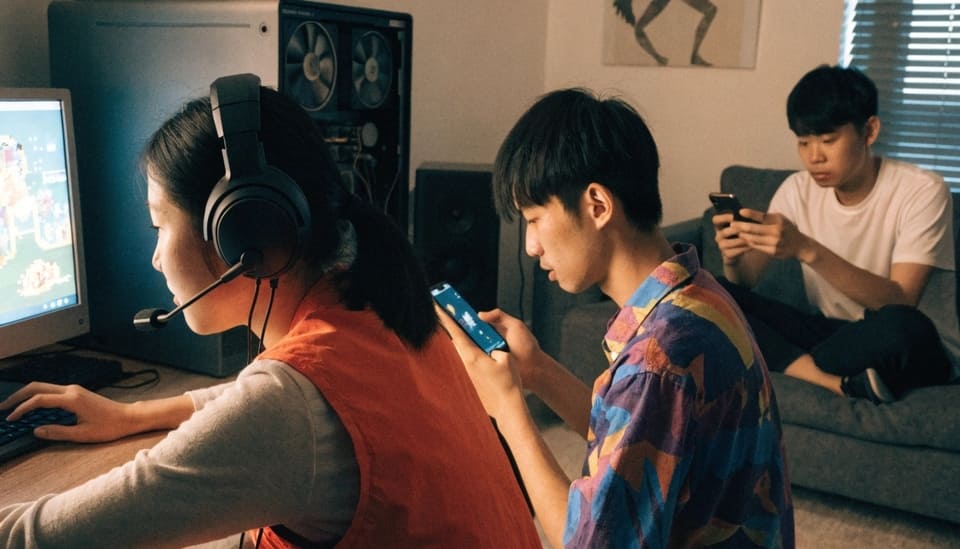
I remember seeing how strong the demand was even when official console sales were restricted. Players still wanted entertainment. They just changed the way they accessed it.
Common gaming routes included:
| Gaming Route | Why It Grew |
|---|---|
| PC games | Easy access through homes and internet cafés |
| Online games | Strong social gameplay and local publishing |
| Mobile games | Low hardware cost and fast adoption |
| Imported consoles | Available through unofficial channels |
| Emulation handhelds | Affordable access to classic games |
This period shaped Chinese consumer behavior. Gamers became comfortable with flexible hardware, multi-game devices, and value-driven entertainment. That is one reason retro handhelds became so popular later.
From a procurement point of view, this also explains why many modern retro consoles focus on:
- Built-in game libraries
- Compact handheld design
- HDMI output
- Rechargeable batteries
- Custom UI
- Low retail price
- Gift-ready packaging
The console ban created a gap between demand and official supply. Manufacturers learned to serve export customers, while local users learned to adapt. When the policy environment changed, both sides were ready for new products.
What Changed After China Lifted the Console Ban?
When China lifted the console ban, the market did not simply return to normal. It entered a new stage. Major global brands could explore official sales again, and Chinese manufacturers could apply years of export experience to more product categories.
China fully lifted the console ban in 2015 after earlier pilot reforms in the Shanghai Free Trade Zone. This allowed approved console products to be sold more openly in China and encouraged stronger development in gaming hardware, retail channels, and local manufacturing.
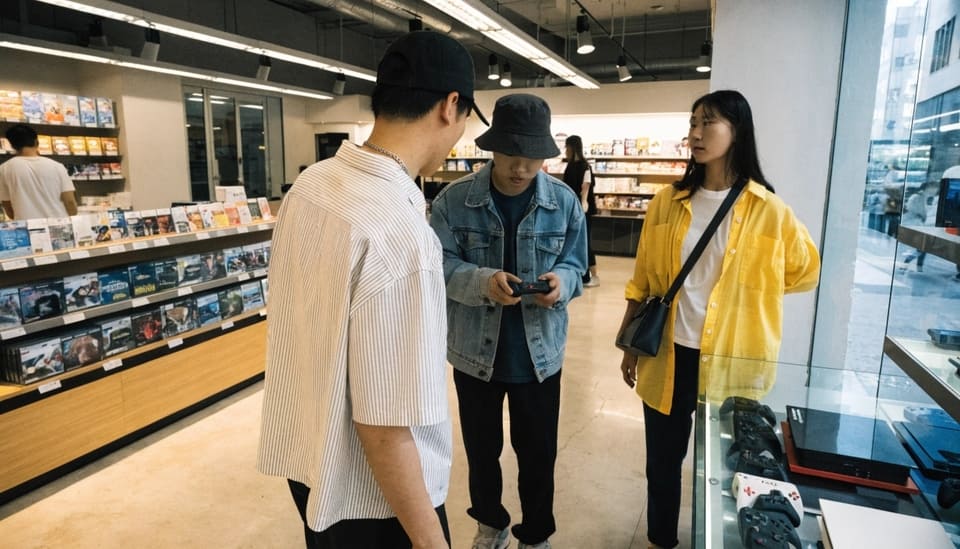
The biggest change was not only legal access. The bigger change was confidence.
Factories already knew how to build gaming devices. Engineers already understood chips, screens, controllers, and firmware. Supply chains already knew how to buy components globally. When the console ban ended, those skills did not disappear. They turned into new business opportunities.
This is where white-label and private-label gaming devices started to grow faster.
Today, buyers see products like:
- Retro handheld gaming consoles
- Plug-and-play TV game consoles
- Android gaming handhelds
- Mini arcade devices
- OEM/ODM private-label consoles
- Retail-ready gaming bundles
For Amazon sellers, wholesalers, and brand owners, the key lesson is simple: do not choose a supplier only by catalog photos.
I recommend checking:
- Production capacity – How many lines does the factory operate?
- QC process – Does the supplier test screens, buttons, sound, charging, and HDMI output?
- Firmware stability – Does the system boot consistently?
- Packaging support – Can the supplier make retail-ready packaging?
- Export experience – Can the supplier handle your market’s documentation needs?
- Customization ability – Can they support logo, shell, UI, memory, and game library changes?
At Kalefu, we treat certifications and compliance documents as items buyers should verify for their own markets. Different countries may have different rules, so buyers should ask qualified professionals for application-specific decisions.
From Console Restrictions to a Global Gaming Manufacturing Hub?
The console ban looked negative at first. But from the factory side, those 15 years helped Chinese manufacturers build real gaming hardware know-how. Restrictions changed the industry’s path instead of removing demand.
China moved from restricting console sales to becoming one of the world’s important gaming device manufacturing hubs. Export production trained factories in assembly, testing, sourcing, and customization. After the ban ended, those capabilities supported the rise of retro handhelds and OEM/ODM consoles.
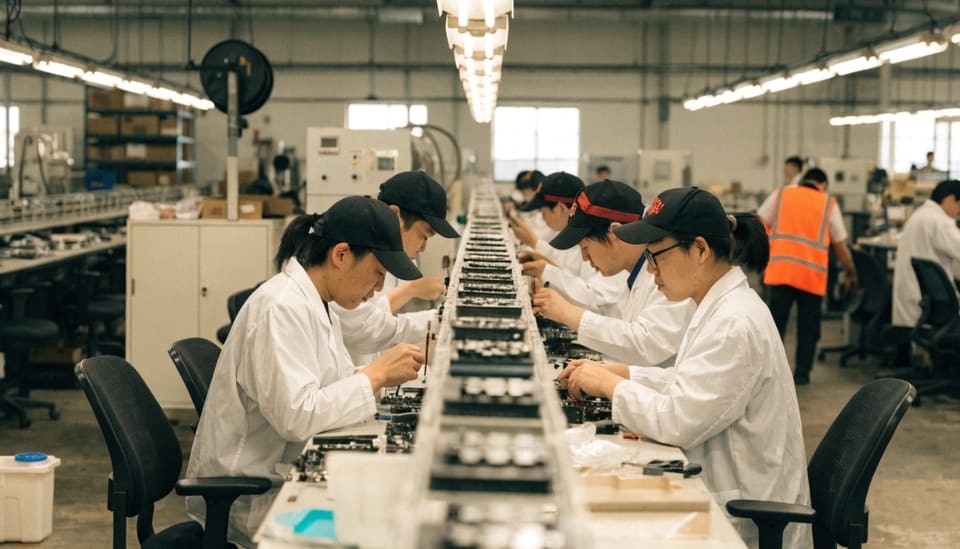
This is the part I find most important. Many people say the ban was only bad. But from a factory perspective, the story is more complicated.
Between 2000 and 2015, many factories in Shenzhen and Dongguan worked on gaming-related products for global supply chains. Workers learned precision assembly. Engineers learned chip debugging and firmware adjustment. Supply chains learned how to source screens, batteries, memory, chipsets, shells, and packaging at scale.
After the console ban ended, these capabilities became the foundation for new categories.
You can see this in today’s retro handheld market. Devices like R36S-style and R36Plus-style handhelds did not appear from nowhere. Behind them is years of manufacturing experience, component sourcing, assembly control, and export packaging knowledge.
For B2B buyers, this history gives a practical sourcing lesson:
A strong gaming console supplier is not just a trading company with a product list. A strong supplier understands hardware, testing, customization, and repeatable production.
When I help customers evaluate a project, I usually suggest starting with a small trial order before mass production. This helps check:
- Button feel
- Screen brightness
- Battery life
- Speaker quality
- Heat performance
- System stability
- Packaging protection
- Defect rate after transport
That approach reduces sourcing risk and helps buyers make better decisions before scaling.
Frequently Asked Questions
When did China ban game consoles?
China restricted most video game console sales in 2000. The policy was mainly linked to concerns about young people and gaming. Manufacturing for export continued, which allowed Chinese factories to keep producing gaming hardware for international markets.
When was the console ban lifted in China?
China fully lifted the console ban in 2015, after earlier reforms connected with the Shanghai Free Trade Zone. This allowed approved console products to enter the market more openly and supported growth in official gaming hardware channels.
Did the console ban stop Chinese people from gaming?
No. Chinese gamers continued playing through PCs, internet cafés, mobile games, imported consoles, and unofficial hardware channels. The ban changed how people played, but it did not remove gaming demand.
Why are many retro game consoles made in China?
China has a strong electronics supply chain, experienced assembly workers, component sourcing networks, and export-ready manufacturing capacity. Years of gaming hardware production helped suppliers support retro consoles, handheld devices, and OEM/ODM projects.
Conclusion
The console ban in China was more than a simple restriction story. It limited domestic console sales, but it also pushed factories to build export skills, quality control systems, and gaming hardware experience. After the ban ended, those skills helped China become a major gaming device manufacturing hub. If you are sourcing retro consoles, handheld gaming devices, or OEM/ODM gaming products, contact Shenzhen Kalefu Electronics Co., Ltd to discuss stable production, customization, and export-ready supply.