
Retro gaming is back in buyer conversations, but nostalgia alone does not pay invoices. If a product looks charming but sells slowly, creates returns, or forces price-only competition, the opportunity becomes a risk. From my supplier-side experience at KLF, I see the better approach: treat nostalgia as a buying signal, then match it with channel fit, product quality, and real user experience.
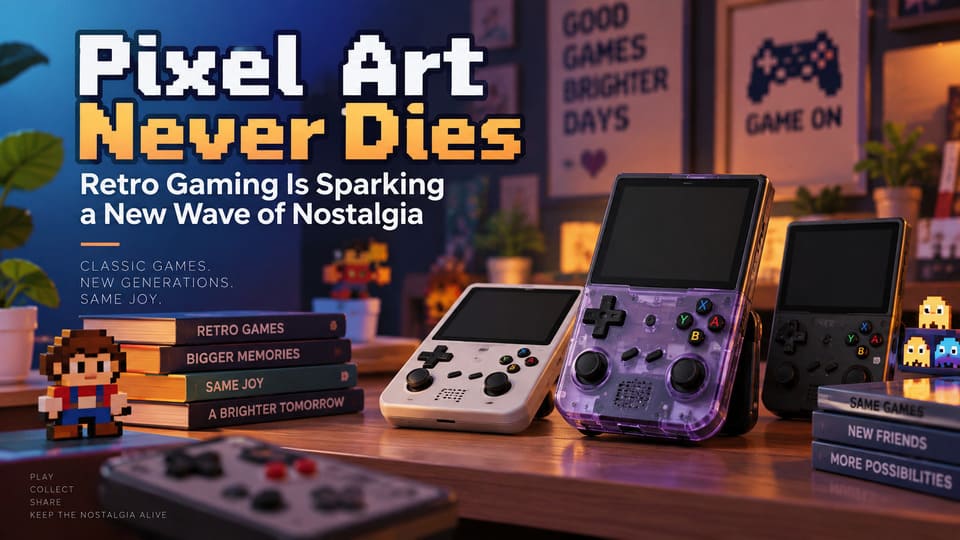
Retro gaming is sparking a new wave of nostalgia because pixel art, simple gameplay, and familiar console designs feel easy to understand and easy to gift. For B2B buyers, the real value is not emotion alone. It is whether that nostalgia supports sell-through, repeat orders, clear positioning, and manageable after-sales risk.
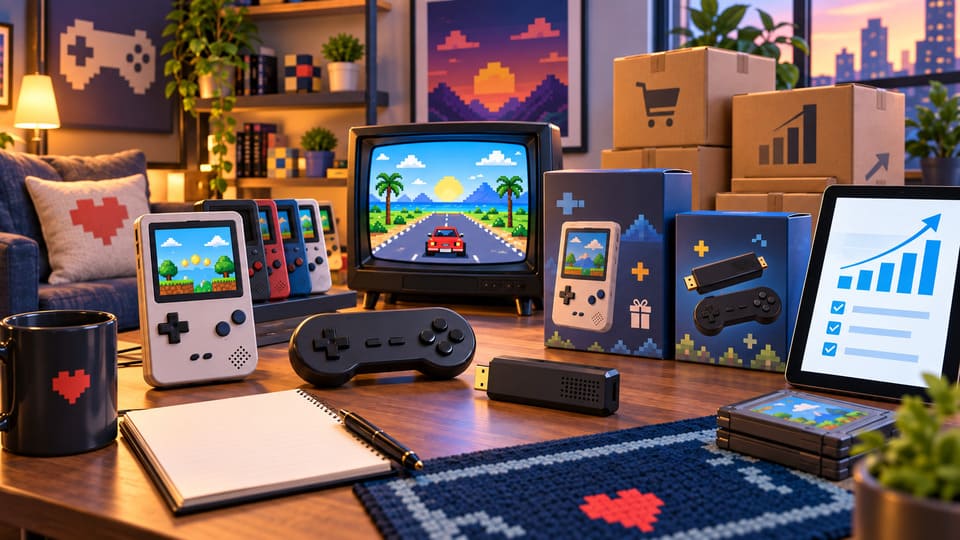
The question is not, “Do people still like old games?” Many do. The better question is, “Which retro product fits my market, price point, and sales channel?” That is where importers, distributors, online sellers, and gift companies need to look more carefully.
Why Is Retro Gaming More Than a Short-Term Trend?
Retro gaming looks emotional on the surface. Buyers see pixel art, childhood memories, and simple fun1. But if they stop there, they may choose the wrong model, wrong package, or wrong price level.
A practical answer is this: retro demand should be treated as a product-selection signal, not just a mood. Buyers should check whether the product can support repeat sales, low return risk, and a clear reason to buy beyond “many built-in games.”
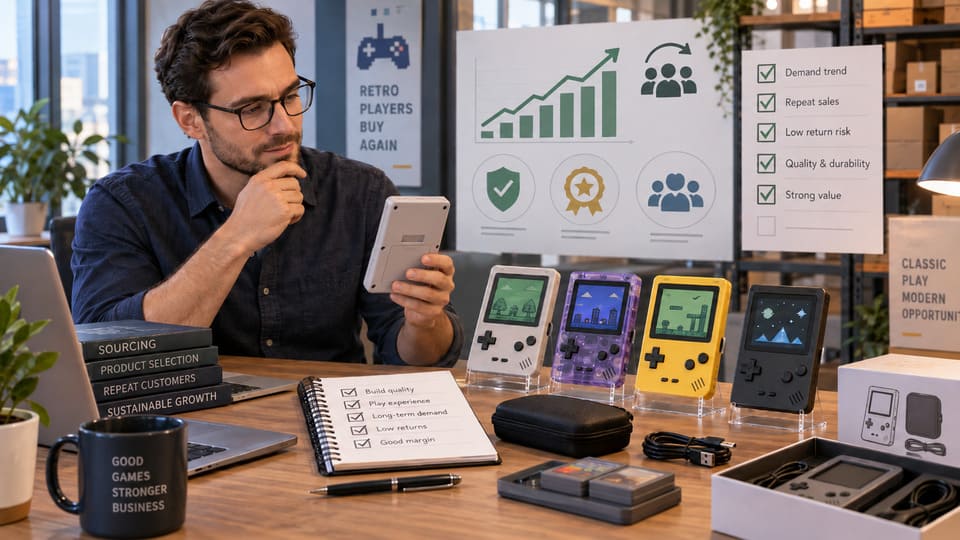
From my experience with overseas buyer inquiries, the strongest buyers usually ask more than “How many games?” They ask about screen size, battery, buttons, language, packaging, shipping carton, logo options, and defect handling.
That tells me something important. The market is not only buying memories. It is buying a complete product experience.
For example, two handheld consoles may both look “retro,” but they can perform very differently in the market:
| Buyer Concern | Why It Matters |
|---|---|
| Screen quality | A weak screen makes the product feel cheap fast2 |
| Button feel | Poor buttons create bad reviews and returns3 |
| System stability | Freezing or confusing menus damage trust |
| Packaging | Gift buyers and retail shelves need stronger presentation4 |
| Accessories | Cables, manuals, and cases can improve perceived value |
| After-sales risk | Lower return pressure helps protect margin |
I often remind buyers that more built-in games is not the full selling point. A product with fewer complaints may be better than a product with a louder spec sheet. For wholesale and retail channels, stable feedback matters because one bad batch can affect repeat orders5.
How Should B2B Buyers Choose Retro Gaming Products?
Choosing retro gaming products can feel simple at first. A buyer sees a popular model, asks for the lowest price, and compares game counts. But this shortcut can lead to poor fit.
The better answer is: choose by channel, customer profile, price band, and after-sales tolerance. An Amazon seller, a local distributor, and a gift company may need different retro consoles even if they all sell to nostalgic customers.
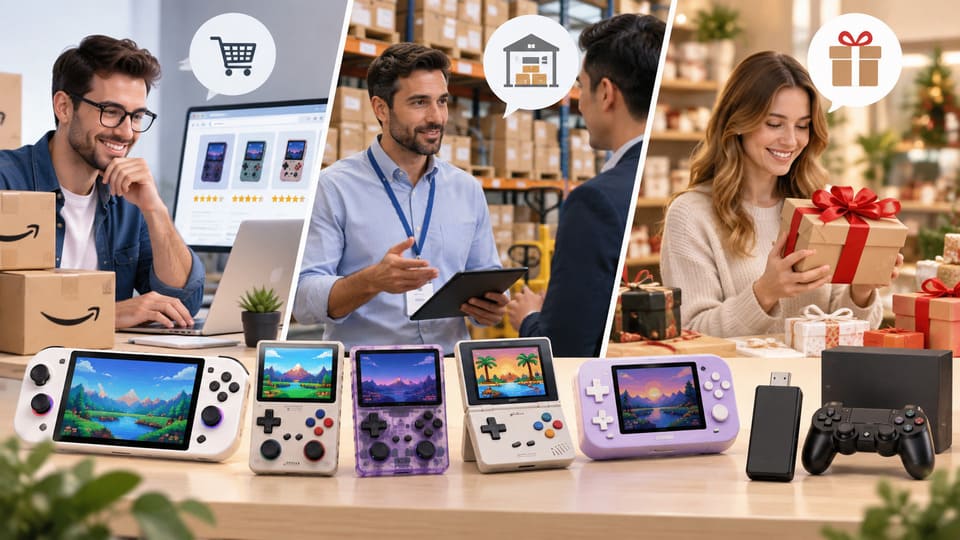
Here is how I usually think about it with buyers:
- Amazon and marketplace sellers often need better packaging, clear photos, stable quality, and products that can reduce negative reviews.
- Importers and distributors may focus on mixed models, carton efficiency, market coverage, and repeat supply.
- Retail stores often care about packaging design, shelf appeal, and easy explanation for walk-in customers.
- Gift companies may prefer colorful designs, private-label packaging, and products that look ready to present.
- Online independent sellers may need a stronger story, such as “classic pixel gaming,” “travel-friendly console,” or “family TV game device.”
A simple selection framework
Before placing an order, I suggest buyers answer five questions:
- Who is the final buyer? Adults, kids, families, gift shoppers, or hobby gamers?
- Where will it sell? Marketplace, retail shelf, wholesale network, or promotional channel?
- What price level feels natural? Entry, mid-range, or premium gift positioning?
- What experience matters most? Screen, buttons, TV output, portability, or game variety?
- What customization is needed? Logo, color, packaging, manual, bundle, or carton mark?
At KLF, we support trial orders because many buyers need market testing before scaling. I think this is often more practical than guessing from photos alone.
Can Pixel Art Help Private-Label Retro Gaming Brands?
Pixel art can create fast recognition. It feels familiar, playful, and easy to understand. But for B2B buyers, design should not be treated as decoration only.
The direct answer is: yes, pixel art can support private-label differentiation when it is used through logo, packaging, color, gift positioning, and a clear sales message. It works best when the branding matches the channel and target buyer.
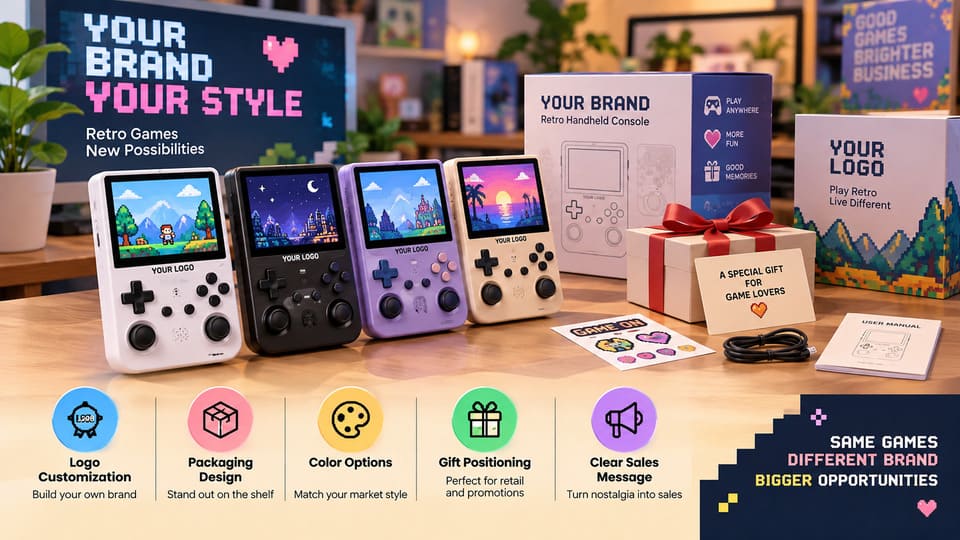
Private-label buyers should use nostalgia as a commercial tool. A simple retro design can make a product easier to sell, especially in crowded online listings or gift categories. However, the product still needs to feel good in the hand.
Good private-label work may include:
- Logo printing on the console or package
- Custom packaging for retail shelves or gift channels
- Color selection for different markets
- Bundle options such as cable sets, cases, or extra controllers
- Localized manuals to reduce support questions
- Carton marks and barcode support for distributors and warehouses
I have seen buyers become more confident when the product story is clear. “Mini handheld console with retro pixel games” is easier to understand than a vague electronics listing. Still, buyers should avoid overpromising. Nostalgia attracts attention, but quality keeps the order alive.
What Should Buyers Check Before Ordering Retro Gaming Consoles?
Retro gaming products can look similar in photos. That is why buyers should check the details before committing to larger quantities. A low price can hide weak packaging, unstable systems, or poor user feedback.
The practical answer is: buyers should verify samples, test user experience, review packaging, confirm customization details, and discuss after-sales handling before bulk orders. Certifications and compliance documents should also be checked based on the destination market.
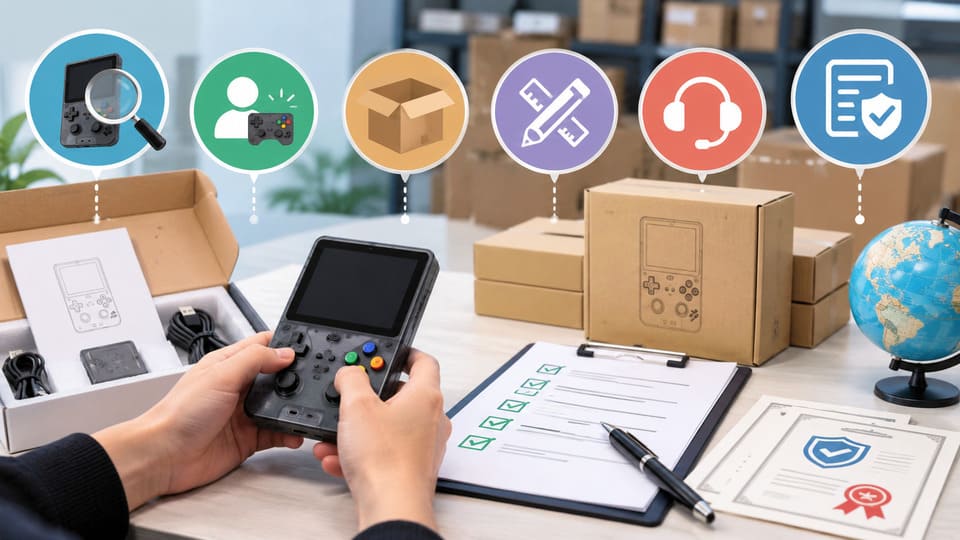
A basic sourcing checklist can include:
| Checkpoint | What to Review |
|---|---|
| Sample testing | Buttons, screen, charging, menu, sound, TV output |
| Packaging | Box strength, language, barcode, gift appeal |
| Accessories | Cable quality, manual, controller, memory card if included |
| Customization | Logo position, MOQ, color, printing method |
| QC process | Function test, appearance check, packing check |
| Shipping | Carton size, weight, delivery method, import needs |
| Documents | Certificates, labels, and market-specific compliance |
I always suggest that buyers test samples in the same way their end customers will use them. Open the box. Charge it. Play it. Connect it to a TV if needed. Let someone unfamiliar with the product try the menu. This simple step often reveals more than a long specification sheet.
Frequently Asked Questions
Is retro gaming still worth sourcing for wholesale buyers?
Yes, it can be worth sourcing when the product fits the sales channel, price point, and target customer. Buyers should not rely only on nostalgia. They should test samples, compare product experience, and start with a reasonable trial order.
Are more built-in games always better?
No. More games can help marketing, but it is not enough. Screen quality, button feel, menu stability, packaging, and after-sales risk often matter more for reviews, repeat orders, and long-term buyer confidence.
Which buyers are best suited for retro consoles?
Importers, distributors, Amazon sellers, online stores, retailers, gift companies, and private-label brands can all consider them. However, each channel may need different models, packaging styles, price levels, and selling points.
Can KLF support private-label retro gaming products?
Yes. KLF supports wholesale orders, trial orders, OEM/ODM, logo customization, packaging customization, and private-label services for retro handheld consoles and TV game devices. Buyers should confirm requirements before production.
Conclusion
Retro gaming nostalgia is real, but B2B buyers should treat it as a practical market signal, not a shortcut. The right product depends on channel fit, user experience, packaging, customization, and after-sales risk. If you are sourcing handheld retro consoles, HDMI TV game sticks, or private-label gaming devices, I recommend starting with samples and a clear product plan. Contact KLF to discuss suitable models for your market and order strategy.
"Nostalgia and consumer behavior", https://pubmed.ncbi.nlm.nih.gov/36709745/. Consumer psychology research has established that nostalgia increases product valuation and purchase intent by activating positive autobiographical memories, a mechanism documented across multiple product categories including entertainment media. Evidence role: mechanism; source type: paper. Supports: That nostalgia functions as a psychological driver that increases consumer willingness to purchase products associated with past experiences.. Scope note: Most nostalgia research addresses general consumer goods or media; direct studies on retro gaming hardware specifically are limited. ↩
"How Online Reviews Influence Sales", https://spiegel.medill.northwestern.edu/how-online-reviews-influence-sales/. Studies on consumer electronics satisfaction have identified display quality as one of the primary hardware attributes influencing user perception of product value, particularly for portable devices where screen size and brightness are constrained. Evidence role: general_support; source type: research. Supports: That display quality is a significant factor in consumer satisfaction and perceived value for handheld electronic devices.. Scope note: Research tends to focus on smartphones and tablets rather than dedicated handheld gaming consoles, so findings are contextually applicable rather than directly proven for this product category. ↩
"Consumer Complaint Database", https://www.consumerfinance.gov/data-research/consumer-complaints/. Research on e-commerce product returns and review behavior has found that tangible product quality failures, including hardware feel and durability, are among the most frequently cited reasons for negative ratings and return requests in consumer electronics categories. Evidence role: mechanism; source type: research. Supports: That physical hardware deficiencies, including poor tactile controls, are a documented driver of negative online reviews and product returns in consumer electronics.. Scope note: Available data typically covers broad electronics categories and may not isolate gaming peripherals or handheld consoles specifically. ↩
"The Impact of Visual Elements of Packaging Design on ... - PMC", https://pmc.ncbi.nlm.nih.gov/articles/PMC11851823/. Consumer behavior research on gift purchasing has found that packaging aesthetics and perceived presentation quality are weighted more heavily in gift contexts than in routine purchases, as packaging signals the giver's care and the product's suitability as a gift. Evidence role: general_support; source type: research. Supports: That packaging quality and visual appeal have a measurable effect on purchase decisions in gift product categories.. Scope note: Research is primarily conducted on general gift categories such as food, cosmetics, and apparel, and may not directly translate to consumer electronics gifting behavior. ↩
"Evaluating the drivers of B2B performance - PMC - NIH", https://pmc.ncbi.nlm.nih.gov/articles/PMC11244795/. Supply chain and B2B relationship research has documented that quality failures, particularly those affecting end consumers, erode buyer trust in suppliers and are a leading cause of supplier switching and reduced reorder rates in wholesale and distribution channels. Evidence role: general_support; source type: research. Supports: That product quality failures negatively affect B2B buyer trust and reduce the likelihood of repeat purchasing.. Scope note: Research findings are drawn from general B2B and supply chain contexts and may not reflect the specific dynamics of consumer electronics wholesale markets. ↩