
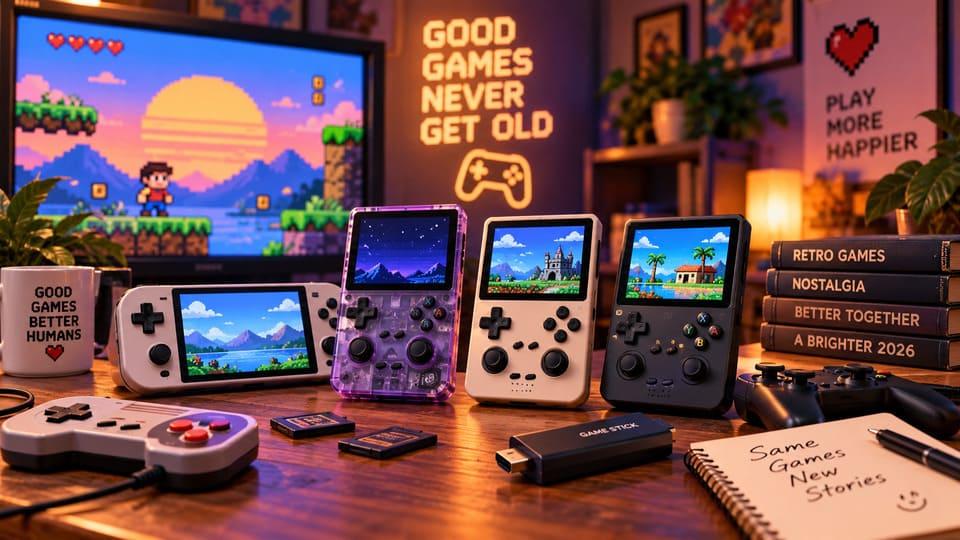

The retro gaming revival is creating real sourcing interest in 2026, but nostalgia alone does not make a product safe to buy in bulk. If buyers choose only by game count or lowest price, returns and bad reviews can grow fast. I see a better path: match the right device to the right sales channel.
The retro gaming revival is winning again in 2026 because customers want simple, familiar, affordable entertainment without old hardware problems. For B2B buyers, the opportunity is not just “old games are popular.” It is finding reliable handhelds, TV sticks, and plug-and-play consoles that fit retail, wholesale, gift, and e-commerce demand.
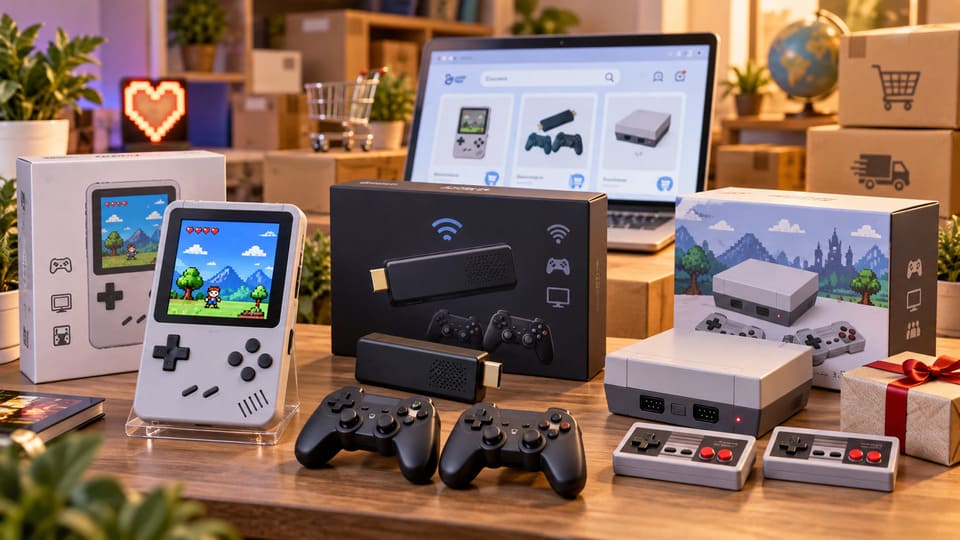
From supplier-side communication with importers, wholesalers, and online sellers, I often see the same question: “Which retro game console should I stock?” The answer depends less on nostalgia and more on price band, quality control, user experience, and after-sales risk.
Why Is the Retro Gaming Revival a B2B Opportunity in 2026?
The retro gaming revival can look like a consumer trend, but I see it more as a product-channel fit opportunity. Buyers want products that are easy to explain, easy to gift, and easy to sell online.
A retro gaming device works well for B2B when it offers low purchase friction, familiar gameplay, attractive packaging, and stable basic performance. Importers and sellers should evaluate whether the model fits their customer group, not only whether the games feel nostalgic.
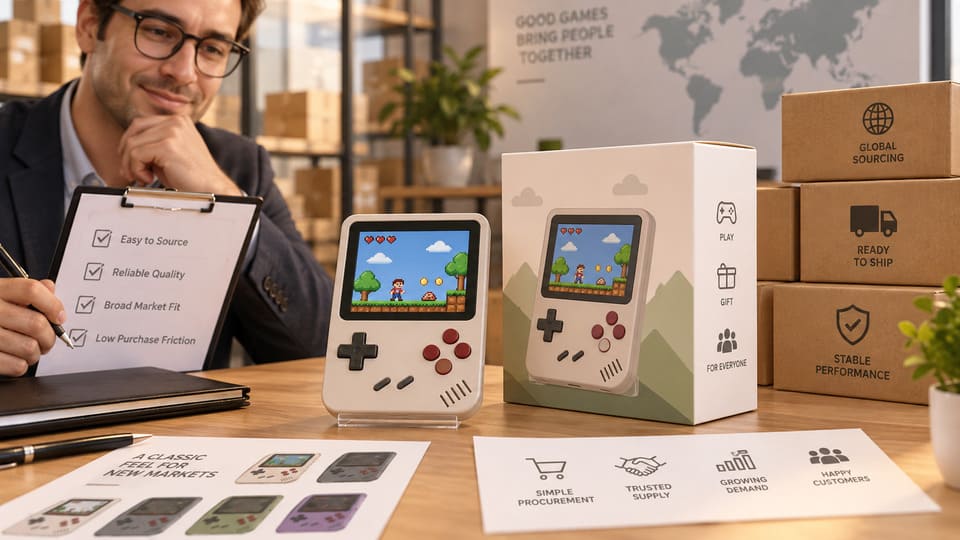
Modern retro handhelds solve many old frustrations. People want old games, not old problems. Today’s popular devices often combine:
- Classic-style games
- Modern screens
- Rechargeable lithium batteries
- USB-C charging
- microSD storage
- Multiple emulators
- Portable designs
- Simple menus
That mix matters because consumers now expect convenience. A buyer in 2026 is not sourcing an old toy. They are sourcing a simple entertainment product that must survive modern reviews.
For example, an e-commerce seller may need a device with better packaging, clear instructions, and stable firmware. A gift company may care more about appearance, gift-box design, and easy operation. A wholesaler may prioritize pricing, carton quantity, and replacement policy.
I usually suggest buyers compare models like this:
| Buyer Type | Main Concern | Better Fit |
|---|---|---|
| Amazon/e-commerce seller | Reviews, returns, photos | Better screen, stable system, good packaging |
| Wholesaler | Price and supply stability | Popular mid-range models |
| Gift company | Appearance and easy use | Plug-and-play or simple handhelds |
| Retail shop | Demo experience | Good controls and display |
| Private-label brand | Differentiation | OEM packaging, logo, color options |
The key point is simple: retro demand is real, but inventory risk is also real.
Why Is Nostalgia Not Enough for Retro Gaming Revival Products?
The retro gaming revival starts with emotion, but bulk purchasing must end with numbers and quality checks. I often see buyers get excited by a product list, then forget to ask how customers will actually use the device.
Nostalgia can attract attention, but it cannot protect buyers from weak buttons, poor battery life, confusing menus, or unstable systems. A profitable retro gaming product needs both emotional appeal and acceptable user experience.
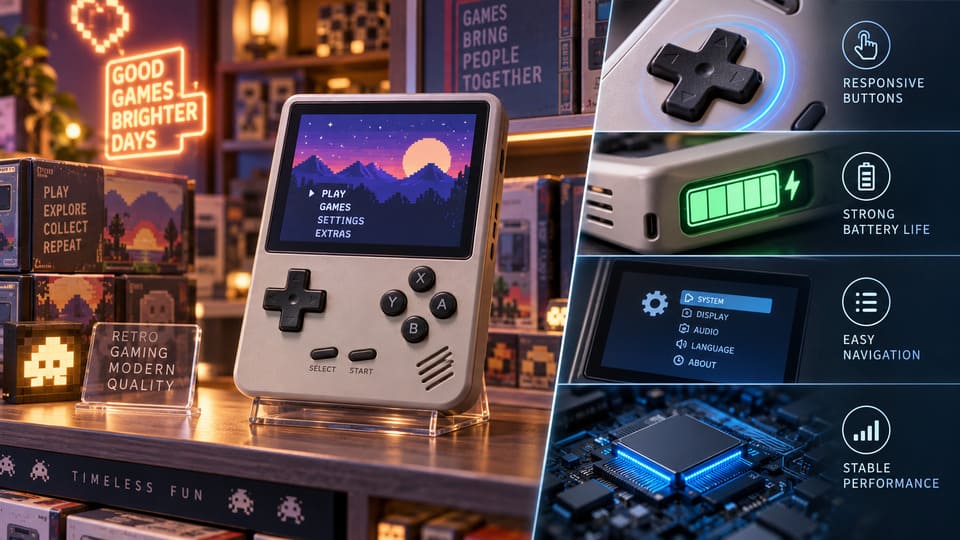
A common mistake is thinking “more games means better product.” It sounds good in ads, but it does not always mean better sell-through. Customers may complain if the screen is dull, the controls feel loose, or the interface is difficult.
When I discuss models with buyers, I encourage them to check these points before placing volume orders:
-
Screen quality
A brighter, clearer screen can reduce disappointment, especially for handhelds.1 -
System stability
Freezing, lag, or menu errors can create returns even when the price is low. -
Controls and buttons
Buttons affect the first impression. Poor controls can hurt reviews quickly. -
Battery performance
Buyers should confirm battery capacity, charging time, and real usage expectations. -
Packaging and manual quality
Good packaging supports retail display and reduces customer confusion.2 -
After-sales support
Importers should ask suppliers how defects, spare parts, and replacements are handled.
I also recommend sample testing. A buyer does not need a full laboratory setup for early screening, but they should still test charging, buttons, screen, sound, ports, menu navigation, and packaging condition. For safety, compliance, and market-specific regulations, buyers should verify documents with qualified professionals and local import requirements.
Which Retro Gaming Revival Product Types Fit Different Channels?
The retro gaming revival includes several product types, and each type fits a different sales channel. A cheap TV stick, a compact handheld, and a higher-end retro device do not serve the same customer.
Buyers should choose retro gaming devices by channel fit.3 Handheld consoles are strong for portable play and gifting.4 HDMI TV game sticks fit low-barrier home entertainment. Higher-spec handhelds fit customers who expect better screens, controls, and system performance.5
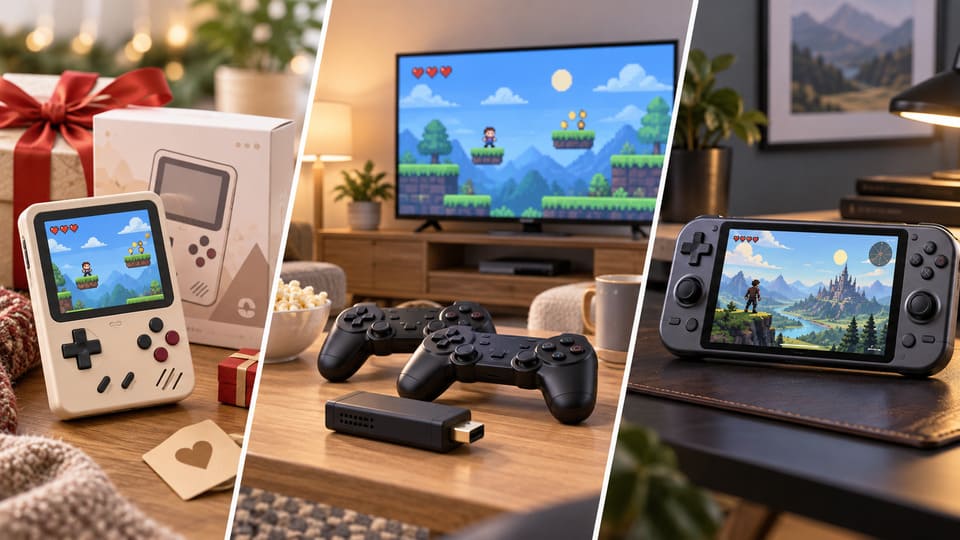
Here is a practical way I look at product selection:
| Product Type | Strength | Risk |
|---|---|---|
| Handheld retro console | Easy to sell, portable, giftable | Quality expectations vary |
| HDMI TV game stick | Low price, simple home use | Controller and compatibility complaints |
| Plug-and-play console | Family-friendly, easy demo | Packaging and accessory quality matter |
| Higher-end handheld | Better experience, higher margin | Higher purchase cost and support need |
| Private-label model | Brand control | Longer preparation time |
For trial orders, I prefer a balanced approach. Buyers can test two or three price levels instead of betting everything on the cheapest model. The cheapest option may move fast at first, but it can also create more support pressure. A mid-range model may produce better reviews if the screen, buttons, and system feel more reliable.
For private-label buyers, OEM and ODM options can help with logo printing, packaging design, color choices, and bundle planning. Still, customization should follow product validation. I would not suggest customizing deeply before checking samples, target price, shipping cost, and expected return handling.
Frequently Asked Questions
Is the retro gaming revival only about nostalgia?
No. Nostalgia helps attract attention, but the bigger trend is simple entertainment.6 Customers want familiar games with modern convenience, such as portable screens, rechargeable batteries, USB-C charging, and easier setup.
Should I choose the retro console with the most games?
Not always. A high game count may look attractive, but buyers should also check screen quality, controls, system stability, battery life, packaging, and customer support risk.
Are retro handhelds better than TV game sticks?
It depends on the channel. Handhelds are easier for gifting and personal use. TV game sticks can work for low-cost home entertainment. Buyers should test both if their customer base is mixed.
What should I test before a wholesale order?
I would test the screen, buttons, charging, battery life, sound, menu, game loading, packaging, accessories, and carton condition. Buyers should also verify compliance documents for their target market.
Conclusion
The retro gaming revival in 2026 is not just a wave of nostalgia. It is a practical sourcing opportunity for buyers who choose carefully. The strongest products combine old-school fun with modern convenience, stable quality, clear packaging, and the right price band. If you are evaluating handheld consoles, TV game sticks, or private-label retro gaming devices, I suggest starting with samples and channel-based testing. For wholesale, OEM, or ODM sourcing support, you can contact KLF to compare suitable models.
"Do you care about image quality in handheld gaming?", https://www.reddit.com/r/Handhelds/comments/1o4h86m/do_you_care_about_image_quality_in_handheld_gaming/. A technical review or user study could confirm the importance of screen quality in reducing customer disappointment. Evidence role: general_support; source type: research. Supports: Screen quality, particularly brightness and clarity, significantly affects user satisfaction with handheld gaming devices.. Scope note: The source may focus on general screen quality rather than retro gaming specifically. ↩
""The Impact of Consumer Product Package Quality on ...", https://repository.rit.edu/japr/vol6/iss1/4/. A retail study or packaging analysis could confirm the role of good packaging in improving customer experience and sales. Evidence role: general_support; source type: research. Supports: Effective packaging enhances retail display and minimizes customer confusion.. Scope note: The source may focus on general retail products rather than retro gaming devices. ↩
"Top 10 Marketing and Promotion Strategies for Games", https://www.sae.edu/gbr/insights/top-10-marketing-and-promotion-strategies-for-games/. A sourcing or retail strategy study could validate the importance of aligning product types with sales channels. Evidence role: general_support; source type: research. Supports: Channel fit is an important consideration when sourcing retro gaming devices.. Scope note: The source may provide general insights rather than retro gaming-specific examples. ↩
"Handheld game console", https://en.wikipedia.org/wiki/Handheld_game_console. A consumer preference study or market analysis could confirm the popularity of handheld consoles for portable play and gifting. Evidence role: general_support; source type: research. Supports: Handheld consoles are well-suited for portable gaming and gifting purposes.. Scope note: The source may not address the specific year 2026. ↩
"How big is the retro handheld market : r/SBCGaming", https://www.reddit.com/r/SBCGaming/comments/1iy4k43/how_big_is_the_retro_handheld_market/. A market analysis or consumer study could confirm the demand for high-spec retro gaming handhelds and the features customers prioritize. Evidence role: general_support; source type: research. Supports: Higher-spec handhelds appeal to customers seeking better screens, controls, and system performance.. Scope note: The source may focus on general gaming trends rather than retro-specific devices. ↩
"How many people do you think will covert to retro following ...", https://www.reddit.com/r/retrogaming/comments/1un6ppy/how_many_people_do_you_think_will_covert_to_retro/. A market trend analysis or consumer study could confirm the shift from nostalgia to simplicity as the primary driver of retro gaming's popularity. Evidence role: general_support; source type: research. Supports: The retro gaming trend is driven more by the demand for simple entertainment than by nostalgia alone.. Scope note: The source may provide general trends rather than specific data for 2026. ↩