

Console makers don't make profits from hardware sales. They build ecosystems to lock players in and earn continuously. Console manufacturers make money from game sales, subscriptions, and accessories. They sell hardware at cost and profit from taking 30% of every game sold on their platform. Let's break down how this works exactly. The console business model might surprise you.
How do console manufacturers make money?
Losing money on every console sale seems crazy. But there's method to this madness. Manufacturers recover hardware losses through platform fees, subscription services, and accessory sales. For every $60 game sold, Sony/Microsoft keeps about $18.
The console business operates on a razor-and-blades model. Here's how the money flows:
- Hardware Sales
- Sold at or below cost
- Example: PS5 components cost about $450 to make (retails at $499)
- Loss leaders to build user base
- Software Royalties
- 30% cut of every game/dlc sold
- Digital sales mean pure profit
- First-party games earn 100% profit
| Revenue Source | Profit Margin | Notes |
|---|---|---|
| Console Hardware | -10% to -20% | Sold at loss initially |
| Game Sales Cut | 30% | Bigger margin on digital |
| Subscriptions | 60%+ | PS+/Xbox Live Gold margins |
| Accessories | 50%+ | Controllers, headsets, etc. |
The real goldmine comes from keeping players in your ecosystem for 7-10 years through:
- Network effects (friends lists)
- Digital libraries
- Exclusives
- Cloud saves
Small recurring revenues add up to millions. That $10/month subscription becomes $1,200 over 10 years per user.
How does the video game industry make money?
Gaming is bigger than Hollywood now. The money flows differently than you think. The industry earns from game sales, in-game purchases, subscriptions, ads, and esports. Console makers profit most from platform control and recurring revenues.
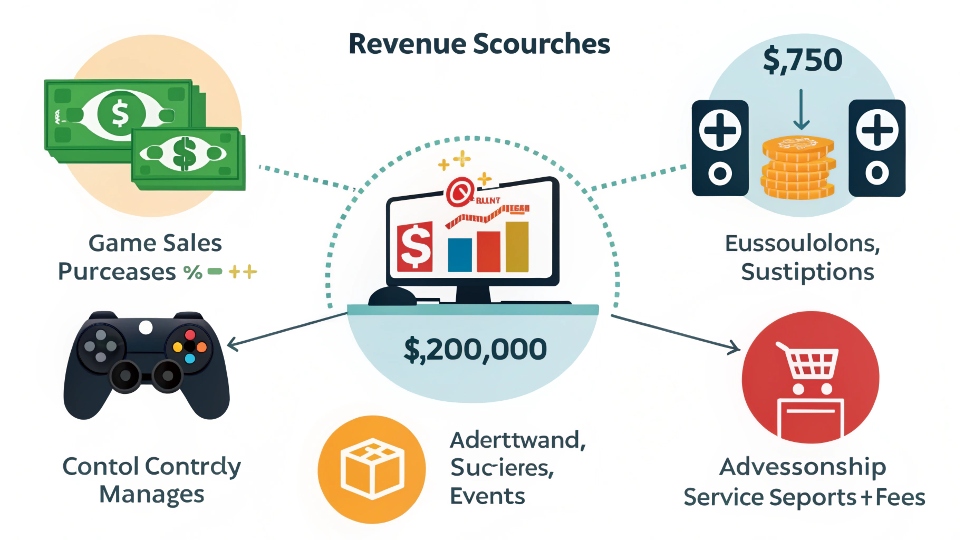 Modern gaming revenue comes from multiple streams:
- Traditional Sales1
- Physical/digital game copies
- Season passes
- Downloadable content
- Live Services2
- Battle passes
- Loot boxes
- Cosmetic microtransactions
- Mobile dominates here
- Secondary Markets
- Peripheral devices
- Licensed merchandise
- Cloud gaming subscriptions The platform holders (Sony/MS/Nintendo) have the most stable model: Advantages:
- Traditional Sales1
- Predictable 30% cut of all transactions
- Recurring subscription income
- Control over hardware specs Challenges:
- Requires huge upfront investment
- Long ROI periods (5+ years)
- Dependent on third-party support Mobile gaming actually generates more revenue now, but console gaming remains important for:
- Pushing technical boundaries
- Maintaining hardcore gamer base
- Creating system-selling exclusives
Do companies lose money on game consoles?
Yes, and they do it on purpose. Console losses are a calculated risk.
Manufacturers lose $100-$200 per console initially, recouping through game sales and subscriptions. This loss-leader strategy builds the install base needed for profits.
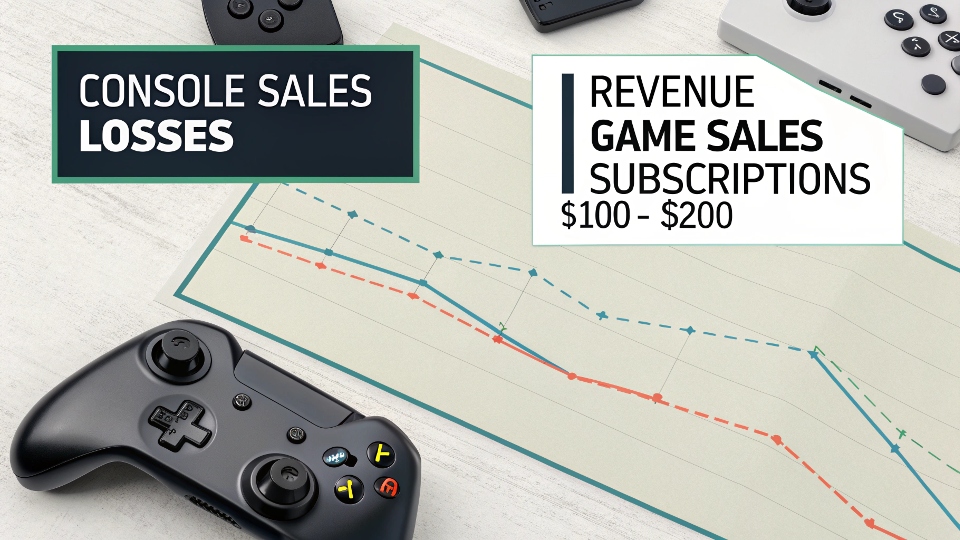 The console loss cycle has three phases:
1. Launch Phase (Years 1-2)
The console loss cycle has three phases:
1. Launch Phase (Years 1-2)
- Maximum hardware losses1
- Heavy R&D costs
- Building user base
- Example: PS3 lost $300 per unit initially 2. Maturity Phase (Years 3-5)
- Manufacturing costs drop
- Profit per console begins
- Game sales peak
- Example: PS4 became profitable after 3 years 3. Late Phase (Years 6+)
- Console sold at profit
- Focus shifts to next-gen
- Backward compatibility key2 Key cost reduction factors:
- Chip shrinks (smaller nanometers)
- Eliminating costly components
- Higher production volumes
- Cheaper shipping methods The gamble pays off if:
- Install base reaches critical mass (10M+)
- Attachment rate is high (8+ games per console)
- Digital sales ratio increases
Does Sony make a profit on consoles?
Sony loses on each PS5 sold initially, but makes billions overall.
Sony loses money on PS5 hardware but profits from PlayStation Plus, game sales, and accessories. Their gaming division made $2.5B profit last year.
 Sony's gaming business has multiple income layers:
- Hardware Economics
- PS5 cost to make: ~$450
- Retail price: $499
- Loses $50 per console
- But makes $180+ per user annually
- Software Advantage
- 30% of all PS game sales
- Higher cut on digital (£70 game = £21 profit)
- First-party games keep 100%
- Recurring Revenue
- PlayStation Plus subscriptions
- Cloud storage fees
- Advertising on dashboard Profit breakdown example:
- 10M consoles sold
- Hardware loss: $500M
- But from those 10M users:
- Game sales: $1.8B
- Subscriptions: $600M
- Accessories: $300M
- Net profit: $2.2B Sony's secret weapons:
- Exclusive franchises (God of War, Spider-Man)
- Strong brand loyalty
- Best-selling accessories
- Early digital transition
Conclusion
Console makers lose on hardware but win through games and services. Their platform control creates steady, long-term profits from locked-in users.