
Game console industry competition can look confusing when buyers only see big brand news, viral product videos, and fast-changing online prices. That confusion can lead to poor sourcing choices, slow inventory turnover, and unnecessary after-sales pressure. I usually suggest a simpler approach: evaluate competition by price band, device format, sales channel, and buyer risk.
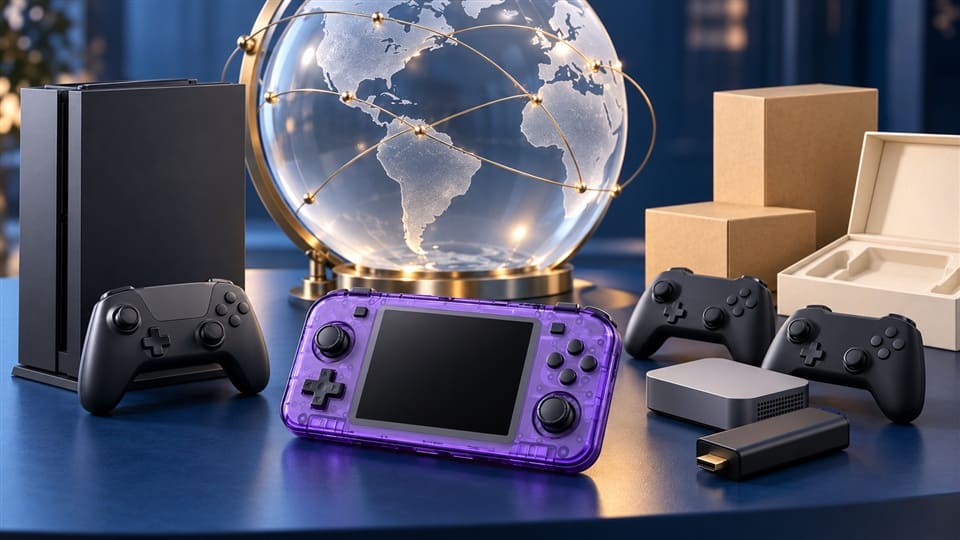
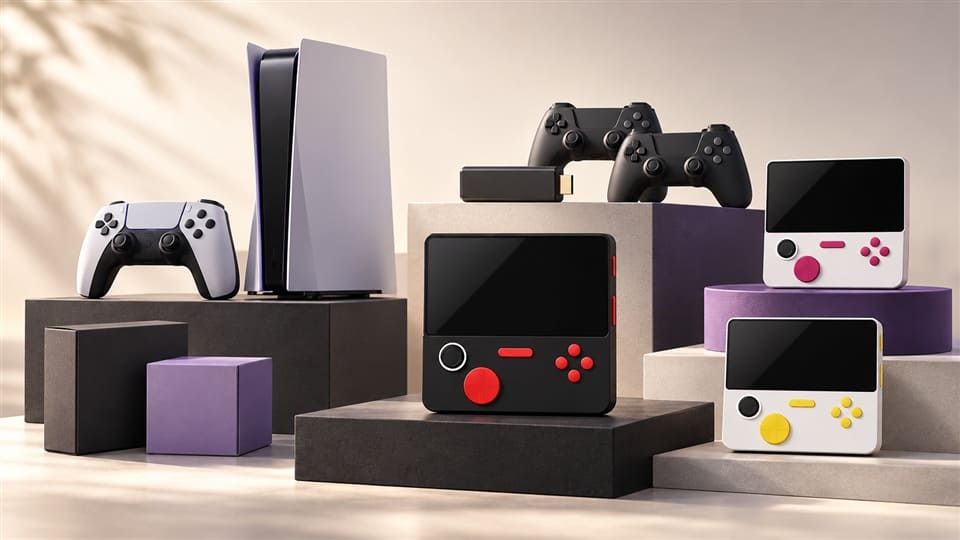
Game console industry competition is not only a battle between Nintendo, Sony, and Microsoft. For B2B buyers, it is a layered market where premium consoles, retro handhelds, TV game sticks, plug-and-play consoles, gift devices, and e-commerce-friendly products serve different customers, budgets, and sales scenarios. The real task is choosing the right product mix.
Many buyers ask me which “hot model” they should import. I understand the question, but I usually start somewhere else. A hot product can still be a bad fit if the market, channel, packaging, quality level, and after-sales expectations do not match.
How should buyers understand game console industry competition?
Buyers often treat game console industry competition as a simple brand war. That view is too narrow. It creates pressure to chase whatever is trending, even when the product does not fit the buyer’s real customers, budget, or local sales channel.
Game console industry competition should be understood as competition between different usage scenarios and price levels1. Premium home consoles compete in one space. Retro handhelds, HDMI game sticks, plug-and-play consoles, and gift-oriented devices compete in another space with different buyers, margins, and risks.
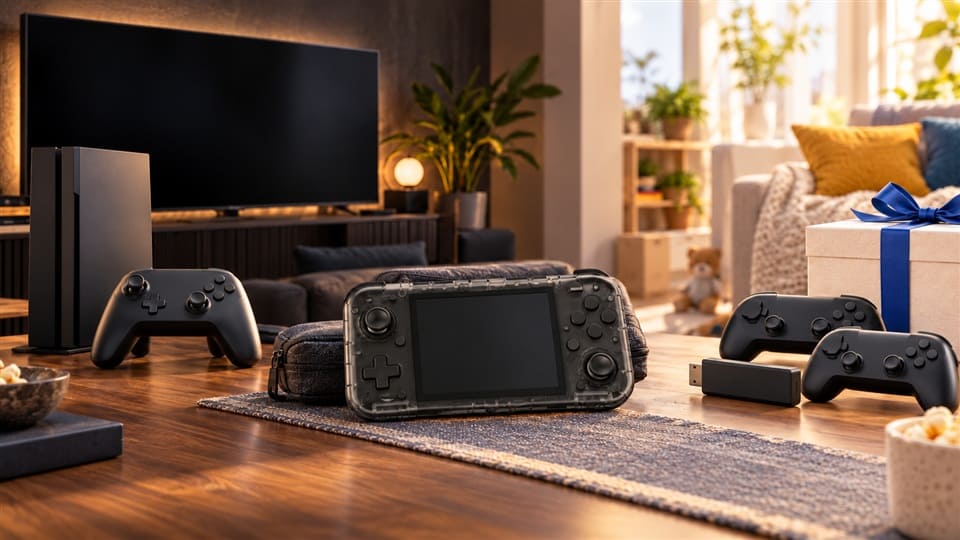
The big brands matter, but they are not the whole market
Sony, Nintendo, and Microsoft shape consumer expectations.2 Their products influence what many customers think a “game console” should be. However, most importers and wholesalers I speak with are not trying to compete directly with premium platforms. They are usually looking for products that are:
- Affordable enough for impulse purchase
- Simple enough for casual users
- Easy to ship in bulk
- Suitable for online stores or local retail
- Flexible for logo or packaging customization
- Low enough in unit cost to support wholesale margins
This creates a very different sourcing logic.
A buyer selling in a mall kiosk, electronics shop, gift store, or online marketplace may not need the same product story as a major console brand. The customer may be a parent buying a low-cost gift, a young adult who enjoys nostalgic games, or a reseller looking for fast-moving electronics.
I usually divide the market into practical layers
When I discuss product selection with overseas buyers, I prefer a layered view:
| Market layer | Typical product type | Buyer concern | Common sales scenario |
|---|---|---|---|
| Premium gaming | Major branded consoles | Official supply, high cost, strong brand control | Specialist retail, large chains |
| Mid-range entertainment | Android-style gaming devices, advanced handhelds | Specifications, software, warranty | E-commerce, electronics retail |
| Retro handhelds | R36S-style and similar devices | Screen, battery, buttons, game list, packaging | Online sellers, importers, distributors |
| TV plug-and-play | HDMI game sticks, TV consoles | Easy setup, controllers, compatibility | Gift channels, family entertainment |
| Promotional/gift devices | Simple portable or TV game devices | Low MOQ, packaging, price stability | Gift companies, seasonal sales |
This is why I do not see retro devices as products that need to “defeat” premium consoles. They win when they match a different customer need.3 In my experience, many B2B buyers succeed by avoiding direct comparison with premium platforms and focusing on accessibility, nostalgia, giftability, and fast turnover.
Why does game console industry competition change by product format?
A buyer may lose money when they compare every gaming device as if it serves the same user. A handheld retro console, a TV game stick, and a home console do not solve the same problem. They compete differently because customers buy them for different reasons.
Game console industry competition changes by product format because each format has its own use case, price expectation, packaging need, and after-sales risk. Handhelds sell on portability and nostalgia. TV sticks sell on family use and low entry cost. Gift devices sell on appearance, simplicity, and price.
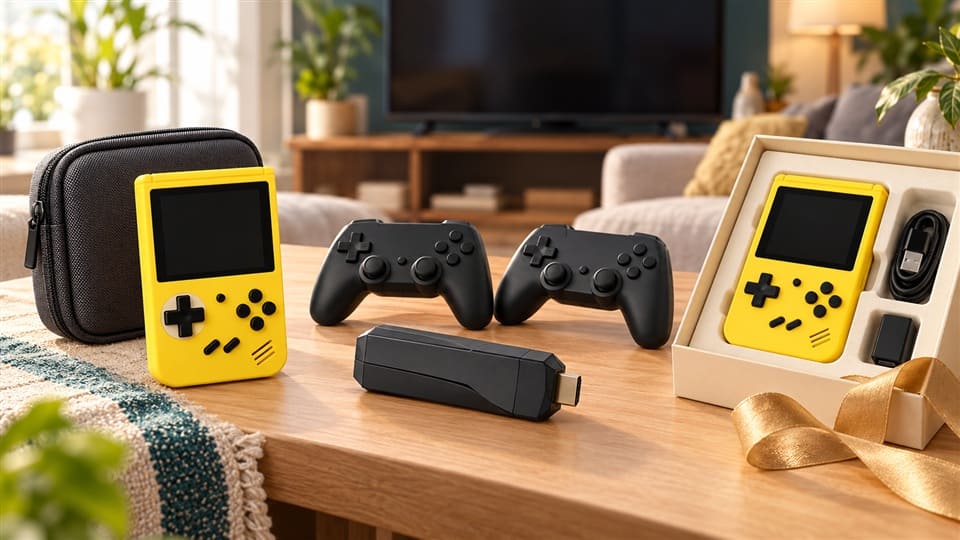
Handheld retro consoles
Handheld retro consoles are often attractive for e-commerce sellers because they are easy to demonstrate with images and videos. Buyers usually ask about screen size, system smoothness, battery capacity, button feel, memory card options, game lists, and packaging.
From a B2B view, the main questions are:
- Is the product easy for the end customer to understand?
- Does the price leave enough margin after freight and platform fees?
- Can the supplier keep quality consistent across repeat orders?
- Does the model have too many similar sellers already?
A “hot” handheld model can bring traffic, but it can also create price wars.4 I have seen buyers become interested in a model after watching competitors sell it online. That is normal. But I always suggest checking whether the local market still has room for another seller with the same product and similar images.
HDMI TV game sticks
TV game sticks are different. They usually sell on convenience.5 The buyer can position them as a simple family entertainment product. The end customer plugs the stick into a TV, connects controllers, and starts playing.
The buying focus is usually:
- Controller quality
- Signal stability
- Menu language
- Game list presentation
- Packaging strength
- Return rate control
- Compatibility with common TVs
For wholesalers, this format can work well because the unit cost is often accessible. However, quality control is important. A cheap game stick with unstable controllers may create more after-sales work than expected.6
Plug-and-play home consoles
Plug-and-play home consoles sit between handheld devices and TV sticks. They can look more “complete” as gifts because they include a console body, controllers, cables, and retail packaging. Gift companies and offline retailers often like this format because it feels more substantial on a shelf.
Here is a simple comparison:
| Product format | Main advantage | Main risk | Best-fit buyer |
|---|---|---|---|
| Retro handheld | Portable, trendy, easy to promote online | High similarity among sellers | E-commerce sellers, distributors |
| HDMI TV stick | Low entry price, simple family use | Controller and setup complaints | Wholesalers, gift sellers |
| Plug-and-play console | Good gift presentation | Higher shipping volume | Retailers, importers |
| Advanced handheld | Higher perceived value | Higher after-sales expectations | Specialist sellers, private-label brands |
This format-based thinking helps buyers avoid copying another seller blindly. A product may perform well in one channel and fail in another.
How can buyers avoid bad decisions in game console industry competition?
The biggest sourcing mistake I see is buying a model only because it is popular. Popularity can be useful, but it can also hide price pressure, quality variation, short product life, and weak differentiation.7 Buyers need a simple decision process before placing volume orders.
Buyers can avoid bad decisions in game console industry competition by checking product lifecycle, supplier similarity, quality testing, packaging options, local customer fit, and after-sales risk. A small trial order is often safer than a large first order based only on online popularity.
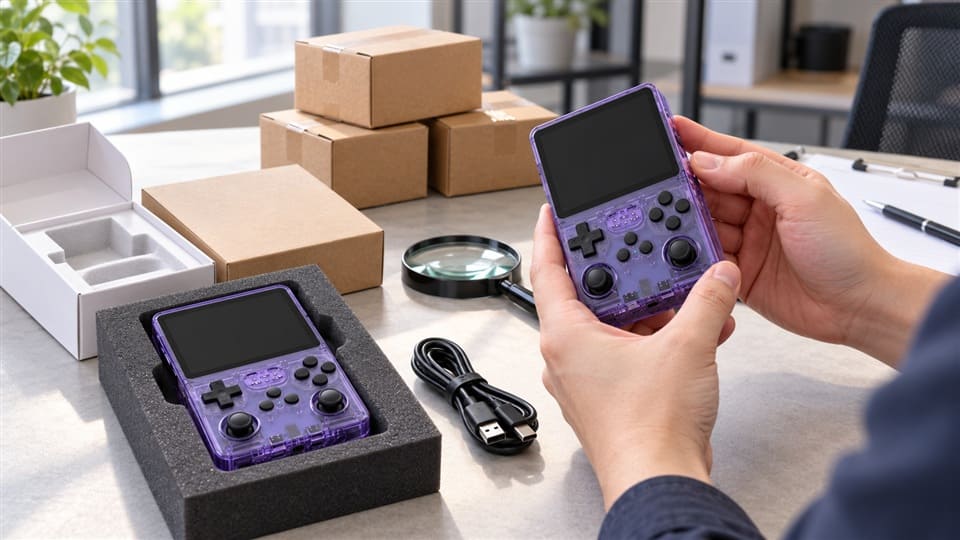
A hot model is not always a safe model
I understand why buyers chase hot models. A product with strong search demand feels safer. It already has market proof. However, in fast-moving electronics categories, that same visibility can bring heavy competition.
Before I recommend any model, I usually ask buyers a few questions:
- Who is your target customer?
- Do you sell online, offline, or wholesale?
- What is your acceptable return rate?
- Do you need logo or packaging customization?
- Can your market accept English packaging, or do you need local language?
- Do you want low price, better quality, or stronger differentiation?
These questions are basic, but they prevent many mistakes.
Use a sourcing checklist before volume orders
A structured checklist helps buyers compare products more calmly.
| Evaluation point | Why it matters | What buyers should check |
|---|---|---|
| Product lifecycle | Avoid late entry into a saturated model | Search trend, competitor listings, repeat demand |
| Supplier consistency | Reduce batch-to-batch surprises | Testing process, sample comparison, communication |
| Packaging | Improve retail value and reduce damage | Box strength, manual, barcode, language |
| MOQ flexibility | Lower first-order risk | Trial order quantity, mixed models |
| Customization | Support brand building | Logo, color, packaging, insert card |
| After-sales risk | Protect margin | Common defects, spare parts, return policy |
| Delivery time | Support sales planning | Production schedule, export packing, shipping method |
Quality control should not be an afterthought
For retro handhelds and plug-and-play gaming devices, buyers should pay attention to practical quality details. These details may sound small, but they affect customer reviews.
Important checks include:
- Screen display quality
- Button response
- Battery charging and discharge
- Speaker function
- Controller pairing or wired controller response
- HDMI output stability
- Memory card reading
- Menu language and system operation
- Packaging condition after transport
- Accessory completeness
At KLF, we see many buyer questions around these areas during sample discussions and after-sales communication. I do not present this as a universal lab standard. I present it as practical supplier-side experience from handling B2B retro gaming orders.
A low unit price is useful only when the product still meets the buyer’s return-rate and review-score expectations.
This is especially important for Amazon sellers and marketplace sellers. A small defect rate can become expensive when platform returns, customer messages, and negative reviews are included.8
Where do retro and plug-and-play devices create opportunity?
Some buyers worry that smaller gaming devices cannot compete because major consoles dominate consumer attention. I see the situation differently. These devices do not need to compete head-to-head with premium platforms. They win in different price bands and buying moments.
Retro and plug-and-play devices create opportunity in affordable, nostalgic, giftable, casual, and fast-turnover sales channels. They work best when buyers position them clearly as accessible entertainment products rather than direct alternatives to premium gaming consoles.
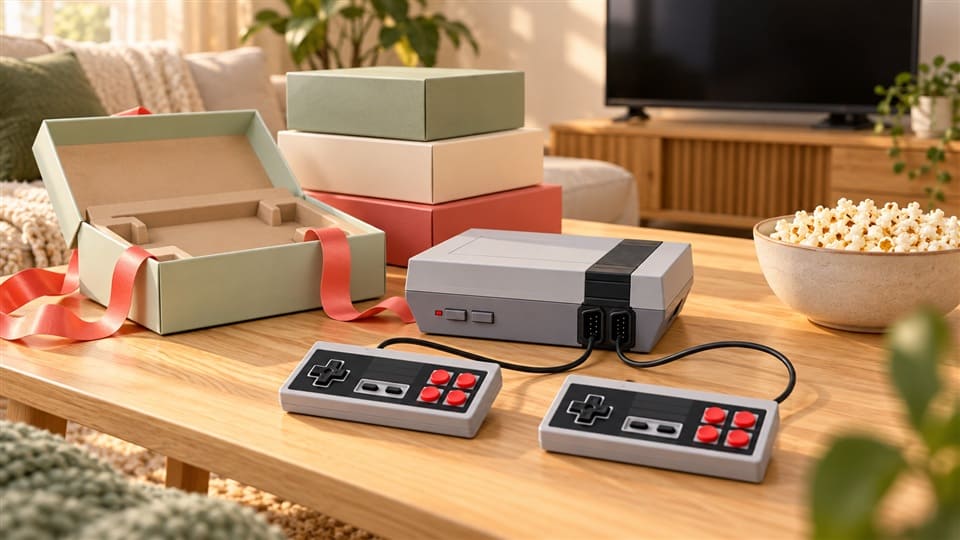
Opportunity comes from overlooked demand
Many end customers do not want to spend a high amount on a premium console.9 Some customers want a simple gift. Some want childhood-style games.10 Some want a portable device for casual play. Some parents want a low-cost entertainment option for children.
These needs create room for products such as:
- Handheld retro game consoles
- HDMI TV game sticks
- Plug-and-play home game consoles
- Gift-oriented gaming devices
- Private-label retro gaming products
For B2B buyers, the value is not only in the product itself. The value also comes from the ability to build a suitable offer.
Positioning matters more than hype
A retro handheld can be positioned in several ways:
| Positioning angle | Best sales channel | Buyer advantage |
|---|---|---|
| Nostalgia gift | Gift stores, seasonal campaigns | Emotional appeal |
| Budget entertainment | General retail, online shops | Wider customer reach |
| Portable gaming | E-commerce, social media ads | Easy product demonstration |
| Private-label device | Brand owners, distributors | Better differentiation |
| Trial-order product | Importers testing a category | Lower entry risk |
I often tell buyers that their product page or retail display should not promise too much. Clear positioning reduces complaints. If the product is a casual retro gaming device, the sales content should present it that way. Overpromising creates returns.
Customization can reduce direct price competition
When many sellers offer similar models, customization becomes useful. Buyers can consider:
- Logo printing
- Customized packaging
- Local language manuals
- Bundle options
- Color selection
- Retail-ready cartons
- Barcode or SKU management
These changes do not make a product completely unique, but they can help sellers avoid looking identical to every competitor. They also make the product more suitable for offline retail and private-label programs.
Trial orders are useful in unstable markets
Because game console industry competition changes quickly, I rarely suggest that new buyers start with the largest possible order. A trial order can test:
- Local customer response
- Real shipping cost
- Packaging strength
- Platform feedback
- Return reasons
- Best-selling colors or models
- Price sensitivity
This approach is slower than chasing a viral product, but it is safer. It gives buyers real market feedback before they commit more capital.
Frequently Asked Questions
Is game console industry competition only about Nintendo, Sony, and Microsoft?
No. Those brands are important, but B2B buyers should also study retro handhelds, TV game sticks, plug-and-play consoles, and gift-oriented gaming devices. These categories serve different price bands, sales channels, and customer expectations.
Are retro game consoles direct competitors to premium consoles?
I would not position them that way. Retro consoles usually compete in lower-entry, casual, nostalgic, and giftable segments. They are better understood as accessible entertainment products for different buying moments, not as replacements for premium gaming platforms.
What should importers check before buying a hot gaming device model?
Importers should check product lifecycle, local market fit, supplier consistency, packaging quality, testing process, MOQ, customization options, and after-sales risk. A hot model may still be risky if many sellers already compete mainly on price.
Which gaming devices are easier for e-commerce sellers to start with?
Handheld retro consoles and compact TV game sticks are often easier to test because they are visual, easy to explain, and suitable for small trial orders. However, sellers still need to check quality, product descriptions, return reasons, and platform rules.
How can private-label buyers reduce price competition?
Private-label buyers can use logo printing, custom packaging, localized manuals, bundle design, color selection, and clearer product positioning. These steps help the offer look less generic and may support better retail presentation and customer trust.
Conclusion
Game console industry competition is best understood as a layered market, not a single brand battle. Premium consoles, retro handhelds, HDMI TV sticks, plug-and-play consoles, and gift devices all serve different buyers and channels. For importers, wholesalers, and online sellers, the smartest move is to match product format with local demand, margin goals, and after-sales capacity. If you are evaluating retro gaming products for wholesale, OEM/ODM, or trial orders, I recommend comparing several models carefully before choosing your product mix.
"Chapter 3: Home Videogame Platforms - Robin S. Lee", https://robinlee.sites.fas.harvard.edu/papers/HandbookVgames.pdf. Studies of video-game console demand find that platform choice is affected by price and product attributes, supporting the article’s use of price level and usage scenario as dimensions of competition. Evidence role: general_support; source type: paper. Supports: Research on console demand and platform competition shows that consumers respond to price, software, device attributes, and use contexts.. Scope note: The evidence supports the segmentation logic generally, but may not use the article’s exact B2B categories. ↩
"Microsoft/Activision Blizzard, In the Matter of", https://www.ftc.gov/legal-library/browse/cases-proceedings/2210077-microsoftactivision-blizzard-matter. Regulatory analyses of console gaming markets identify Sony, Nintendo, and Microsoft as principal console platform operators, supporting the article’s statement that these brands shape consumer expectations in the console category. Evidence role: historical_context; source type: government. Supports: Major regulatory reviews identify Sony, Nintendo, and Microsoft as principal console platform operators and discuss their role in structuring console competition.. Scope note: Such sources document market structure and platform competition; they do not directly measure every consumer expectation. ↩
"Segmentation, Targeting, and Product Positioning", https://hbsp.harvard.edu/course-explorer/modules/segmentation-targeting-and-product-positioning. Marketing research on segmentation and positioning shows that products can gain advantage by targeting distinct consumer needs, supporting the article’s claim that retro devices may compete through fit with a different use case. Evidence role: mechanism; source type: paper. Supports: Segmentation and positioning research supports the idea that products can compete effectively by serving distinct customer needs rather than by matching premium alternatives feature-for-feature.. Scope note: This supports the marketing mechanism in general, not the performance of any specific retro-console model. ↩
"Competitive pricing on online markets: a literature review - PMC", https://pmc.ncbi.nlm.nih.gov/articles/PMC9194889/. Studies of online marketplace competition show that visible demand and seller entry can intensify price competition, supporting the article’s warning that popular models may generate both traffic and price pressure. Evidence role: mechanism; source type: paper. Supports: Research on online marketplaces and competitive entry should support the mechanism that visible demand can attract more sellers and intensify price competition.. Scope note: This evidence supports the marketplace mechanism and may not be specific to handheld game consoles. ↩
"An empirical evaluation of technology acceptance model for ...", https://pmc.ncbi.nlm.nih.gov/articles/PMC10382301/. Technology adoption studies identify perceived ease of use as a factor in consumer acceptance, providing contextual support for the article’s statement that TV game sticks often sell on convenience. Evidence role: mechanism; source type: paper. Supports: Technology adoption research supports the importance of perceived ease of use and convenience in consumer acceptance of electronic devices.. Scope note: The evidence is contextual unless the source specifically studies TV game sticks or plug-and-play gaming devices. ↩
"Research on the influence of after-sales service quality ...", https://www.academia.edu/45436821/Research_on_the_influence_of_after_sales_service_quality_factors_on_customer_satisfaction. Research on product returns and service failures links defects and poor usability with higher complaint and return activity, supporting the article’s warning that unstable controllers can increase after-sales work. Evidence role: mechanism; source type: paper. Supports: Research on product quality and returns should support the relationship between defects, usability problems, consumer complaints, and after-sales costs.. Scope note: The mechanism is general to consumer products and electronics unless the source directly studies gaming accessories. ↩
"What Are Stages in Product Life Cycle?", https://www.phoenix.edu/articles/marketing/what-are-the-stages-in-a-product-life-cycle.html. Product lifecycle and competitive imitation research shows that successful products can attract imitators and price competition, supporting the article’s caution that popularity may conceal commercial risks. Evidence role: general_support; source type: paper. Supports: Product lifecycle and competitive imitation research should support the idea that popular products may face faster imitation, price pressure, and differentiation challenges.. Scope note: The support is conceptual and may not quantify the exact risks for retro gaming devices. ↩
"The impact of online reviews in the presence of customer returns", https://pmc.ncbi.nlm.nih.gov/articles/PMC7501828/. E-commerce research links product defects and returns with direct handling costs and reputational effects from negative reviews, supporting the article’s claim that even small defect rates can become costly for marketplace sellers. Evidence role: mechanism; source type: paper. Supports: Research should show that product defects can increase returns and service interactions, while negative reviews can affect seller performance or demand.. Scope note: The evidence may establish the cost mechanisms without specifying a universal defect-rate threshold. ↩
"Technological Tying and the Intensity of Competition", https://www.economics.uci.edu/files/docs/micro/f10/derdenger.pdf. Empirical studies of console demand find that price is an important factor in consumer adoption, supporting the article’s statement that some customers avoid high-priced premium consoles. Evidence role: statistic; source type: paper. Supports: Empirical demand or survey research should show that price affects console purchase decisions or that some consumers are unwilling to buy high-priced consoles.. Scope note: The source may demonstrate price sensitivity generally rather than measure demand for the specific retro or plug-and-play devices discussed. ↩
"Reliving 10 Years Old: Descriptive Insights Into Retro Gaming", https://surface.syr.edu/ms/27/. Studies of retro gaming and nostalgia show that memories of earlier play experiences can motivate engagement with older game styles, supporting the article’s claim that some customers seek childhood-style games. Evidence role: mechanism; source type: paper. Supports: Research on nostalgia and retro gaming should support the idea that memories of earlier games can influence interest in retro-style products.. Scope note: The evidence supports nostalgia as a motive but does not prove demand for any particular device. ↩