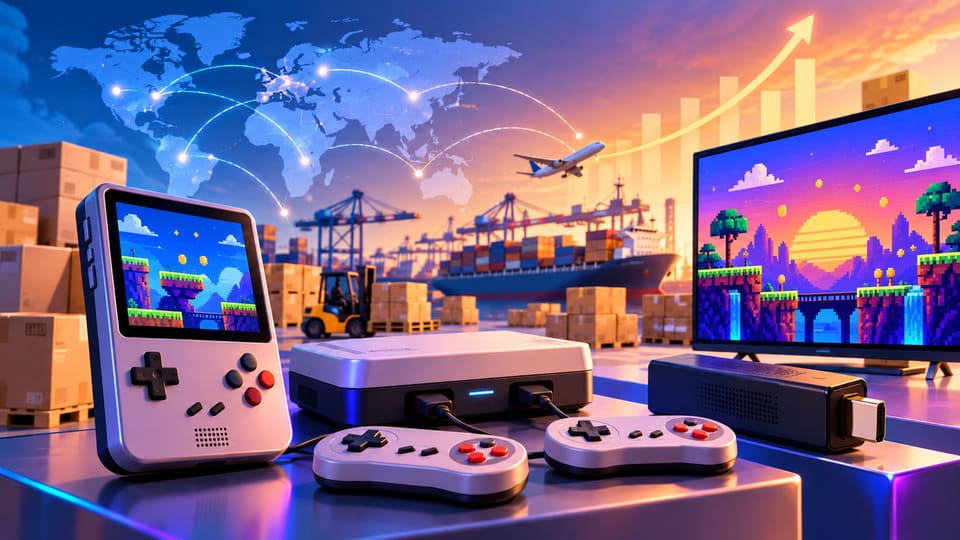

The retro gaming console market in 2026 looks attractive, but many buyers still struggle to turn market interest into stable profit. A hot model can sell fast, yet version changes, weak QC, or poor replenishment can quickly damage margins. I see the better approach as product testing, supplier verification, and channel-matched portfolio planning.
The retro gaming console market in 2026 offers B2B opportunities for importers, wholesalers, and e-commerce sellers, but buyers should not rely only on market-size reports or low unit prices. The stronger strategy is to test demand with selected handheld consoles, HDMI game sticks, and plug-and-play consoles, then scale only after confirming quality, version consistency, and reorder reliability.
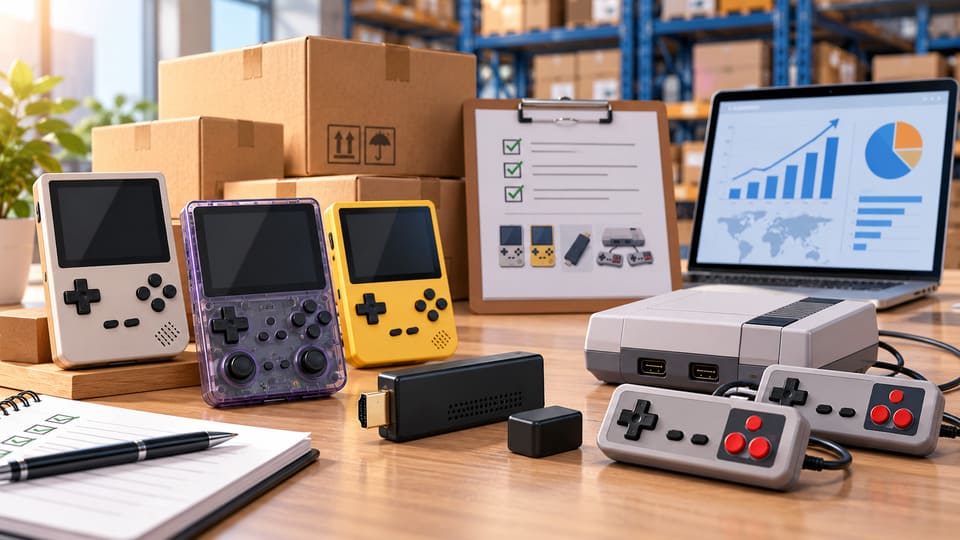
Market reports can show direction, but they do not answer the most important sourcing question: which product mix will work for your channel, price range, and reorder plan? That is where many 2026 buyers will win or lose.
How Big Is the Retro Gaming Console Market in 2026?
The retro gaming console market is part of a wider gaming and consumer electronics trend, but buyers should be careful with headline numbers. Market size can create confidence, yet it can also mislead buyers who treat all retro devices as the same product.
The retro gaming console market in 2026 is likely to remain active because nostalgia gaming, affordable entertainment, gifting, and handheld play continue to support demand. However, B2B buyers should use market-size data as context, not as a purchase decision. Product type, channel fit, and supply reliability matter more than the headline market value.
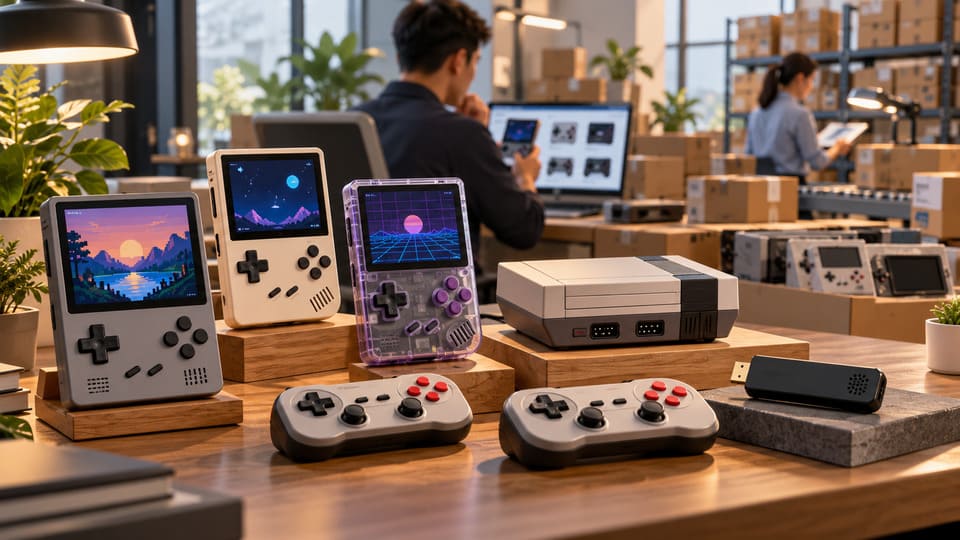
Market Size Is Useful, But It Is Not a Buying Plan
Public gaming industry data supports the idea that gaming remains a large global category. For example, Newzoo’s Global Games Market Report has estimated global gaming revenue in the hundreds of billions of dollars, with console, PC, and mobile gaming all contributing to demand. Statista also tracks video game hardware, gaming accessories, and digital gaming revenue across major regions.
However, I would not suggest using these numbers as a direct forecast for retro console purchases. The retro gaming console market is more fragmented than the general gaming market. It includes:
- Linux-based handheld retro consoles
- Android handheld gaming devices
- HDMI TV game sticks
- Plug-and-play home consoles
- Gift-oriented mini consoles
- Private-label retro gaming bundles
These products do not have the same buyer profile, price band, or after-sales risk.
In my experience handling overseas B2B inquiries, many importers ask, “Which model is most popular?” before they define the sales channel. That question sounds practical, but it is incomplete. A popular model for an Amazon seller may not be the best model for a local wholesaler in Latin America. A gift company may care more about packaging and bundle appearance than advanced emulator performance.
What Market Data Really Means for Buyers
Market data should help buyers understand direction, not make the final sourcing decision. The better questions are:
| Buyer Question | Why It Matters |
|---|---|
| Is demand growing in my region? | It helps estimate trial order size. |
| Which price band sells locally? | It prevents overbuying expensive models. |
| Which channel will I use? | Online, retail, wholesale, and gift channels need different SKUs. |
| Can I reorder the same version? | Replenishment stability protects customer reviews. |
| What return rate can I tolerate? | Low price does not help if returns are high. |
For 2026, I expect more professional buyers to use small trial orders before scaling. This is not because demand is weak. It is because the product category has many versions, suppliers, firmware types, screen qualities, and packaging options. A controlled test gives buyers real local feedback before they commit serious capital.
Which Products Drive the Retro Gaming Console Market in 2026?
The retro gaming console market should not be treated as one simple category. A handheld console, an HDMI game stick, and a plug-and-play home console may all target retro gaming fans, but they solve different buyer needs and create different sourcing risks.
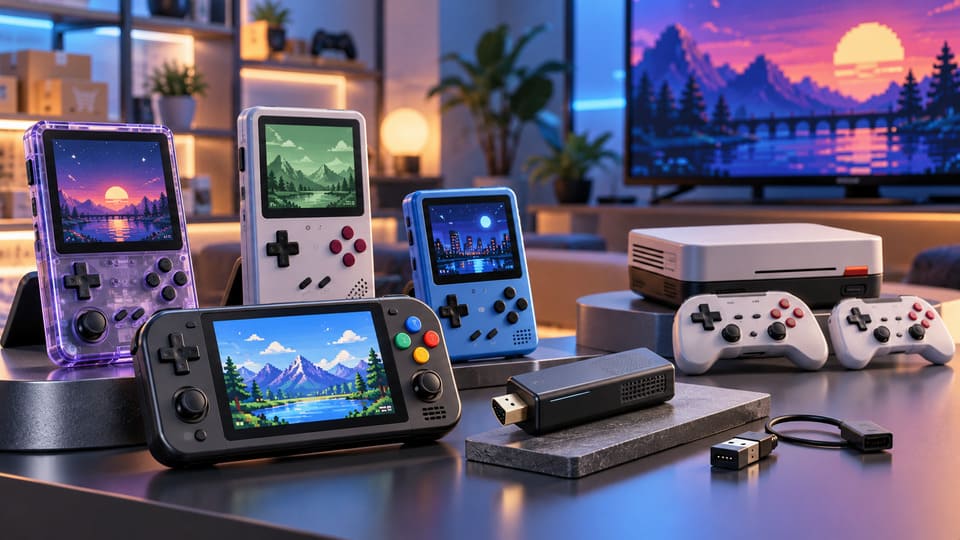
The main products driving the retro gaming console market in 2026 are handheld retro consoles, HDMI TV game sticks, and plug-and-play home game consoles. Handhelds usually fit e-commerce and electronics retail channels. HDMI sticks are useful for family entertainment and gift testing. Plug-and-play consoles work well for bundles, retail displays, and home-use promotions.
Handheld Retro Game Consoles
Handheld devices often attract buyers because they are easy to demonstrate and easy to ship. Models such as R36S, R36XX, R46S, HC8000, X80, Project X, PX Pro, and similar devices can serve different price levels.
A basic handheld can target price-sensitive consumers. A higher-spec model can target users who care about:
- Screen size and brightness
- UI smoothness
- Button feel
- Battery life
- Emulator compatibility
- Storage capacity
- Build quality
However, similar advertised specifications do not always mean the same user experience. Two handhelds may both show “64GB” or “3.5-inch screen,” but the actual performance can differ because of motherboard version, firmware, screen batch, SD card quality, and factory testing standards.
HDMI TV Game Sticks
HDMI TV game sticks, such as M8 TV Stick-style products, often fit family entertainment, gift, and low-cost testing channels. They are compact, easy to bundle, and simple to explain. A buyer can position them as plug-and-play entertainment for a TV.
Still, buyers should check:
- Controller pairing stability
- Menu language options
- Game list structure
- HDMI compatibility
- Packaging durability
- Power adapter requirements by market
These products may look simple, but after-sales problems can appear if the controller quality is weak or the UI is confusing.
Plug-and-Play Home Consoles
Plug-and-play home consoles can work well for retail stores, gift companies, and family-use channels. They often have a more “complete product” feel because they include controllers, cables, and retail packaging.
For B2B buyers, the question is not only whether the console works. The question is whether the full set is consistent:
| Item to Check | Reason |
|---|---|
| Console shell | Affects visual consistency. |
| Controller quality | Impacts user satisfaction. |
| Cable set | Must match market requirements. |
| Packaging | Supports retail and gift positioning. |
| Manual language | Reduces customer confusion. |
| Firmware version | Affects UI and gameplay experience. |
I usually suggest that buyers avoid adding too many SKUs at the beginning. A better method is to choose one entry-level product, one mid-range handheld, and one TV/home-use product. Then buyers can compare sales speed, return rate, and customer feedback before expanding.
What Growth Trends Will Shape the Retro Gaming Console Market in 2026?
The retro gaming console market in 2026 will likely be shaped by controlled testing, private-label demand, channel-specific product mixes, and stronger quality expectations. The buyers who treat sourcing as an inventory strategy will usually perform better than those chasing one hot model.
The key growth trends in the retro gaming console market include small trial orders before scaling, more OEM/ODM and private-label requests, stronger concern about product version consistency, and more careful SKU planning. Buyers are moving from simple price comparison toward total purchasing risk management.
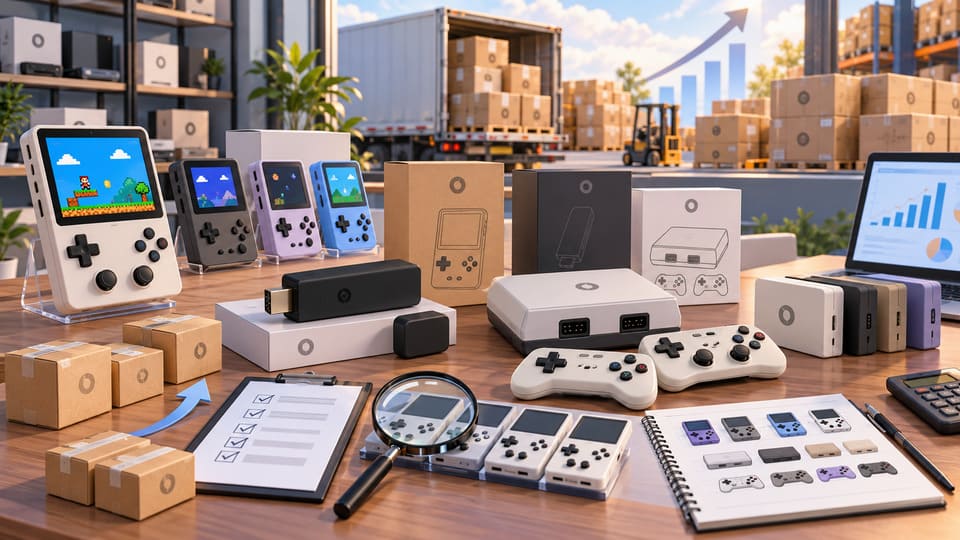
Trend 1: Trial Orders Before Bulk Orders
In 2026, I expect more buyers to start with trial orders. This is already common in many overseas inquiries we handle. A buyer may want 50, 100, or 300 units first, not because the buyer lacks confidence, but because the buyer wants to test:
- Local demand
- Customer reviews
- Return rate
- Packaging feedback
- Sales channel performance
- Reorder timing
This is a practical approach. It protects cash flow and helps buyers avoid slow-moving inventory.
Trend 2: Private-Label and Packaging Customization
OEM/ODM and private-label demand will continue to matter. Many e-commerce sellers and distributors do not want to sell the same plain package as everyone else. They want logo customization, packaging changes, barcode labels, or market-specific manuals.
However, customization should be planned carefully. A custom box can help branding, but it can also increase MOQ, cost, and lead time. Buyers should confirm:
| Customization Item | Buyer Checkpoint |
|---|---|
| Logo on device | MOQ, method, durability |
| Color box | Artwork file, printing lead time |
| Manual | Language, layout, compliance wording |
| Barcode label | Amazon or local retail format |
| Bundle set | Accessories, cable type, storage option |
A small mistake in packaging can create large problems later. For example, if a product photo shows one color but the box shows another, online returns may increase.
Trend 3: Version Consistency Becomes More Important
Product version consistency is not only a technical issue. It is also an inventory management issue.
If the first batch sells well and the second batch arrives with a different motherboard, firmware, UI, color shade, or accessory set, the buyer may face complaints. Customers may compare reviews and product photos. Retail partners may question why the second batch feels different.
Before confirming bulk orders, buyers should ask suppliers:
- Can future orders maintain the same specification?
- Will hardware or firmware upgrades be communicated in advance?
- Are popular colors stable during peak season?
- Can storage versions remain consistent?
- What is the normal production lead time?
- What happens if the original component is no longer available?
I have seen buyers focus only on the first quote and forget the second order. But for importers with established channels, a reliable reorder can be more valuable than a very cheap first shipment.
How Should B2B Buyers Build a Product Portfolio for the Retro Gaming Console Market?
The retro gaming console market rewards buyers who match products to channels. A wholesale buyer, Amazon seller, gift company, and electronics retailer should not always choose the same model. Each channel has different expectations, pricing pressure, and after-sales risk.
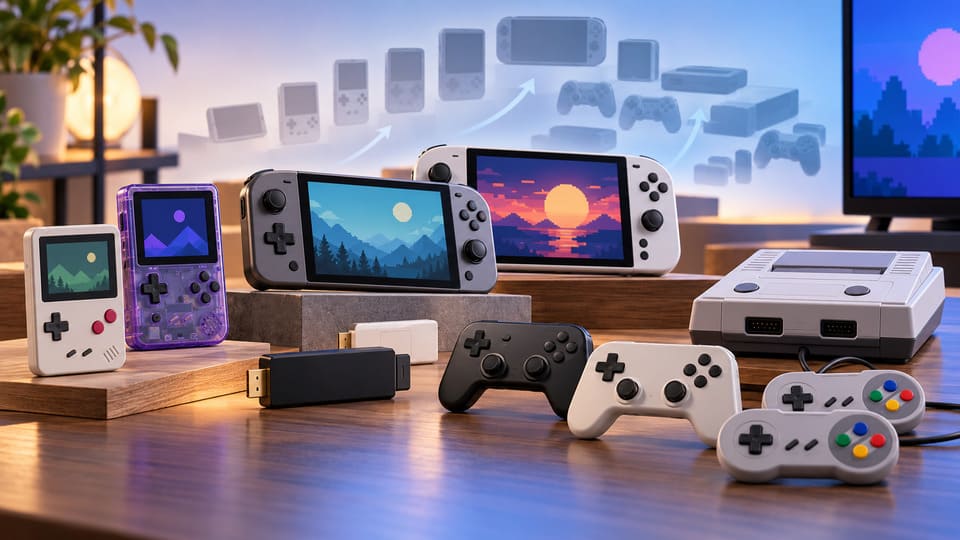
B2B buyers should build a retro gaming product portfolio by selecting a small number of representative models first, then expanding based on actual sales data. A balanced 2026 portfolio may include entry-level handhelds, mid-range handhelds, HDMI TV game sticks, and plug-and-play home consoles, depending on channel and market demand.
Match Product Type to Sales Channel
A good product portfolio starts with the sales channel. I would usually separate channels like this:
| Channel | Suitable Product Direction | Key Risk |
|---|---|---|
| Amazon / marketplace | Mid-range handhelds, branded packaging | Reviews and return rate |
| Local wholesale | Entry-level handhelds, stable stock | Price competition |
| Retail stores | Plug-and-play consoles, color boxes | Packaging and display |
| Gift companies | HDMI sticks, bundles, custom boxes | Seasonal timing |
| Gaming shops | Better handhelds, niche models | Performance expectations |
This table is not a fixed rule. It is a starting point. A strong Amazon seller may successfully sell an entry-level handheld if the listing is clear and support is good. A distributor may sell higher-end devices if the local market accepts the price.
Avoid Blind SKU Expansion
Many buyers want to add many models quickly because the category looks exciting. I understand that feeling. When I review product lists with buyers, I often notice the same problem: too many similar SKUs with no clear role.
Blind SKU expansion can create:
- Slow-moving stock
- Confusing listings
- Higher storage cost
- More after-sales questions
- Harder replenishment
- Messy warranty handling
A more controlled starting portfolio may look like this:
- One entry-level handheld for price-sensitive consumers
- One mid-range handheld for better user experience
- One HDMI TV game stick for gift and family testing
- One plug-and-play home console for retail or bundle sales
After 30–60 days of local sales data, buyers can decide whether to reorder, replace, or expand. The real decision should come from sales speed, customer feedback, return rate, and margin after after-sales cost.
Consider Total Purchasing Cost
Low unit price is not the same as low total cost. A cheaper console can become expensive if it creates returns, bad reviews, or failed reorders.
Buyers should calculate:
Total purchasing cost = unit price + shipping + duty + packaging cost + return loss + support cost + inventory risk
This formula is simple, but it changes the sourcing conversation. A product that costs slightly more may protect profit better if it has stable quality, consistent packaging, and reliable replenishment.
For 2026 sourcing, I suggest buyers compare suppliers on more than price:
| Evaluation Point | Why It Matters |
|---|---|
| Factory-direct pricing | Helps improve margin control. |
| MOQ flexibility | Supports trial orders and risk reduction. |
| QC process | Reduces return and complaint risk. |
| Version communication | Protects reorder consistency. |
| Packaging support | Helps retail and e-commerce sales. |
| Shipping experience | Reduces delivery uncertainty. |
| Reorder reliability | Supports long-term channel growth. |
At KLF, we usually discuss these points with buyers before orders become large. This is not just a sales step. It helps both sides reduce misunderstanding before production and shipment.
Frequently Asked Questions
Is the retro gaming console market still profitable in 2026?
Yes, the retro gaming console market can still be profitable in 2026, but profit depends on product selection, channel fit, quality control, and reorder reliability. Buyers should not judge profit only by unit price. Returns, packaging issues, and inconsistent batches can reduce margin quickly.
Which retro gaming console type is best for wholesale buyers?
There is no single best type for every wholesale buyer. Entry-level handhelds suit price-sensitive markets, mid-range handhelds suit experience-focused consumers, HDMI game sticks suit gift channels, and plug-and-play consoles suit home-use bundles. Buyers should test a few representative products before scaling.
Why is version consistency important for retro game consoles?
Version consistency matters because different motherboards, firmware, screens, storage cards, or packaging can change the user experience. If a reorder differs from the first batch without notice, buyers may face customer complaints, higher return rates, and inconsistent online reviews.
Should I start with a small trial order or a bulk order?
Most new buyers should start with a small trial order. A trial order helps test local demand, pricing, customer feedback, and after-sales risk. Bulk orders make more sense after the buyer confirms sales performance and supplier reliability.
What should I ask a retro gaming console supplier before ordering?
Buyers should ask about MOQ, lead time, QC process, motherboard version, firmware consistency, storage card quality, packaging options, customization support, and reorder stability. Buyers should also request clear product photos, specifications, and sample confirmation before bulk production.
Conclusion
The retro gaming console market in 2026 offers real B2B opportunities, but buyers need more than market-size optimism. The stronger strategy is to build a channel-matched product mix, start with controlled trial orders, verify quality and version consistency, and protect future replenishment. A reliable reorder is often more valuable than the lowest first quote. If you are planning wholesale, OEM/ODM, or private-label retro gaming console sourcing for 2026, I recommend discussing your target market, MOQ, packaging needs, and reorder plan with KLF before scaling.