
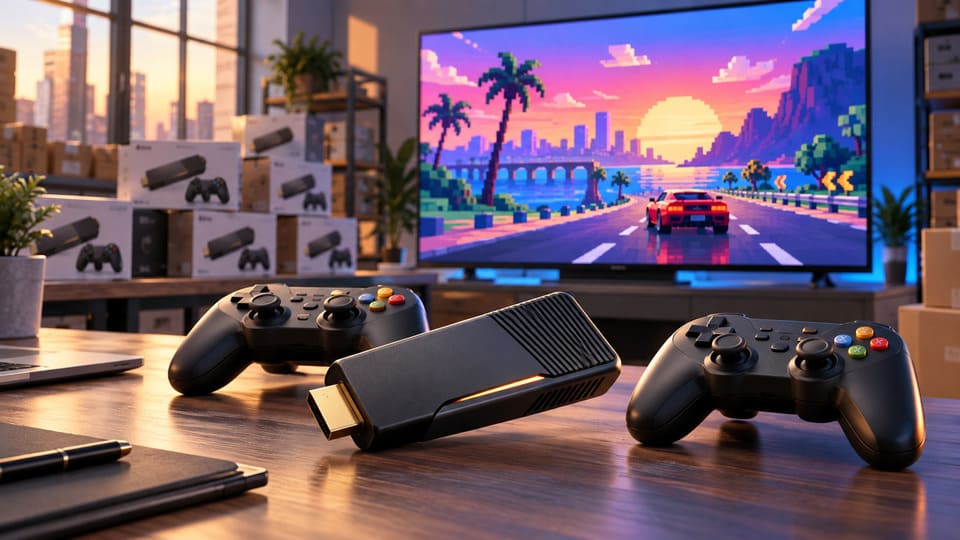

Retro console sourcing in 2026 looks attractive because 4K TV game sticks are easy to sell, simple to demonstrate, and familiar to many buyers. But the market can quickly become a price war if importers only chase the cheapest unit cost1. The smarter path is to source for stable quality, visible value, and earlier production planning.
The 2026 4K TV stick boom is worth watching, but buyers should not treat it as a race to the lowest price. Importers and wholesalers should compare chip configuration, system smoothness, controller feel, mold quality, packaging options, and supplier reliability. A slightly better product can protect margin better than a very cheap one with more complaints.
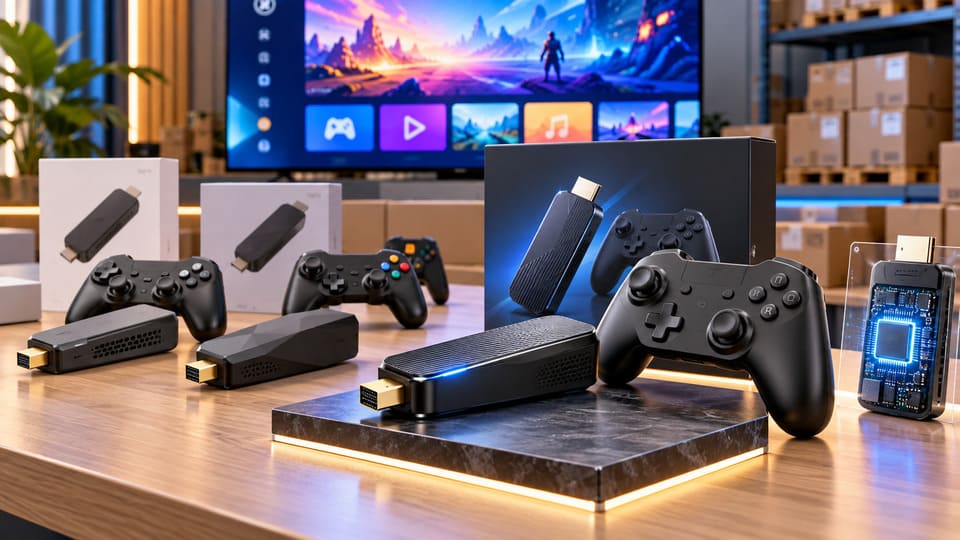
From my side as a factory supplier, I see many overseas buyers asking similar questions: “Which model is cheapest?” “Can I test 50 or 100 sets first?” “Can we customize the box?” These are fair questions. But in 2026, I think the better question is: Which 4K TV stick gives my channel the best value-for-money?
Why Should Retro Console Sourcing Focus on Value-for-Money Instead of the Lowest Price?
Many buyers start retro console sourcing by asking for the lowest quotation. That is normal. Price matters in wholesale. But if the product feels cheap, freezes often, or has weak controllers, the low price may create new problems after sales2.
The better sourcing logic is simple: choose a 4K TV game stick that spends the budget on things users can see and feel. Buyers should check system performance, controller response, HDMI output stability, casing quality, packaging, and supplier QC instead of comparing price alone.
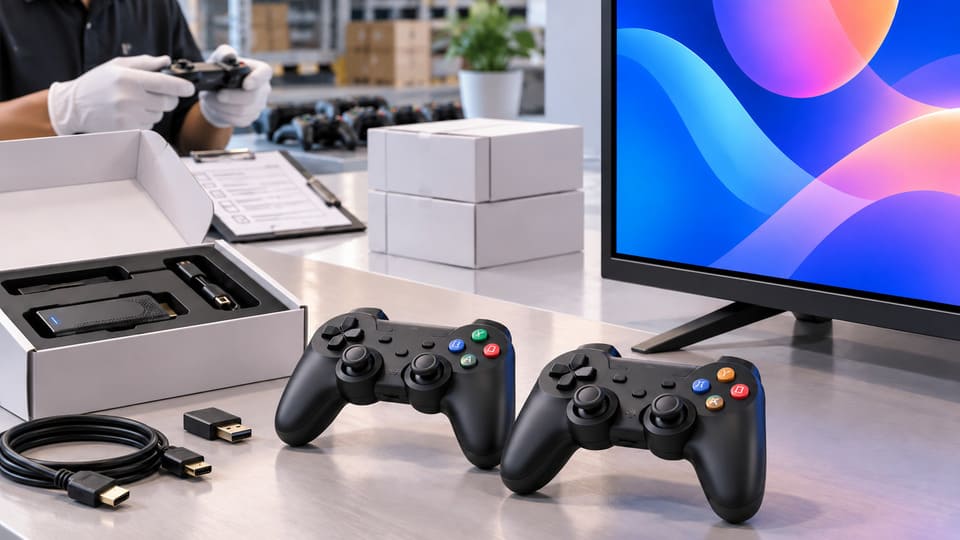
What “value-for-money” really means for importers
For B2B buyers, value-for-money does not always mean premium. It means the product matches the selling price and reduces after-sales pressure.
When I talk with importers, I often notice one pattern. The buyer may accept a small cost increase if the improvement is easy to explain to their customers. For example:
- Better controller feel can make the product seem more reliable.
- Smoother menu operation can make demonstrations easier.
- Cleaner packaging can help retail and gift channels.
- Stronger mold quality can reduce the “cheap toy” feeling.
- Stable HDMI output can reduce basic user complaints.
A very cheap TV stick may look good on a spreadsheet. But if the controller buttons feel loose, the menu is slow, or the casing looks rough, the buyer may need to sell it only by price. That makes the whole channel less healthy.
A simple comparison for sourcing decisions
| Sourcing focus | Short-term benefit | Possible risk | Better use case |
|---|---|---|---|
| Lowest unit price | Lower first purchase cost | More price competition, weaker perceived quality | Very price-sensitive promotions |
| Balanced value-for-money | Easier retail positioning | Slightly higher upfront cost | Wholesalers, online sellers, repeat orders |
| Higher-spec model | Stronger product story | Higher MOQ or cost | Private label, gift channels, premium bundles |
In my view, most importers should not jump directly to the most expensive model. They should also avoid the lowest-quality option. A balanced model usually gives more room for stable sales.
What buyers should ask suppliers
Before confirming an order, I suggest asking direct questions:
- Which chip solution does this model use?
- What is the real HDMI output claim?
- How many controller types are available?
- Can I test a small trial order first?
- Can you support logo or packaging customization?
- What QC steps are done before shipment?
- How early should I place repeat orders before peak season?
These questions help buyers compare real product value, not just quotation sheets.
What Are the Real Risks Behind the “4K” Label in Retro Console Sourcing?
The “4K” label is powerful in retro console sourcing because it looks modern and easy to market. But it can also create misunderstanding.3 Some end users may think “4K” means high-end console-level graphics, which is not the correct expectation for most plug-and-play retro TV sticks.
Buyers should treat “4K” as a product claim that needs checking. They should verify output support, chip solution, system interface, game compatibility, controller response, and the way the product is described in packaging and listings.
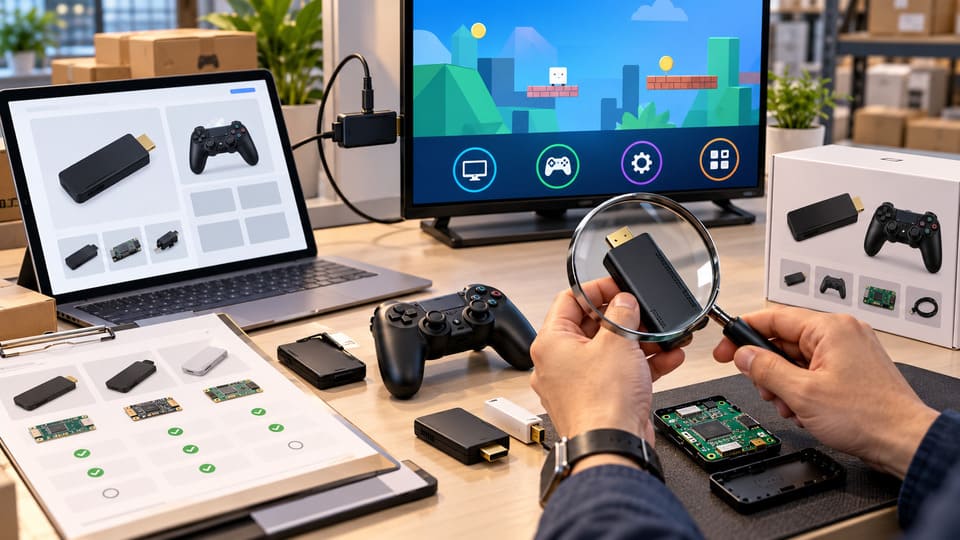
“4K” does not always mean what buyers think
In the retro gaming category, “4K” is often used in a broad marketing way. It may refer to HDMI output support or interface display capability. It does not mean every old game becomes true high-end 4K gameplay.
This point matters for importers because wrong expectations can create complaints. If a seller advertises the product too aggressively, customers may expect performance close to a modern console. That is not realistic for most budget TV game sticks.
A safer product description should be clear and practical:
“HDMI TV game stick with 4K output support, built-in retro games, wireless controllers, and plug-and-play operation.”
This wording is more controlled than saying something like “true 4K high-performance gaming console.” Buyers should always verify the exact claim with the supplier and review the packaging text before production.
Key checks before placing an order
Here is a practical checklist I use in sourcing discussions:
- Chip configuration: Does the chip match the performance level you want?
- System smoothness: Does the menu load quickly enough?
- Game compatibility: Do popular emulators and game types run acceptably?
- Controller response: Is there noticeable delay during play?
- Controller build: Do buttons, joysticks, and battery covers feel solid?
- HDMI stability: Does the product work well on common TV models?
- Language support: Does the menu fit your market?
- Packaging claim: Does the box avoid exaggerated promises?
- Manual clarity: Can a first-time user connect and play without confusion?
Why controller feel matters more than many buyers expect
Many importers focus on the stick itself and forget the controller. But the controller is the part users hold for the longest time. If the controller feels too light, has weak buttons, or disconnects often, the whole product feels low quality.
For wholesalers, controller quality also affects channel confidence. Retailers do not want products that create many simple complaints. Online sellers do not want negative reviews about “bad controller response” or “cheap buttons.”
So when buyers compare samples, they should not only turn on the menu. They should actually play for 15–20 minutes. They should test fighting games, racing games, and platform games because these show controller response more clearly.
Better components can create more profit room
A slightly higher-cost TV stick can sometimes support better retail positioning. I am not saying every market will pay more. I am also not claiming a fixed profit margin. But from a buyer’s view, a product with better perceived quality can help in several ways:
- It can reduce pressure to sell only as the cheapest option.
- It can support better photos, videos, and product pages.
- It can make private-label packaging look more credible.
- It can lower avoidable complaints caused by poor build quality.
- It can make repeat purchasing easier if the first batch performs well.
That is why I usually tell buyers to calculate total selling risk, not only unit price.
How Early Should Importers Plan 4K TV Stick Orders for Peak Season?
Production timing is often ignored in retro console sourcing until it becomes urgent. Buyers may wait for demand to rise before ordering. But during busy periods, chips, controllers, packaging, and factory capacity can become tighter, especially in Shenzhen’s electronics supply chain.
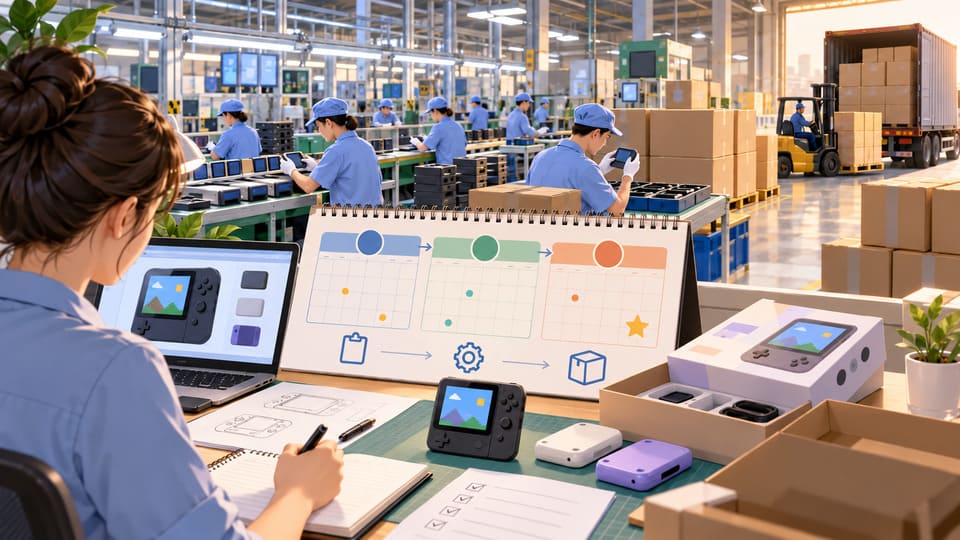
For peak-season orders, buyers should try to lock production capacity around three months in advance where possible4. Early planning gives more time for sample testing, packaging confirmation, production scheduling, QC, and shipment preparation.
Why waiting too long creates problems
When demand is calm, buyers can compare samples slowly. They can adjust packaging. They can discuss shipment methods. But when peak season gets close, everything becomes more urgent.
From the factory side, I often see buyers ask for fast delivery after they confirm market demand. The problem is that production is not only assembly. A real order may include:
- Sample confirmation
- Logo file checking
- Packaging design confirmation
- Component preparation
- Production scheduling
- Assembly and aging tests
- QC inspection
- Carton packing
- Export documents and shipment arrangement
If one step is delayed, the whole delivery plan can move. Custom packaging can also add time because artwork, printing, and box production need confirmation.
A simple order planning timeline
| Time before selling season | Buyer action | Why it matters |
|---|---|---|
| 3–4 months | Test samples and compare suppliers | Reduces wrong model selection |
| Around 3 months | Lock model, MOQ, and production slot | Improves delivery certainty |
| 2 months | Confirm packaging and labels | Avoids printing delays |
| 4–6 weeks | Monitor production and QC plan | Catches problems earlier |
| Final weeks | Arrange shipment and documents | Keeps launch schedule realistic |
This timeline is not a guarantee. Every order depends on quantity, customization, supplier capacity, and logistics. But as a practical rule, earlier planning gives buyers more control.
Why trial orders are a smart first step
A controlled sourcing strategy works better than guessing. I often suggest that new buyers start with a trial order if the supplier supports it. A small batch can help answer real market questions:
- Does the product sell well in your channel?
- Do customers understand the “4K” positioning?
- Are the controllers accepted by users?
- Is the packaging suitable for retail?
- Do online reviews mention repeated issues?
- Which color, bundle, or game list performs better?
After the trial order, the buyer can plan repeat orders with more confidence. This is safer than waiting until demand is already high and then trying to buy large quantities quickly.
What to discuss with your supplier before repeat orders
For repeat and seasonal orders, buyers should discuss more than price:
- Forecast quantity: Give the supplier a rough plan if possible.
- MOQ flexibility: Ask if small repeat orders are possible.
- Component stability: Confirm whether the same configuration can be kept.
- Packaging lead time: Check printing and customization timing.
- QC standards: Confirm testing steps before shipment.
- Shipping method: Compare air, sea, rail, or express where available.
- Backup model: Prepare an alternative if one model becomes tight.
At KLF, our buyer conversations often include trial orders, OEM packaging, QC checks, and shipment preparation. I see these details as normal sourcing work, not extra decoration. For B2B buyers, these steps protect the order.
Frequently Asked Questions
Is a 4K TV game stick the same as a high-end console?
No. Most 4K TV game sticks are plug-and-play retro gaming devices, not high-end modern consoles. Buyers should check the chip solution, HDMI output claim, emulator performance, and packaging language. Clear expectation management helps reduce complaints.
What MOQ should I choose for my first 4K TV stick order?
A trial order is often better for first-time buyers. The right MOQ depends on your market, sales channel, customization needs, and supplier policy. Start with a quantity that lets you test demand, reviews, controller feedback, and packaging response before scaling.
Should I choose the cheapest 4K TV stick for wholesale?
Not always. The cheapest model may help with promotions, but it can also create quality and complaint risks. Importers should compare controller feel, system smoothness, casing quality, game compatibility, QC process, and supplier reliability before choosing.
Can I customize packaging for 4K TV game sticks?
Yes, many factories can support logo, box, manual, and label customization. Buyers should confirm MOQ, artwork format, printing lead time, and packaging claims before production. Custom packaging should be accurate and should avoid exaggerated “4K” performance promises.
How early should I order before peak season?
I suggest planning around three months in advance where possible. This gives time for sample testing, packaging approval, production scheduling, QC, and shipment preparation. Large orders or customized packaging may need even more time.
Conclusion
Retro console sourcing in 2026 should be less about chasing the cheapest 4K TV stick and more about building a stable, sellable product mix. Buyers should compare real value: chip configuration, controller feel, system smoothness, mold quality, packaging, QC, and delivery planning. A controlled strategy works best: test with trial orders, review market feedback, then plan repeat orders before peak season. If you are evaluating 4K TV game sticks for wholesale or private label, KLF can support samples, OEM/ODM discussion, QC communication, and production planning.
"Bertrand competition", https://en.wikipedia.org/wiki/Bertrand_competition. Economic research on price competition and product differentiation shows that markets with weak differentiation are more susceptible to intense price-based rivalry, supporting the mechanism by which sourcing only for the lowest unit cost can contribute to price-war conditions. Evidence role: mechanism; source type: paper. Supports: Economic research explaining how low differentiation and price-focused competition can intensify price competition.. Scope note: The evidence would support the general competitive mechanism rather than document this exact product category. ↩
"Quality in Customer Service and Its Relationship with ... - PMC", https://pmc.ncbi.nlm.nih.gov/articles/PMC6843569/. Research on consumer product reliability and complaint behavior finds that defects and poor performance are associated with dissatisfaction and after-sales contacts, supporting the article's claim that low-cost devices with quality problems may create downstream service issues. Evidence role: general_support; source type: paper. Supports: Evidence that product defects and reliability problems increase consumer dissatisfaction, complaints, or returns.. Scope note: The evidence is likely to be drawn from consumer electronics or general durable goods rather than 4K TV game sticks specifically. ↩
"Advertising and Marketing", https://www.ftc.gov/business-guidance/advertising-marketing. Consumer-protection guidance on advertising substantiation states that objective performance claims should be clear and not misleading, supporting the article's caution that a broad '4K' label can create misunderstanding if product capability is not accurately described. Evidence role: general_support; source type: government. Supports: Consumer-protection guidance explaining that technical advertising claims must not mislead consumers and should be substantiated.. Scope note: The guidance would establish advertising principles rather than evaluate any particular 4K TV game stick. ↩
"Holiday Supply Chain Planning: How Small Businesses ...", https://web.uri.edu/risbdc/holiday-supply-chain-planning-how-small-businesses-can-prepare-early/. Supply-chain planning research indicates that early capacity reservation and longer procurement lead times can reduce schedule risk for seasonal demand, offering contextual support for the article's three-month planning rule. Evidence role: general_support; source type: research. Supports: Supply-chain research showing that earlier capacity reservation and lead-time planning reduce disruption risk for seasonal products.. Scope note: The three-month figure is a practical rule of thumb and may not be directly validated by the cited source for this exact product category. ↩