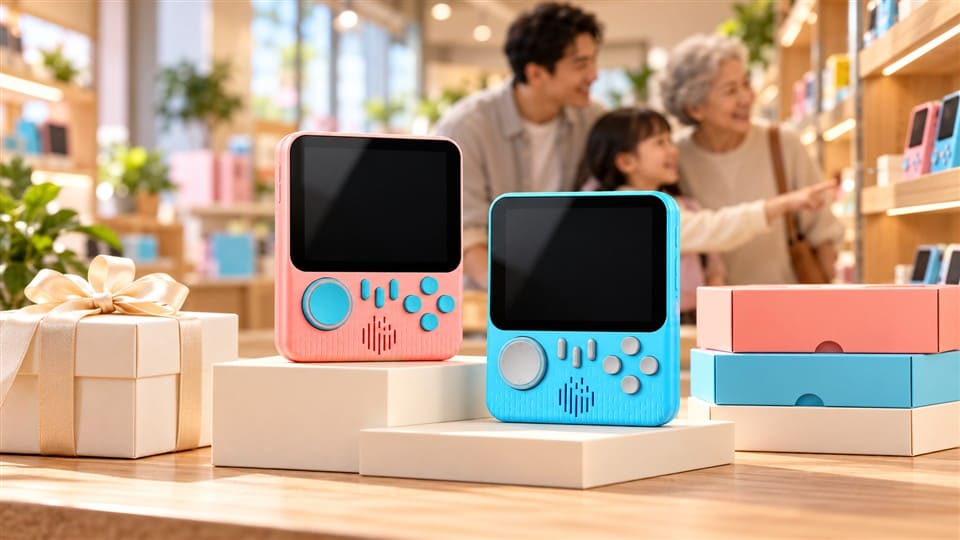

Player’s choice video games are popular in wholesale because buyers need products that sell steadily1, not just products that look exciting on a catalog page. If a retro console has poor controls, lag, or confusing menus2, sellers face returns and bad reviews. The right product mix solves this by combining variety, usability, and lower after-sales risk.
Player’s choice video games are popular for wholesale because they give end users instant game variety, nostalgia, easy family entertainment, and a low learning barrier3. For B2B buyers, the real value is not only “many games included,” but stronger sell-through potential, simpler product positioning, and reduced inventory risk when product quality is reliable.
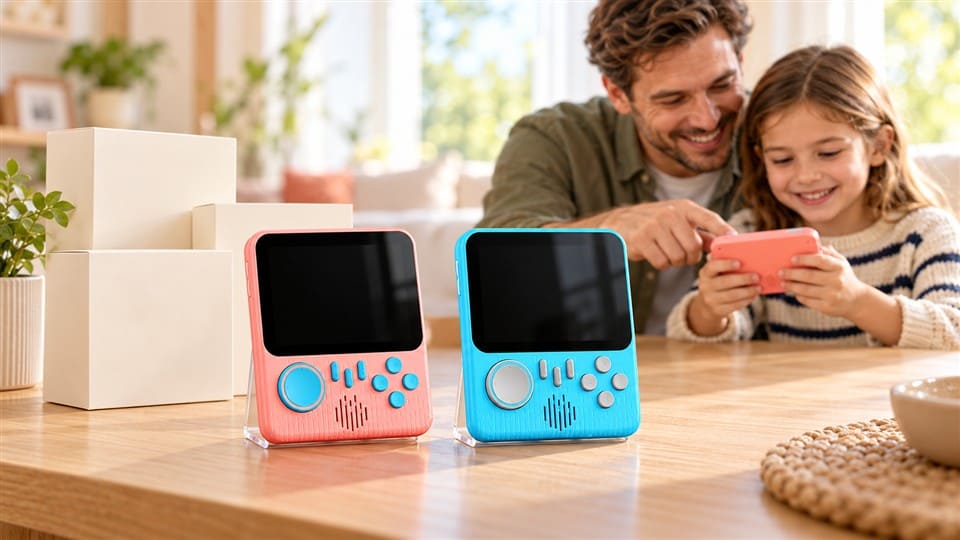
In my wholesale discussions, I notice that buyers rarely ask only one question. They do not simply ask, “How many games are included?” They also ask about screen quality, button feel, packaging, plug type, language options, shipping, and return risk. That is where the real wholesale value appears.
Why Are Player’s Choice Video Games Easier to Sell in Wholesale?
Many buyers feel pressure when choosing gaming products for a new market. A product may look attractive, but slow sales can create stock pressure. Player’s choice video games help because they are easier for retailers and online sellers to explain to different customer groups.
Player’s choice video games are easier to sell wholesale because they offer broad appeal. A single retro handheld, TV game stick, or plug-and-play console can attract adults, children, families, gift buyers, and casual players4. This wide positioning helps sellers avoid depending on only one narrow customer segment.
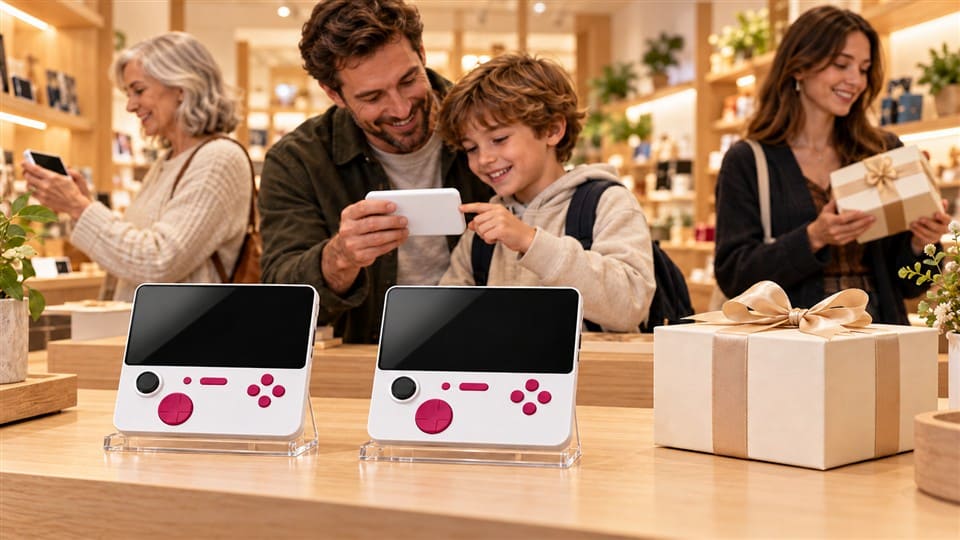
Choice Creates Simple Product Positioning
When I speak with importers and online sellers, I often hear one practical concern: “Can my customers understand the product quickly?” This matters more than many new sellers expect.
A retro gaming device with built-in games is easy to explain:
- No complex setup
- No expensive game purchases
- No advanced gaming knowledge needed
- Suitable for casual play
- Good for gifts, family use, and travel
- Familiar classic-style gameplay
This simple message helps wholesalers sell to different channels. A distributor may supply electronics shops. An Amazon seller may target gift buyers. A retailer may place the product near toys, gadgets, or seasonal promotion items. In each case, the product story is easy.
Nostalgia Helps Adult Buyers Say Yes
Retro gaming is not only for children. Many adult consumers remember arcade-style games, handheld games, and old TV consoles. This nostalgic feeling makes the product emotionally attractive.5
However, I do not suggest that nostalgia alone guarantees sales. In wholesale, nostalgia opens the door, but product experience keeps the customer satisfied. If the screen is poor or the buttons feel weak, the emotional appeal disappears quickly.
Variety Reduces the “Wrong Product” Problem
For wholesalers, product selection always includes risk. If they choose a single-purpose item, the customer base may be limited. Player’s choice video games reduce that risk because one device can include different game types6:
| Game Type | User Appeal | Wholesale Benefit |
|---|---|---|
| Puzzle games | Easy for casual users | Good for family positioning |
| Fighting games | Fast action | Strong visual demo value |
| Sports games | Broad understanding | Simple for retail staff to explain |
| Racing games | Quick entertainment | Good for short product videos |
| Arcade-style games | Nostalgia | Attractive to adult buyers |
This variety helps sellers create more flexible listings and promotions. For example, an e-commerce seller can position the same retro handheld as a gift, a travel entertainment device, or a low-cost family gaming product.
That is why I see player’s choice video games as a wholesale selection issue, not only an entertainment feature. The buyer is really asking: “Will this product move through my channel without creating too much stock pressure?”
Do More Built-In Games Make Player’s Choice Video Games Better?
Many new buyers feel excited when they see a high advertised game count. I understand why. A larger number looks stronger in a product title or sales image. But this can become a problem if the games are hard to find, repeated, unstable, or unpleasant to play.
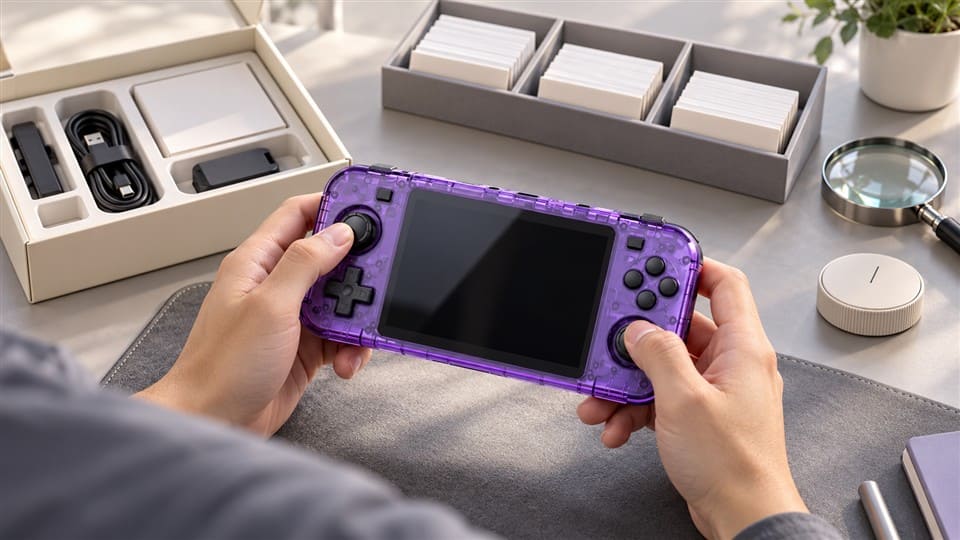
More built-in games do not automatically make player’s choice video games better for wholesale. Buyers should check game usability, menu clarity, system speed, controls, display quality, and stability. A smaller but better-organized game library can create a better customer experience than a large but messy one.7
Game Count Is Only One Marketing Point
I have seen buyers compare two models only by asking, “Which one has more games?” That is a normal starting point, but it is not enough for serious procurement.
A high game count may include:
- Repeated game versions
- Games in languages the market cannot understand
- Titles that are difficult to navigate
- Games with poor frame rate
- Games that do not match the device controls
- Menus that make browsing slow or confusing
For end users, the advertised number matters less after purchase. What they notice is whether they can quickly find a fun game and start playing.
Usability Matters More Than a Big Number
In wholesale, a product must survive real customer use. A buyer may sell hundreds or thousands of units. Even a small problem can become expensive if many customers complain.
I recommend checking these points before judging a retro console by game count:
-
Menu structure
The user should find games easily.8 Categories, search functions, favorites, and clear icons can improve the experience. -
Game loading speed
Slow loading creates a cheap feeling. Even budget models should feel responsive enough for casual users. -
Control matching
Some games need specific buttons or smooth directional control. If the hardware does not match the game style, users feel frustrated. -
Screen performance
For handheld retro game consoles, brightness, viewing angle, resolution, and color affect satisfaction. -
System stability
Freezing, crashes, or corrupted files can increase after-sales pressure. -
Language and region fit
Buyers should check whether menus, packaging, and manuals match the target market.
Better Selection Can Improve Reviews
E-commerce sellers often care deeply about ratings.9 A product with a huge game count may still receive bad reviews if users feel disappointed. Common review problems include:
- “Buttons stopped working.”
- “Many games are repeated.”
- “The screen is not clear.”
- “The system freezes.”
- “The menu is difficult.”
- “The product does not match the listing.”
These complaints damage future sales. They also increase customer service time.
That is why I always suggest that buyers test samples before placing larger orders. A sample order gives the buyer a chance to check real experience, not only catalog specifications. At KLF, we often discuss trial orders with wholesale buyers because it helps both sides confirm expectations before bulk production.
For player’s choice video games, the best wholesale product is usually not the one with the biggest claim. It is the one with a balanced game library, stable hardware, and clear user experience.
How Do Player’s Choice Video Games Reduce Wholesale Inventory Risk?
Inventory risk is one of the biggest concerns for wholesalers and distributors. A product may look profitable on paper, but unsold stock can block cash flow10. Player’s choice video games can reduce that risk when they fit several buyer groups and offer a reliable experience.
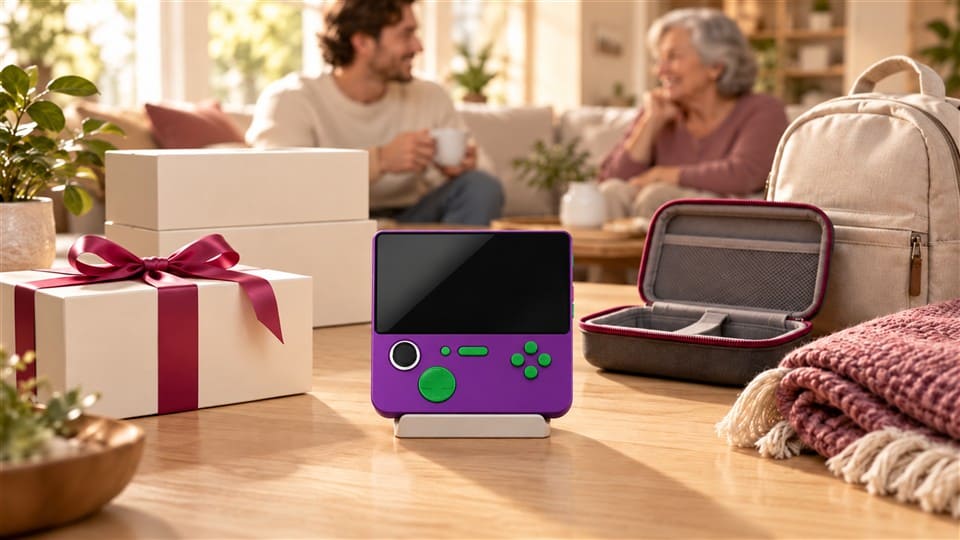
Player’s choice video games reduce wholesale inventory risk by serving multiple sales channels and customer types. They can be sold as gifts, entertainment gadgets, travel devices, family products, or nostalgic gaming items. This flexibility helps buyers adjust marketing when one channel or season performs slower than expected.
Wider Appeal Supports Multiple Channels
A narrow product needs a very specific customer. A retro console with broad game choice can support several channels.
For example:
| Sales Channel | Product Angle | Buyer Concern |
|---|---|---|
| Amazon or marketplace sellers | Giftable retro gaming device | Reviews and return rate |
| Local electronics retailers | Affordable entertainment product | In-store demo and packaging |
| Wholesalers | Fast-moving mixed customer item | Stable repeat demand |
| Gift companies | Promotional or seasonal gift | Custom logo and packaging |
| Importers | Bulk electronics category product | Compliance, MOQ, and shipping |
This channel flexibility is important. If one sales route slows down, the buyer may still move inventory through another route.
Lower Learning Barrier Helps Conversion
Modern gaming products can be expensive and complicated. Many casual consumers do not want to create accounts, download software, or buy extra games.11 A plug-and-play retro game console is easier.
For TV game sticks and home consoles, the message is often simple:
Plug into the TV, connect the controller, choose a game, and play.12
For handheld models, the message is even simpler:
Turn on the device and start playing anywhere.
This low learning barrier helps sellers convert customers who want quick entertainment. It also supports impulse purchases, holiday gifts, and family use.
Product Reliability Protects Margin
Wholesale profit is not only about the purchase price. It is also about what happens after delivery.
A very low-priced model may look attractive. But if quality is weak, the hidden cost can be high:
- More return requests
- More replacement parts
- More negative reviews
- More customer service messages
- Lower repeat orders
- Higher platform dispute risk
In my experience, serious buyers often become more careful after they face after-sales issues once. They start asking better questions about buttons, screens, firmware, battery capacity, packaging protection, and inspection process.
Simple Risk Checklist for Buyers
Before buying player’s choice video games in bulk, I suggest using a basic risk checklist:
- Does the product match the target market’s price range?
- Are the games easy to access and play?
- Is the device stable after repeated use?
- Do the buttons feel firm and responsive?
- Is the screen acceptable for the product level?
- Is the packaging strong enough for international shipping?
- Can the supplier support OEM/ODM or private-label needs?
- Can the supplier provide documents for buyers to verify, such as CE, FCC, RoHS, or other required compliance materials where applicable?
- Is the warranty or after-sales process clear?
Buyers should also seek qualified professional advice for market-specific compliance, especially when importing electronics into regulated markets. A supplier can provide available documents, but the buyer should verify whether those documents meet local requirements.
Player’s choice video games can reduce inventory pressure, but only when procurement is disciplined. The product must be attractive, playable, and reliable enough for the channel.
What Should Buyers Check Before Ordering Player’s Choice Video Games in Bulk?
Bulk orders create higher responsibility. A wrong sample choice can become a warehouse problem later. Before ordering player’s choice video games, buyers should compare product experience, supplier capability, customization options, and quality control process.
Buyers should check samples, game usability, hardware quality, packaging, compliance documents, supplier communication, MOQ, lead time, and after-sales support before ordering player’s choice video games in bulk. A low unit price is useful only when the product can sell smoothly and avoid excessive complaints.
Start With the Sample, Not the Price Sheet
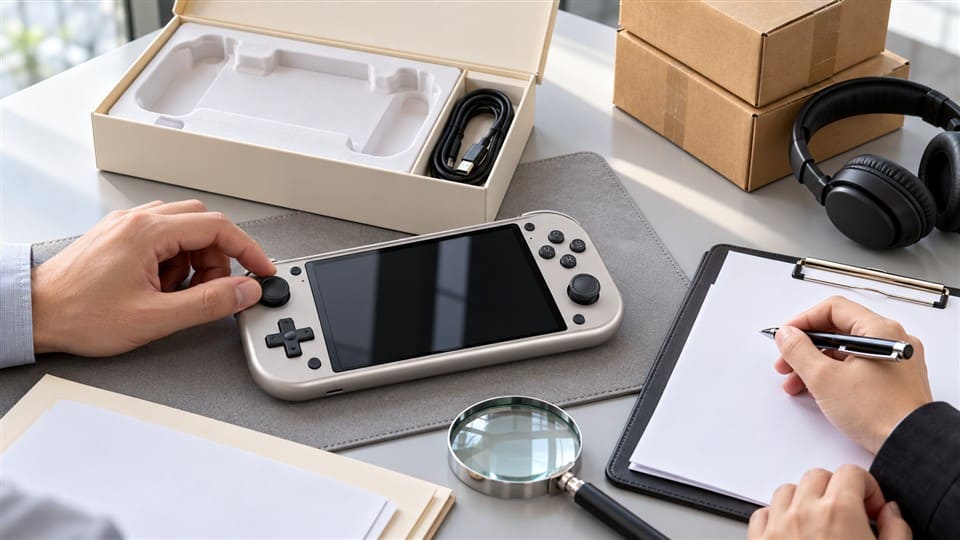
A price sheet is useful, but it cannot show button feel or screen quality. I always think a sample is the most practical first step.
When checking samples, buyers should test:
- Startup time
- Menu navigation
- Game loading
- Button response
- Speaker sound
- Screen brightness
- Charging stability
- Battery life claim versus real use
- Controller connection for TV consoles
- Heat during longer play
- Packaging protection after shipping
A simple 30-minute test is not enough. I suggest testing the device over several sessions because some problems only appear after repeated use.
Compare Models by Market Fit
Different markets need different products. A seller in a price-sensitive market may prefer basic handheld models. An Amazon seller may need better packaging, clearer manuals, and stronger product consistency. A gift company may care more about logo printing, color options, and packaging design.
Here is a practical comparison:
| Buyer Type | Suitable Focus | Important Checks |
|---|---|---|
| Importer | Stable supply and cost control | MOQ, lead time, documents |
| Wholesaler | Product variety | Model range and stock planning |
| Amazon seller | Reviews and listing accuracy | Quality consistency and packaging |
| Retail chain | Shelf appeal | Display box, barcode, manual |
| Private-label brand | Custom identity | Logo, shell color, packaging |
This is why I do not recommend choosing only by game count. A product must fit the buyer’s sales model.
Ask About Quality Control
For retro consoles and handheld gaming devices, quality control should be practical. Buyers can ask suppliers about:
-
Incoming material checks
The supplier should check screens, PCBs, shells, batteries, buttons, and packaging materials. -
Assembly process control
Workers should follow clear assembly steps to reduce loose parts and connection issues. -
Function testing
Devices should be powered on and tested for basic operation, charging, buttons, sound, display, and game access. -
Packaging inspection
Cartons, labels, manuals, and accessories should match the order. -
Random inspection before shipment
Buyers may also arrange third-party inspection for large or important orders.
As a manufacturer and supplier, I see this step as important for both sides. Good quality control protects the buyer’s brand and reduces disputes after shipment.
Confirm OEM/ODM Details Early
Many wholesale buyers want private-label services. That may include:
- Logo printing
- Custom packaging
- Manual design
- Color selection
- Accessory changes
- Bundle options
- Barcode labels
- Market-specific plug or cable requirements
Buyers should confirm these details before production. Small changes can affect cost, lead time, MOQ, and packaging dimensions.
For player’s choice video games, customization can make the product easier to sell, but it should not hide weak product quality. A nice box cannot fix lag, poor buttons, or unstable software.
Frequently Asked Questions
Are player’s choice video games only popular because they include many games?
No. A large game count can help marketing, but wholesale popularity depends more on playable variety, stable performance, clear menus, good controls, and acceptable screen quality. Buyers should test real usability before making bulk decisions.
What type of buyer usually purchases player’s choice video games wholesale?
Importers, wholesalers, distributors, Amazon sellers, electronics retailers, gift companies, and private-label brands often consider these products. They usually want retro gaming devices that are easy to position, simple to use, and suitable for different customer groups.
Should I choose a handheld console or a TV game stick?
It depends on your market. Handheld consoles suit travel, gifting, and personal use. TV game sticks and plug-and-play consoles suit family entertainment and home use. Buyers should compare local demand, price range, packaging needs, and after-sales risk.
What quality problems should wholesale buyers watch for?
Common issues include weak buttons, lag, unstable systems, poor screens, unclear menus, battery problems, controller connection issues, and fragile packaging. These problems can increase returns, negative reviews, and customer service costs.
Can player’s choice video games be customized for private label?
Yes, many models can support logo customization, packaging customization, manuals, color options, and bundle changes. Buyers should confirm MOQ, lead time, artwork requirements, and sample approval before starting bulk production.
Conclusion
Player’s choice video games are popular for wholesale because they combine variety, nostalgia, simple use, and flexible market positioning. However, buyers should not judge them only by the number of built-in games. The better approach is to check playability, controls, screen quality, system stability, packaging, compliance documents, and supplier support. If you are comparing retro handheld consoles, TV game sticks, or plug-and-play consoles for wholesale, I recommend starting with sample testing and a clear procurement checklist. KLF can help buyers review model options, customization needs, and trial order plans for their target market.
"Manage your business - Small Business Administration", https://www.sba.gov/counseling/manage-your-business/. A university or supply-chain reference on retail inventory management should be cited to support that sell-through and inventory turnover are key measures for buyers managing wholesale stock, while noting that the source may discuss retail inventory broadly rather than retro gaming products specifically. Evidence role: general_support; source type: education. Supports: Inventory performance measures such as sell-through and turnover are central to retail and wholesale stock management.. Scope note: Contextual support only; it would not directly prove demand for this product category. ↩
"Determining the Effect of the Returns Management ...", https://trace.tennessee.edu/cgi/viewcontent.cgi?referer=&httpsredir=1&article=2592&context=utk_chanhonoproj. A usability research source or ISO usability reference should be cited to support that effectiveness, efficiency, and satisfaction are core dimensions of product usability, providing a mechanism by which poor controls, lag, or confusing menus can reduce user satisfaction; the source may not quantify return rates for retro consoles directly. Evidence role: mechanism; source type: research. Supports: Usability problems affect user satisfaction and perceived product quality.. Scope note: Contextual support; it explains the usability mechanism rather than documenting returns for this exact product type. ↩
"Nostalgia Marketing: An Integrative Framework - PDXScholar", https://pdxscholar.library.pdx.edu/cgi/viewcontent.cgi?article=2808&context=honorstheses. An industry or academic source should be cited to support that video game play spans multiple age groups and household contexts, and that nostalgic associations can contribute to consumer appeal; this would support the article’s positioning claim without proving wholesale performance for any specific console. Evidence role: general_support; source type: institution. Supports: Video games are played across age groups and household contexts, and nostalgia can influence consumer appeal.. Scope note: Contextual support; it supports likely appeal factors, not product-level sales outcomes. ↩
"Trends in Video Game Play through Childhood, Adolescence ...", https://pmc.ncbi.nlm.nih.gov/articles/PMC3820091/. A demographic report from a recognized games industry association or research institution should be cited to show that video game players span multiple age groups and household settings, supporting the claim that a retro device can be marketed beyond a narrow user segment; the report would not specifically measure gift-buyer demand for this device. Evidence role: statistic; source type: institution. Supports: Gaming audiences include multiple age groups and household segments.. Scope note: Contextual demographic support; not direct evidence of sales for player’s choice consoles. ↩
"Nostalgia and consumer behavior", https://pubmed.ncbi.nlm.nih.gov/36709745/. A peer-reviewed consumer behavior study on nostalgia should be cited to support that nostalgic cues can increase emotional connection and favorable product evaluations, which provides a plausible basis for the appeal of retro gaming products among adults. Evidence role: mechanism; source type: paper. Supports: Nostalgia can increase emotional connection and positive consumer responses to products associated with the past.. Scope note: The evidence would support the psychological mechanism, not guarantee sales of a particular retro console. ↩
"product variety, across-market demand", https://cowles.yale.edu/sites/default/files/2022-09/d2054-r3.pdf. A marketing research paper on assortment variety and consumer preference heterogeneity should be cited to support that offering multiple product or content types can appeal to varied consumer tastes; the source would provide general marketing support rather than direct evidence for built-in retro games. Evidence role: general_support; source type: paper. Supports: Product variety can help address heterogeneous consumer preferences.. Scope note: Contextual support; applies general assortment theory to this product category. ↩
"When Choice is Demotivating: Can One Desire Too Much ...", https://faculty.washington.edu/jdb/345/345%20Articles/Iyengar%20%26%20Lepper%20(2000).pdf. A peer-reviewed study on choice overload or interface organization should be cited to support that large, poorly structured assortments can make selection harder and reduce satisfaction, which explains why a smaller organized game library may be preferable. Evidence role: mechanism; source type: paper. Supports: Too many poorly organized options can reduce choice satisfaction and usability.. Scope note: The source would support the general choice and usability mechanism, not directly compare specific retro console game libraries. ↩
"Human Computer Interaction I", https://cs.brown.edu/courses/cs132/lectures/cs132lect25.pdf. A recognized usability standard or human-computer interaction reference should be cited to support that users’ ability to locate functions efficiently is a core aspect of usability, making menu clarity a relevant quality criterion for retro gaming devices. Evidence role: definition; source type: institution. Supports: Usability includes efficient, effective, and satisfying interaction, including navigation.. Scope note: The source defines usability principles generally rather than testing the article’s specific products. ↩
"How Online Reviews Influence Sales", https://spiegel.medill.northwestern.edu/how-online-reviews-influence-sales/. A peer-reviewed study on online reviews should be cited to support that consumer ratings and reviews can influence purchase decisions and sales performance, explaining why e-commerce sellers treat product ratings as commercially important. Evidence role: general_support; source type: paper. Supports: Online ratings and reviews influence consumer purchase behavior and sales outcomes.. Scope note: The evidence would apply to e-commerce generally, not exclusively to retro gaming devices. ↩
"Working Capital Management, Corporate Performance ... - PMC", https://pmc.ncbi.nlm.nih.gov/articles/PMC4121159/. A government small-business or supply-chain finance source should be cited to support that inventory ties up working capital and that slow-moving or unsold stock can reduce cash-flow flexibility. Evidence role: general_support; source type: government. Supports: Inventory represents working capital and can constrain cash flow when it does not sell.. ↩
"A Review of TAM Technology Acceptance Model and Unified ...", https://pmc.ncbi.nlm.nih.gov/articles/PMC11816427/. A technology acceptance research paper should be cited to support that perceived ease of use is a significant factor in whether consumers adopt and use technology products, providing a basis for the article’s claim that low setup effort can help casual buyers. Evidence role: mechanism; source type: paper. Supports: Perceived ease of use influences technology adoption and user acceptance.. Scope note: The source would support the adoption mechanism broadly rather than directly measuring plug-and-play retro console purchases. ↩
"Plug and play", https://en.wikipedia.org/wiki/Plug_and_play. An encyclopedia or technical reference defining plug-and-play should be cited to support that such devices are designed for simplified setup, which contextualizes the article’s claim that TV game sticks and similar consoles can be easier for casual users to start using. Evidence role: definition; source type: encyclopedia. Supports: Plug-and-play refers to devices designed for automatic or simplified setup and use.. Scope note: Definition-level support; it does not prove higher conversion rates. ↩