
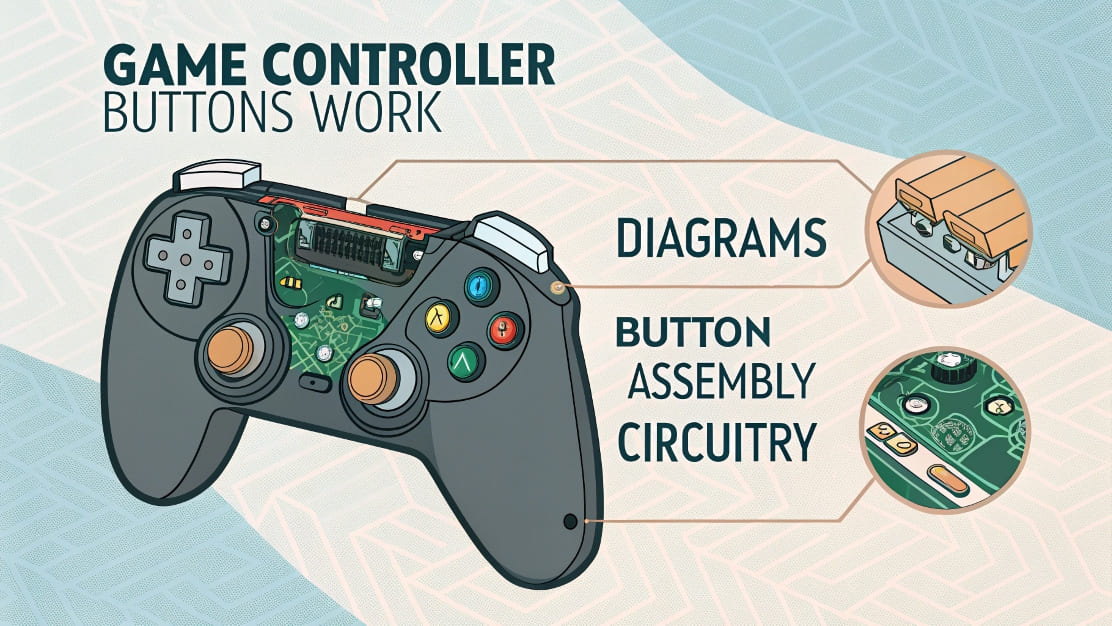

Ever pressed a game controller button and wondered what happens inside? That satisfying click hides clever engineering. Let’s break down how these tiny parts bring your games to life.
Game controller buttons work by completing an electrical circuit when pressed. Most use conductive rubber domes or metal contacts under each button. Pressing them connects circuits, sending signals to the console. High-end controllers may use mechanical switches for faster response.
Think button design is simple? The tech inside balances cost, durability, and feel. Here’s why your controller clicks, why buttons wear out, and how triggers differ from face buttons.
Pressing a button feels instant, but engineers spent years perfecting this. The magic happens beneath the plastic. Most buttons use conductive rubber domes or metal contacts. When you press down, the material bridges a circuit gap on a thin PCB underneath. This sends a signal to the console’s processor, registering your input.
Let’s compare common button mechanisms:
| Type | How It Works | Pros | Cons |
|---|---|---|---|
| Conductive Rubber | Rubber dome presses against PCB | Cheap, quiet, good tactile feedback | Wears out faster, less precise |
| Metal Contacts | Metal disc completes circuit | More durable, precise | Louder click, higher cost |
| Mechanical Switches | Like keyboard switches (e.g., Xbox Elite) | Fast response, customizable | Expensive, bulkier |
Conductive rubber dominates budget controllers. It’s affordable and provides decent feedback. However, after about 500,000 presses, the rubber degrades. Premium controllers use metal contacts or hybrid designs for esports-level durability.
Why do controllers have xyab?
Those four face buttons aren’t random. Their arrangement tells a story of gaming history and global markets.
XYAB buttons standardize inputs across games. Nintendo pioneered this layout in the 1980s. Letters avoid language barriers unlike "start/select." Colors and positions help players memorize controls faster during gameplay.
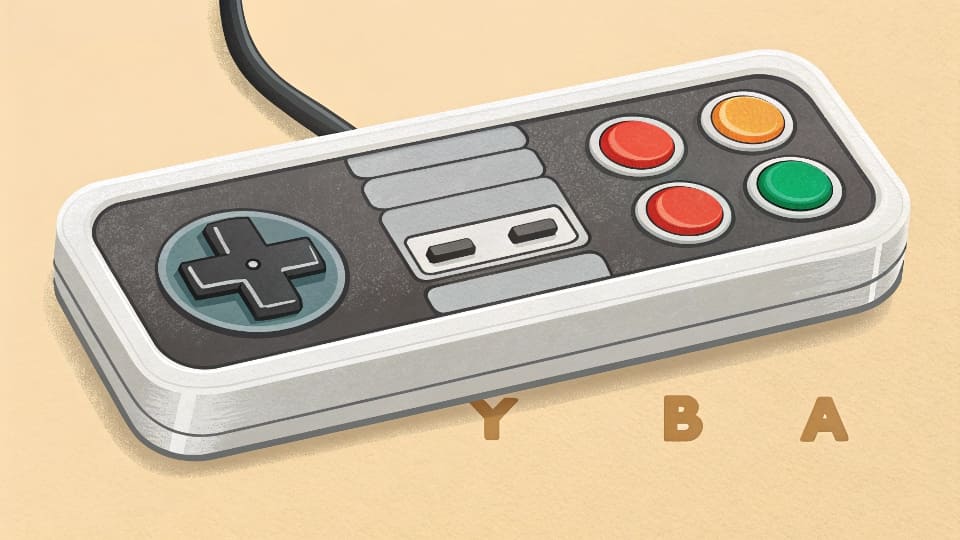 The button letters actually serve specific purposes:
- Universal Language
Letters work globally. Nintendo’s original Japanese Famicom used colored buttons (紅白機), but A/B/X/Y translated better worldwide. - Muscle Memory
Their diamond shape matches thumb movement. Studies show players recall "upper-right=Y" faster than numbered buttons. - Brand Identity
PlayStation uses symbols (△○□×), while Nintendo/Switch/Xbox share XYAB—but swap colors! This causes occasional cross-platform confusion. Interestingly, Microsoft reversed Nintendo’s ABXY order for Xbox. Nintendo’s A is on the right (Japanese reading direction), while Xbox puts A at the bottom (Western "confirm" location).How do game controller triggers work?
Triggers aren’t just fancy buttons. They’re analog components offering precise control—critical for racing games or shooters. Triggers use potentiometers or hall effect sensors to measure how far you pull them. Unlike digital buttons (on/off), they send variable signals. This lets games detect partial presses for acceleration or aim sensitivity.
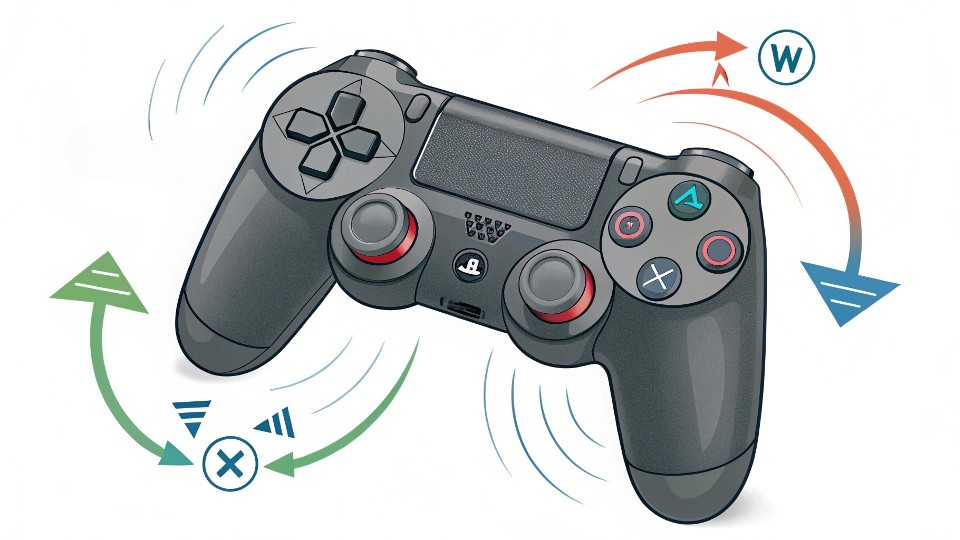 Modern triggers incorporate advanced features:
 - Analog Sensitivity
- Potentiometers: Resistance changes with trigger position (common in mid-range controllers)
- Hall Effect1: Magnetic sensors with no physical contact (used in Xbox Elite—lasts longer)
- Adaptive Resistance2
Premium controllers like DualSense simulate tension. For example, pulling a bowstring feels heavier via built-in motors. - Hair Trigger Mode
Shortens press distance for faster shots in competitive FPS games. Some controllers offer physical locks to toggle this. A typical trigger withstands over 1 million presses. Hall effect versions last longer since magnets don’t wear out like rubbing potentiometers.
How does a gaming controller work?
Your controller is essentially a mini-computer. It processes inputs, communicates wirelessly, and even provides feedback—all in milliseconds.
Controllers convert button presses into digital signals. These travel via Bluetooth or proprietary wireless to the console. Force feedback (rumble) and audio come back the opposite way. Advanced models add touchpads, motion sensors, or programmable buttons.
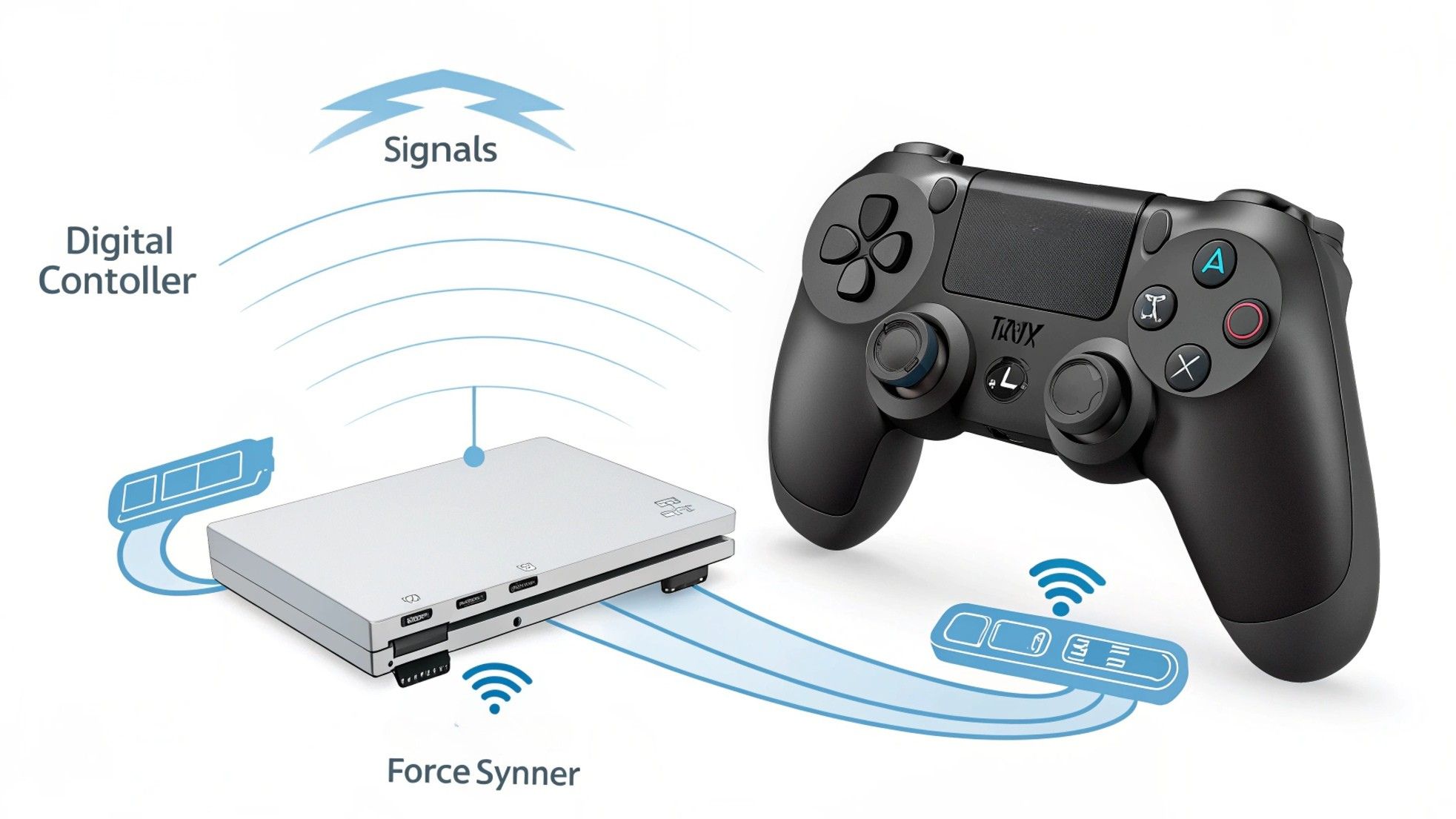 Key components inside a modern controller:
- Input Layer
- Buttons/triggers/sticks all connect to a central PCB
- Membrane sheets route signals efficiently
- Processor
- Encodes inputs for wireless transmission
- Manages low-latency connections3 (2.4GHz RF better than Bluetooth for gaming)
- Feedback Systems
- Eccentric motors4 create rumble effects
- Speakers enable voice chat/game audio (e.g., DualSense’s built-in mic)
Battery life depends on usage. A standard Xbox controller lasts about 30 hours on AAs. PlayStation’s internal batteries average 8-12 hours with rumble/audio enabled.
Conclusion
Game controllers blend simple buttons with smart engineering. From conductive rubber to hall effect triggers, each part balances cost, durability, and player experience.
Explore how Hall Effect sensors enhance durability and performance in gaming controllers, ensuring a better gaming experience. ↩
Learn about Adaptive Resistance technology and how it improves gameplay by simulating real-world sensations. ↩
Understanding low-latency connections can enhance your gaming experience by ensuring faster response times and smoother gameplay. ↩
Exploring how eccentric motors function can provide insights into the technology behind immersive gaming feedback and enhance your overall experience. ↩