
Trending retro handhelds can look exciting on social media, but wholesale buying needs a calmer view. A hot model can still create slow inventory, returns, or unstable replenishment. I prefer to judge trends by B2B signals: inquiry volume, trial-order interest, repeat feedback, supply stability, and channel fit.
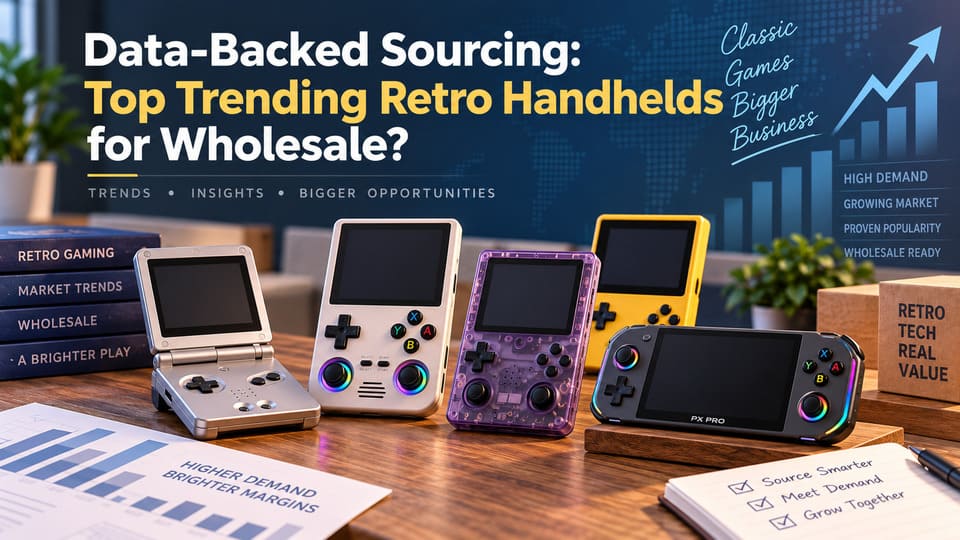
Top trending retro handhelds for wholesale are not always the most talked-about consumer models. The better choices are models that match your selling channel, price band, packaging needs, after-sales tolerance, and replenishment plan. Based on buyer inquiries and order feedback we observe, models like R36S, R36XX, R46S, X80, Project X, and PX Pro each serve different wholesale use cases.
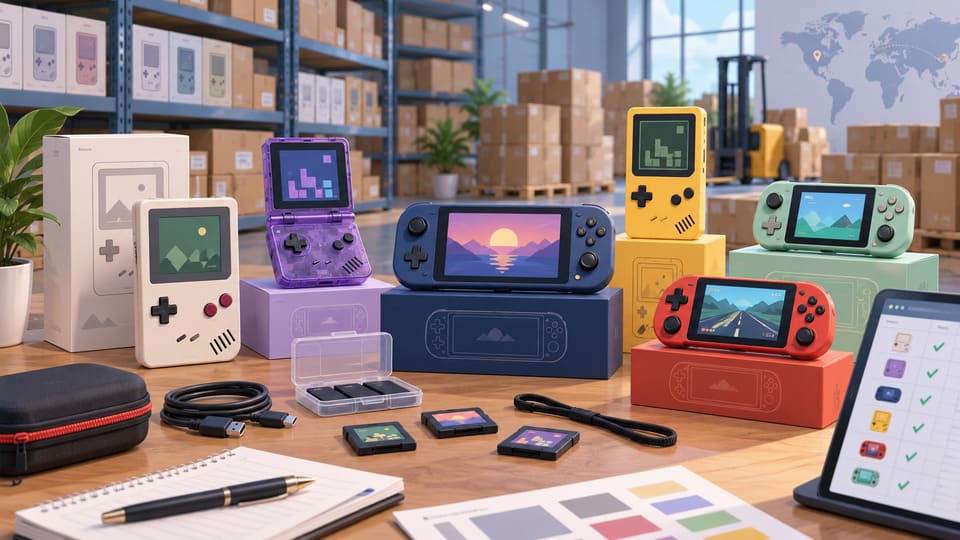
I see many buyers ask, “Which model is best?” My usual answer is simple: best for which market, price point, and sales channel? A small trial order can often tell you more than a long spec sheet.
What Makes Trending Retro Handhelds Worth Wholesaling?
A product may trend online, but that does not automatically make it safe for bulk purchasing. If I am sourcing for resale, I care less about hype and more about whether the model can sell steadily with acceptable risk.
Trending retro handhelds are worth wholesaling when they show strong inquiry demand, stable supply, reasonable defect risk, clear pricing logic, and repeat-order potential. Buyers should treat “trending” as a sourcing signal, not a popularity contest.
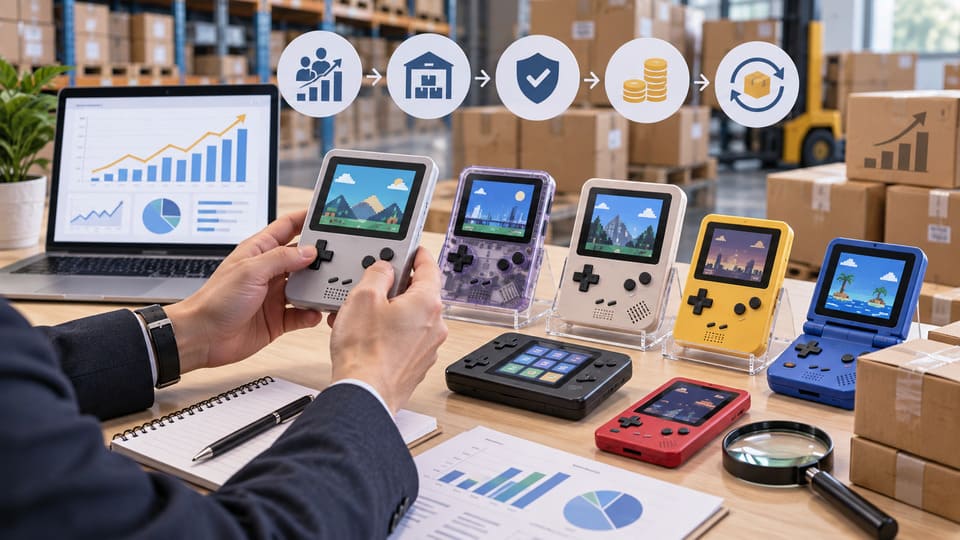
In our daily B2B work at KLF, I see demand signals from overseas inquiries, sample requests, small trial orders, and repeat-order questions. These signals are more useful than a single viral post.
When I evaluate a model, I usually check:
- Inquiry frequency: Are importers and sellers repeatedly asking about it?
- Trial-order suitability: Can buyers test it without taking heavy stock risk?
- Supply consistency: Can the factory support repeat orders?
- After-sales risk: Are returns, buttons, screens, batteries, or firmware issues manageable?
- Channel fit: Is it better for Amazon, local retail, gaming stores, or gift channels?
For example, a very cheap model may attract attention, but if packaging is weak or quality is inconsistent, profit can disappear through returns. A higher-priced model may move slower, but it can work better for buyers selling on perceived value.
Which Trending Retro Handhelds Fit Different Wholesale Channels?
Many buyers compare R36S, R36XX, R46S, X80, Project X, and PX Pro as if one model must win. I do not see it that way. Each model can fit a different buying purpose.
The best trending retro handhelds depend on the sales channel. R36S often suits entry-level testing, R36XX and R46S can support higher perceived value, X80 may fit budget channels, while Project X and PX Pro can help sellers expand into stronger presentation or platform-style offers.
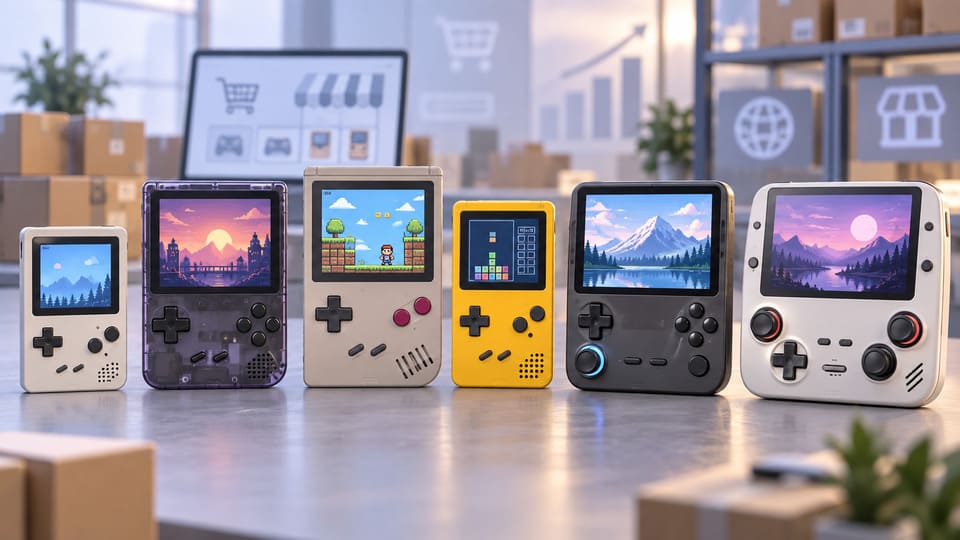
Here is a practical way to think about them:
| Model | Common Wholesale Use Case | Buyer Consideration |
|---|---|---|
| R36S | Entry-level testing, online selling | Good for small trial orders and price-sensitive buyers |
| R36XX | Upgrade option, broader catalog | Useful when buyers want a step above basic models |
| R46S | Higher perceived value | Can suit retail display or premium positioning |
| X80 | Budget market expansion | Works when price control is the main concern |
| Project X | Differentiated catalog offer | Better when buyers need a stronger product story |
| PX Pro | Higher-end platform selling | Suitable for sellers testing better margins |
I always suggest buyers avoid building their whole order around one “hot” model. A mixed trial order across two or three price bands gives cleaner feedback. For example, an importer may test R36S for volume, R46S for higher perceived value, and PX Pro for premium positioning.
How Should I Compare Trending Retro Handhelds Beyond Specs?
Specs matter, but they are not the full wholesale story. Game count, screen size, and chip information may help marketing, but they do not always predict real resale profit.
Buyers should compare trending retro handhelds by total commercial risk: defect rate, packaging quality, supply stability, replacement handling, certification documents to verify, and replenishment speed. These factors can affect profit more than headline specs.
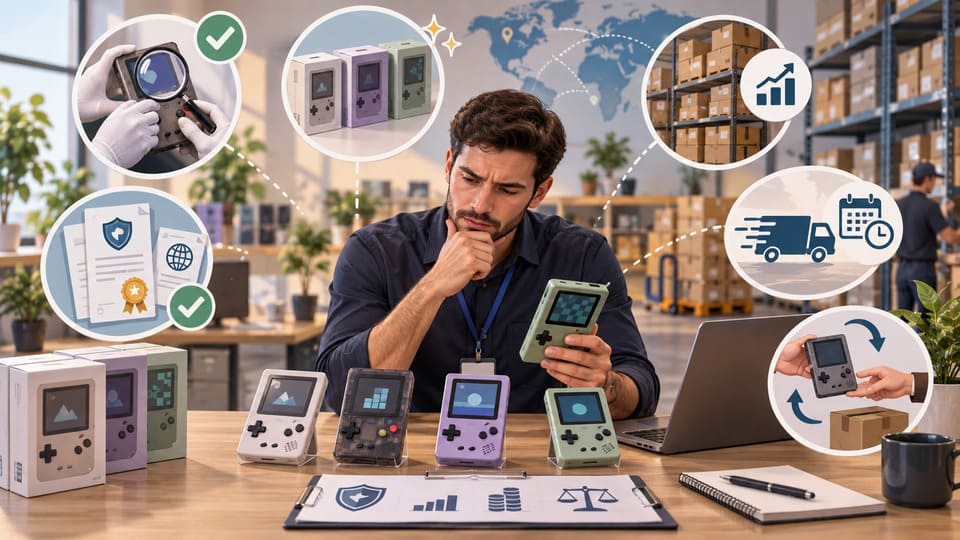
When I speak with B2B buyers, many start with three questions: price, game count, and MOQ. Those are important, but I also ask them to check:
-
Packaging strength
Weak boxes can create complaints before the product is even tested. -
Button and screen consistency
Small hardware issues can increase after-sales workload. -
Battery and charging reliability
Buyers should confirm specifications and test samples properly. -
Language and menu setup
This matters for Europe, Latin America, the Middle East, and Southeast Asia. -
Supplier response speed
A slightly cheaper supplier may cost more if after-sales support is slow.
For certifications or compliance documents, I recommend buyers verify the files based on their own import market requirements. A supplier can provide documents for checking, but importers should confirm what their local customs, platform, or retail channel needs.
How Can I Reduce Risk When Sourcing Trending Retro Handhelds?
The biggest mistake I see is overstocking too early. A model may sell well in one country but move slowly in another. Testing first is usually safer.
To reduce risk when sourcing trending retro handhelds, start with trial orders, compare multiple models, check packaging and QC, collect channel feedback, and scale only after repeat demand appears. This protects cash flow and reduces slow-moving inventory.
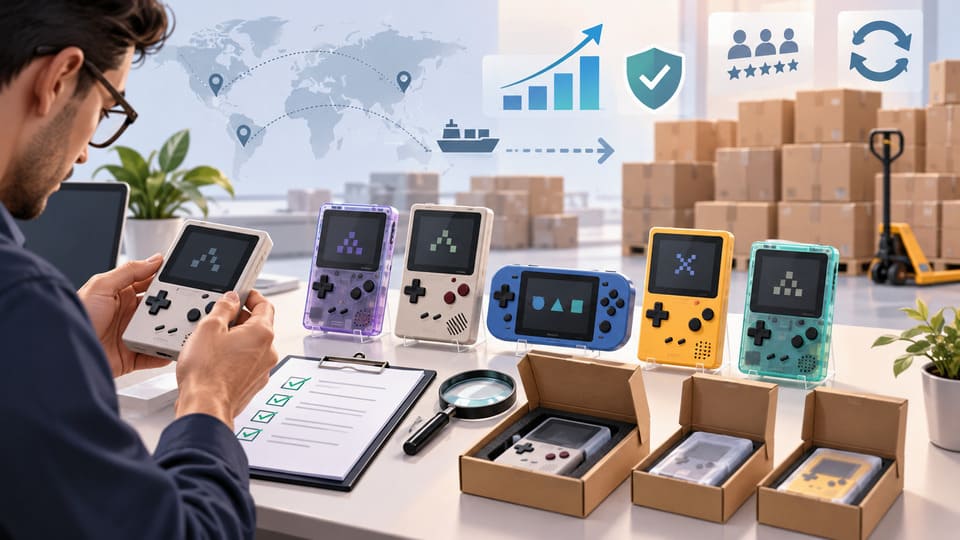
My usual sourcing approach is simple:
- Start with a small trial order
- Test 2–4 models, not just one
- Compare budget, mid-range, and premium options
- Track return reasons from customers
- Reorder only after real sales feedback
- Keep packaging and branding consistent before scaling
At KLF, we support wholesale orders, trial orders, OEM/ODM, logo customization, and packaging customization. I mention this because these services matter most after a buyer knows which model fits their channel. Custom packaging before demand testing can look professional, but it also increases risk if the wrong model is chosen.
Frequently Asked Questions
Are the most popular retro handhelds always best for wholesale?
No. A popular model may still have supply, return, or pricing problems. I prefer models with steady inquiries, manageable after-sales risk, and clear channel fit.
Should I start with R36S for wholesale testing?
R36S is often considered for entry-level testing because it fits price-sensitive channels. Still, I suggest comparing it with at least one mid-range model before scaling.
How many models should I test first?
I usually suggest testing 2–4 models across different price bands. This gives better feedback than betting everything on one trending product.
Do specs matter when choosing retro handhelds?
Yes, but specs are only one part. Buyers should also check packaging, QC, supplier stability, replenishment speed, and after-sales handling.
Conclusion
Top trending retro handhelds for wholesale should be selected with data, not hype. I look at inquiry demand, trial-order feedback, repeat potential, supply stability, and channel fit before recommending scale-up. Models like R36S, R36XX, R46S, X80, Project X, and PX Pro can all make sense in the right market. If you are planning a trial order or private-label project, you can contact KLF to compare suitable models before placing bulk stock.