
Video games can be exciting to watch but not always easy or comfortable to play. I see this often when B2B buyers ask which game types are best for product pages, livestreams, and offline demos. If a game looks impressive but controls poorly on a device, it can create buyer hesitation instead of confidence.1
People often enjoy watching fighting games, racing games, sports games, and fast arcade games even if they do not play them deeply.2 For retro console buyers, the better question is not only “Is this game popular?” but “Does this game show smooth performance, clear visuals, and good control response on this device?”
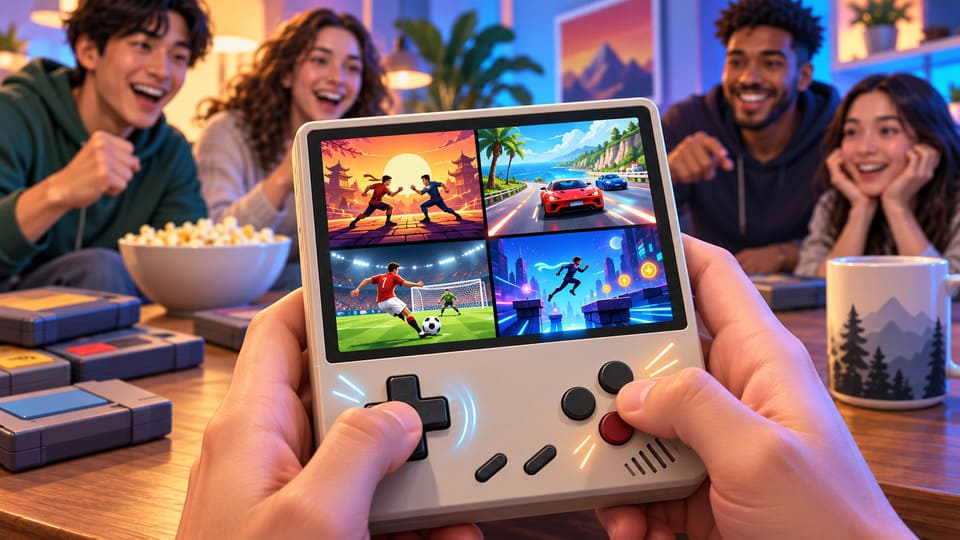
For wholesalers, retailers, and online sellers, watchable games are not just entertainment. They are sales tools. A good demo game can make a handheld console or HDMI TV game stick easier to understand in 10 seconds.3
Which Video Games Are Fun to Watch but Harder to Play?
Some video games are more enjoyable as a viewer experience than a hands-on experience. I usually see this with games that have fast action, strong visual feedback, and obvious winning or losing moments4.
A good “watchable” game is easy to understand from the screen. A good “playable” game must also feel comfortable, responsive, and stable on the device. These are related, but they are not the same.
Common watch-friendly categories
| Game type | Why people watch it | Buyer risk to check |
|---|---|---|
| Fighting games | Fast action, dramatic hits, multiplayer tension | Button response and D-pad accuracy5 |
| Racing games | Speed, motion, easy visual appeal | Frame rate and screen output6 |
| Sports games | Simple rules, quick competition | Control mapping and licensing concerns |
| Arcade shooters | Instant feedback, bright effects | Smoothness and eye comfort |
| Platform games | Easy to understand, nostalgic appeal | Input delay and difficulty level |
In product demonstrations, I often prefer games that show feedback quickly. A fighting game can show whether buttons respond well. A racing game can show whether HDMI output looks smooth on a larger screen. A simple arcade game can help customers test a device without reading instructions.
However, I would not choose a game only because it is famous. A well-known title may look bad if the device struggles with performance. A game with complex controls may also confuse casual customers during an offline demo. For B2B buyers, the safer approach is to choose game types that match the device format, screen size, and target customer.
Why Are Popular Video Games Not Always the Best Demo Choice?
Popular video games can attract attention, but popularity alone is a weak selection rule7. I have seen buyers focus on game count or famous titles first, then later ask why some games do not look smooth in videos.
The best demo game is not always the most famous one. It is the game that helps the customer see the product clearly: screen quality, control response, sound, speed, and multiplayer function.
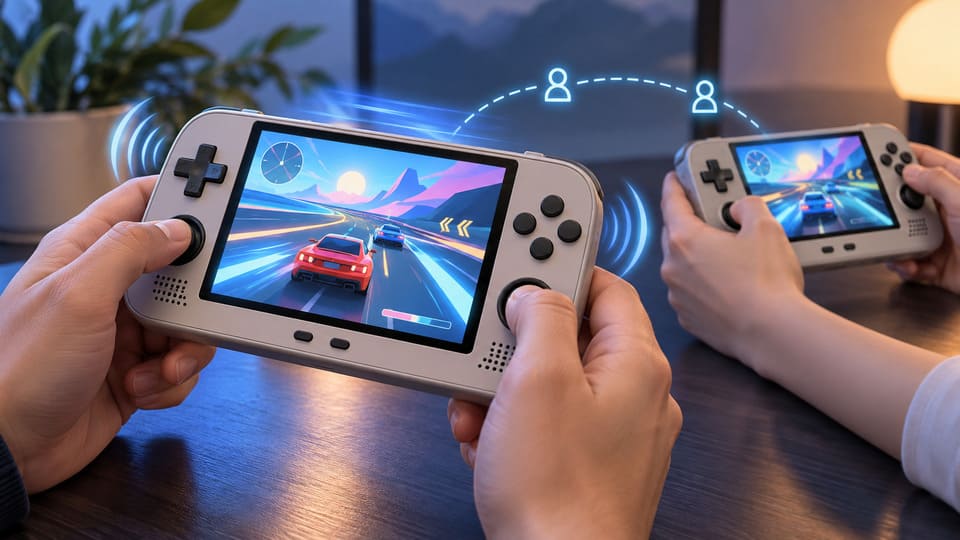
What I check before suggesting demo content
When I discuss product display with buyers, I usually ask:
- Where will the product be sold? Amazon, TikTok Shop, retail stores, gift channels, or wholesale catalogs?
- How will it be shown? Short video, livestream, product page, exhibition booth, or customer trial?
- What is the device format? Handheld console, HDMI TV stick, or plug-and-play home console?
- Who is the end user? Casual player, child, retro fan, family user, or gift buyer?
- Can the device run the selected game smoothly? Buyers should verify this with real samples.
Game quantity can also become a quality risk. A console that claims thousands of games may look attractive on paper, but the buyer still needs to check what is actually useful for display and customer trial. If many games are hard to navigate, duplicated, poorly matched, or not smooth, the large number may not help sales.
I usually tell buyers: a smaller group of well-demonstrated games can be more useful than a huge list that customers never test properly.
This is especially important for e-commerce sellers. Product videos need quick visual proof.8 If the first few seconds show lag, confusing menus, or poor controls, the customer may leave before reading the full listing.
Which Video Games Fit Handheld Consoles and TV Game Sticks Better?
Different video games fit different hardware formats.9 I would not use the same demo strategy for a small handheld device and a large-screen HDMI TV game stick.
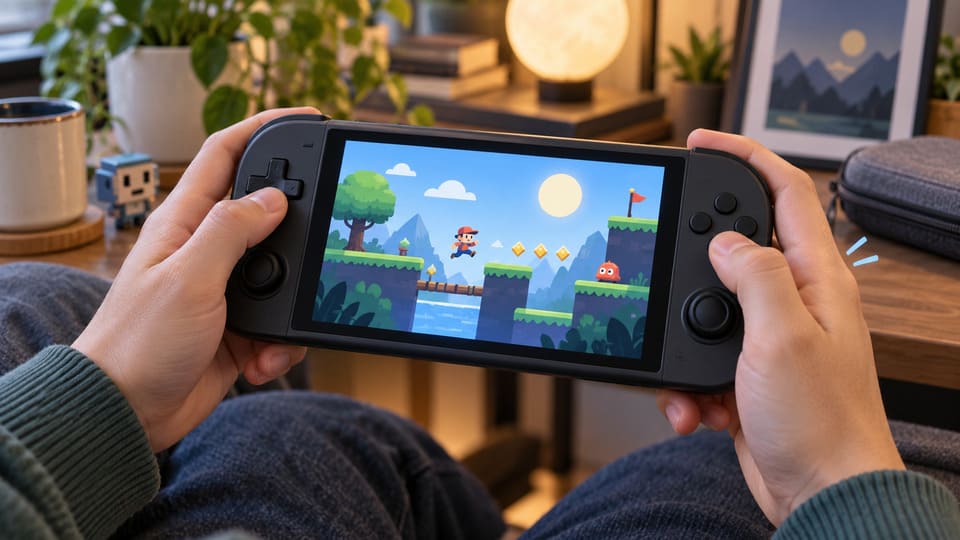
For handheld consoles, I usually focus on games that show screen clarity, battery-friendly play, simple controls, and quick fun. For TV game sticks, I look more at large-screen motion, multiplayer appeal, and couch-play experience.
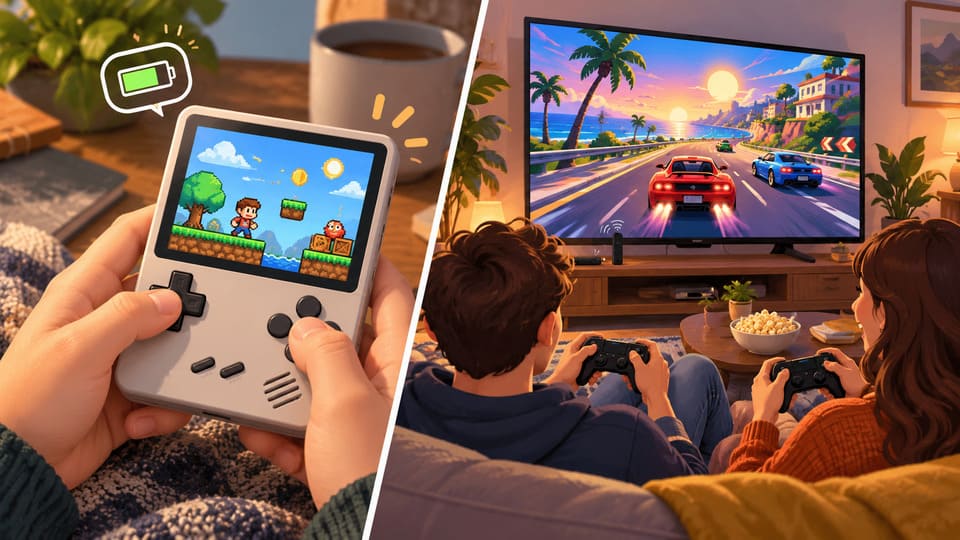
Better fit by device type
| Device type | Good demo focus | Useful game categories |
|---|---|---|
| Handheld retro console | Screen, buttons, portability | Platform, puzzle, arcade, light fighting |
| HDMI TV game stick | Big-screen output, motion, multiplayer | Racing, fighting, sports, party-style arcade |
| Home plug-and-play console | Family use, easy setup | Multiplayer arcade, racing, simple action |
Racing games are often strong for TV output because motion is easy to see.10 Buyers can show smooth movement, color, and screen size quickly. Fighting games are useful for button response and local multiplayer. If two players can test the controls at a booth or retail counter, the product feels more interactive.
For handheld models, I would be more careful with games that require very precise control or long sessions. A game may look exciting in a video but feel tiring on a smaller device. That is why sample testing matters. Buyers should test the actual model, not only rely on screenshots or a game list.
Frequently Asked Questions
What video games are best for retro console demos?
I usually suggest fast, simple, visual games such as fighting, racing, arcade, platform, and puzzle games. The best choice depends on the device, screen size, controls, and sales channel.
Should buyers choose a console based on game count?
No. Game count is only one reference point. I recommend checking game suitability, menu quality, performance, control response, and which games are useful for product videos and customer trials.
Are fighting games good for product display?
Yes, fighting games can be good for showing button response, local multiplayer, and visual impact. Buyers should still test input feel and smooth performance on the actual device.
Are racing games better for TV game sticks?
Often, yes. Racing games can show big-screen HDMI output, motion, and speed clearly. They are useful for short videos and retail demos if the device runs them smoothly.
Conclusion
The question “What video games do you enjoy watching, but don’t play?” is more than a personal gaming topic. For B2B buyers, video games should be evaluated as product display tools. I suggest looking at watchability, playability, control response, smooth performance, and device fit before choosing what to highlight. If you are sourcing retro handheld consoles or TV game sticks, KLF can help you compare models, sample options, and demo suitability for your market.
"The Role of Beliefs, Pride, and Perceived Barriers in Decision ...", https://pmc.ncbi.nlm.nih.gov/articles/PMC8950632/. Research on game input latency and perceived responsiveness shows that delayed or inaccurate controls can reduce player performance and subjective quality judgments; this evidence is contextual for buyer hesitation rather than a direct measurement of retro-console purchasing behavior. Evidence role: general_support; source type: paper. Supports: Control responsiveness and perceived usability affect user experience and confidence in an interactive product.. Scope note: Contextual support; the source may address player experience rather than B2B buyer decision-making directly. ↩
"eSport vs. Sport: A Comparison of Spectator Motives", https://scholarshare.temple.edu/bitstreams/31ea1ae5-cb78-461f-8e3e-9af651250a47/download. Studies of video-game spectatorship report that viewers are attracted by competitive tension, visible action, and entertainment value, which provides contextual support for the watchability of fighting, racing, sports, and arcade-style games. Evidence role: general_support; source type: paper. Supports: Video-game spectatorship research identifies visual excitement, competition, and ease of following action as reasons audiences watch games without necessarily playing them intensively.. Scope note: The evidence is likely genre-level or esports-focused and may not directly measure retro-console demo audiences. ↩
"Effect of Product Presentation Videos on Consumers ...", https://pmc.ncbi.nlm.nih.gov/articles/PMC8891234/. Research on product videos and demonstrations indicates that visual demonstrations can improve consumers' understanding of product attributes and usage, supporting the general point that a demo game can communicate device qualities quickly. Evidence role: general_support; source type: paper. Supports: Product demonstrations and short videos can improve consumer understanding of product features and perceived usefulness.. Scope note: The evidence supports rapid product communication in general, not the exact ten-second threshold or this specific device category. ↩
"Effects of Game Outcomes and Status Instability on Spectators ...", https://pmc.ncbi.nlm.nih.gov/articles/PMC8846218/. Game-design and spectatorship research describes immediate audiovisual feedback and clear success or failure states as mechanisms that make gameplay easier to interpret and more engaging for observers. Evidence role: mechanism; source type: paper. Supports: Immediate feedback, visible progress, and clear outcomes help viewers understand and engage with games.. Scope note: The source may describe general engagement mechanisms rather than testing the exact set of genres discussed in the article. ↩
"Why do fighting games create additional input lag? Wouldn ...", https://www.reddit.com/r/gamedesign/comments/crnp96/why_do_fighting_games_create_additional_input_lag/. Empirical work on input latency in video games shows that delays in controller response can impair player performance and perceived control, providing a technical basis for checking button response and directional accuracy in fighting-game demonstrations. Evidence role: mechanism; source type: paper. Supports: Precise and timely controller input affects performance and perceived responsiveness in fast action games.. Scope note: The cited evidence may address fast games generally rather than fighting games exclusively. ↩
"The Effects of Frame Rate Variation on Game Player Quality of ...", https://web.cs.wpi.edu/~claypool/papers/frame-variation-chi-23/paper.pdf. Research on frame rate, visual motion, and interactive graphics shows that higher temporal smoothness can influence perceived quality and responsiveness, supporting the need to evaluate frame rate and screen output in racing-game demos. Evidence role: mechanism; source type: paper. Supports: Frame rate and display characteristics affect perceived motion smoothness and user experience in moving visual content.. Scope note: The evidence supports the perceptual mechanism generally and may not focus on low-cost HDMI game sticks. ↩
"Effects of Design Aesthetics on the Perceived Value of a Product", https://pmc.ncbi.nlm.nih.gov/articles/PMC8359925/. Consumer-behavior and usability research indicates that perceived usefulness, fit, and performance are important in product evaluation, giving contextual support to the claim that game popularity alone is an incomplete demo-selection criterion. Evidence role: general_support; source type: paper. Supports: Consumer evaluation depends on product fit, usability, and perceived performance, not only popularity or name recognition.. Scope note: The source is likely about consumer evaluation broadly rather than retro-game demo selection specifically. ↩
"Influence of short video content on consumers purchase ...", https://pmc.ncbi.nlm.nih.gov/articles/PMC12075488/. Studies of e-commerce product videos find that video demonstrations can influence perceived information quality, trust, and purchase intention, supporting the general claim that online product videos benefit from rapid visible evidence. Evidence role: general_support; source type: paper. Supports: Online product videos can affect consumer attention, trust, perceived information quality, and purchase intention.. Scope note: The evidence supports product-video effects broadly and may not specify the first few seconds of a retro-console listing. ↩
"Human–computer interaction", https://en.wikipedia.org/wiki/Human%E2%80%93computer_interaction. Human-computer interaction and game-design research describes how device form factor, display size, controller affordances, and play context shape interaction quality, supporting the claim that different games fit different hardware formats. Evidence role: general_support; source type: paper. Supports: Hardware form factor, display size, controller layout, and play context influence game interaction and suitability.. Scope note: The evidence is conceptual and contextual unless it directly compares the specific retro-device categories named in the article. ↩
"Racing Games for Exploring Kinematics: A Computational ...", https://ccl.northwestern.edu/2011/AERA2011-Holbert-Final.pdf. Research on visual motion perception and display characteristics indicates that motion cues and screen presentation influence perceived speed and smoothness, providing contextual support for using racing games to demonstrate TV output. Evidence role: mechanism; source type: paper. Supports: Large displays and visible motion cues can make movement, speed, and visual smoothness easier for viewers to perceive.. Scope note: The evidence supports the perceptual rationale rather than proving that racing games outperform all other genres in sales demos. ↩