
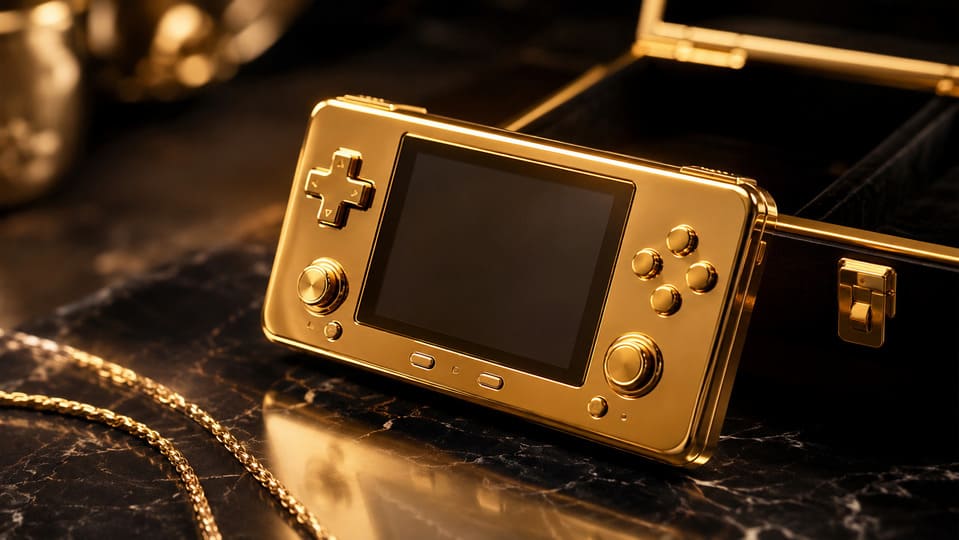

The premium retro handheld market is easy to ignore when buyers are busy fighting for the lowest factory price. I see this often: price pressure rises, margins shrink, and every seller starts looking the same1. A sold-out gold-plated handheld2 does not prove everything premium will sell, but it does show a smarter path worth testing.
A fast-sold gold-plated handheld is not hard proof that premium retro consoles are guaranteed winners. It is a market signal. For B2B buyers, the safer conclusion is that premium handhelds can work as a controlled product-line tier for gifting, collecting, visual differentiation, and higher perceived value.
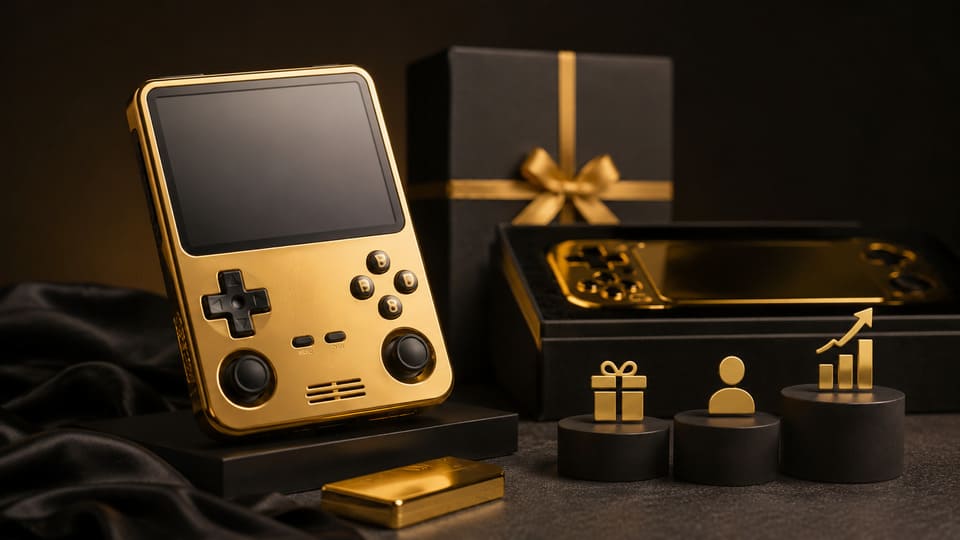
I manufacture retro gaming consoles, and I often speak with buyers who ask about special colors, surface effects, logos, packaging, and limited-edition positioning. That tells me one thing: not every buyer wants another cheap SKU. Some want a product that looks different enough to justify a better price.
What Does The Gold-Plated Sellout Really Mean For The Premium Retro Handheld Market?
The problem is that many B2B buyers read market news too simply. One sellout creates excitement. Then sellers either over-order or ignore the signal completely. Both reactions are risky. I think the better move is to treat the premium retro handheld market as a small-batch test opportunity.
The gold-plated handheld sellout suggests that some consumers value appearance, rarity, and gift appeal3. It does not prove broad demand. For wholesalers, e-commerce sellers, retailers, and brand owners, it is a signal to test a premium tier beside low-price volume models.
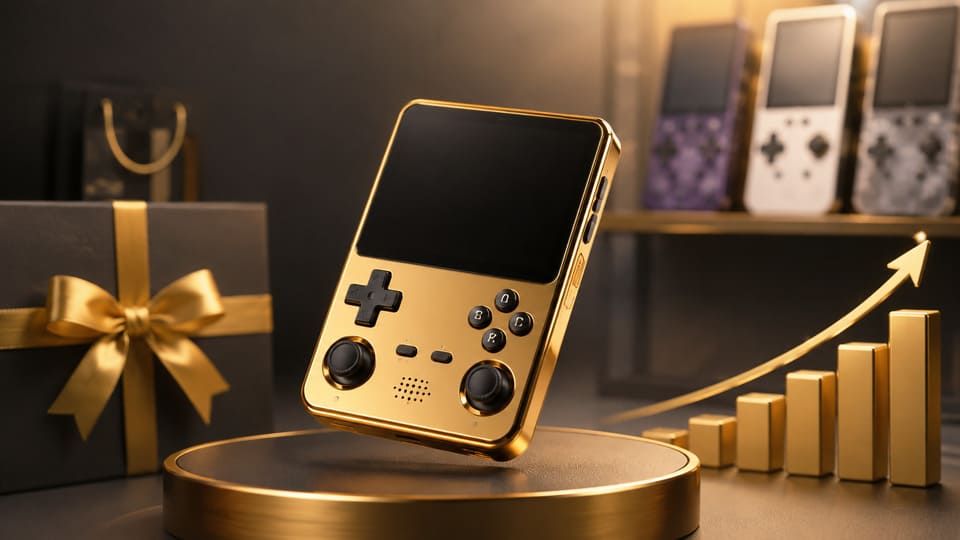
The real lesson is not “gold sells”
Premium positioning is not only about gold color. In my buyer discussions, serious B2B customers usually ask about a full product concept:
- Special shell colors
- Metallic or glossy surface effects
- Custom logo printing
- Gift-ready packaging
- Retail display appeal
- Bundled accessories
- Game library positioning
- Limited-edition labels or numbering
A gold finish may catch attention, but the buyer still needs a complete sales story. A plain box with a premium-looking console can still feel unfinished. A strong package, clean branding, and clear channel fit can increase perceived value.4
Here is how I usually compare the two product tiers:
| Product Tier | Main Role | Buyer Goal | Risk |
|---|---|---|---|
| Entry-level handheld | Volume sales | Low price, fast turnover | Price competition |
| Premium handheld | Margin and differentiation | Higher AOV, gifting, branding | Slower sell-through if over-ordered |
I do not suggest replacing low-price models. Those products still matter. They bring traffic, volume, and repeat orders. But I do think many buyers are missing the chance to build a good-better-best product line.
How Should B2B Buyers Position A Premium Retro Handheld Market SKU?
The biggest mistake is treating premium as “same console, higher price.” Customers need a reason to pay more.5 If the product only looks slightly different, the price gap feels weak. I usually tell buyers to connect the design, packaging, and sales channel before placing an order.
A premium retro handheld should be positioned around a clear buying motive: gifting, collection, visual identity, brand upgrade, or limited availability6. The product should not compete directly with the cheapest model. It should sit above it as a differentiated option.
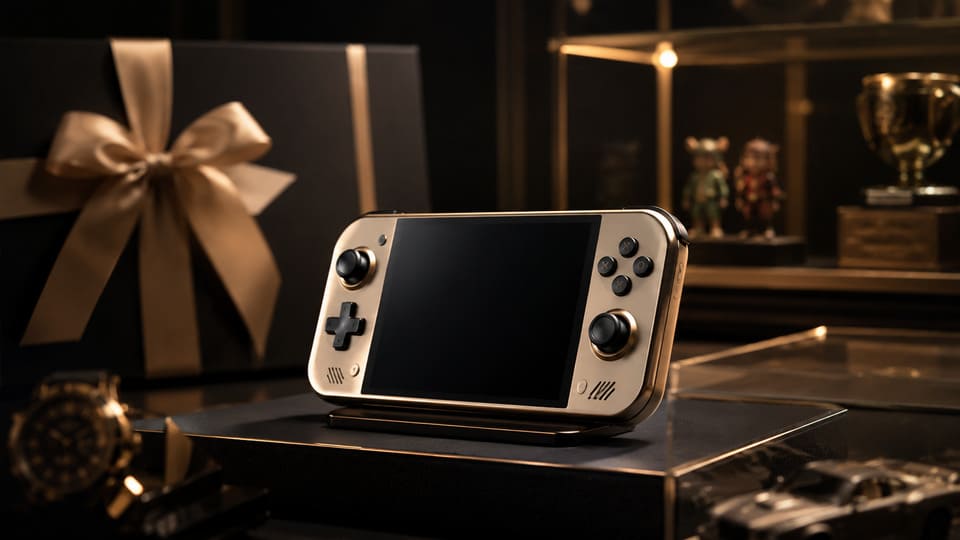
Different B2B buyers should read the opportunity differently.
For distributors
Distributors can test premium handhelds as a higher-margin SKU. The goal is not huge volume at first. The goal is to see whether retailers and resellers want a visually stronger option.
For Amazon, Shopify, and eBay sellers
E-commerce sellers need products that stop scrolling7. A premium shell, strong thumbnail, and giftable box can help create a higher price tier. However, reviews still depend on stable quality8, buttons, screen performance, and battery experience.
For brand owners
Brand owners can use OEM/ODM customization to create a more defensible product. I often see buyers compare logo, UI, shell, memory, chipset, packaging, and bundle options before deciding.
For retailers
Retailers may use premium handhelds as display products. A shiny or limited model can work well near holidays, birthdays, and gift seasons.
How Can Buyers Test The Premium Retro Handheld Market Without Overstock Risk?
The fear is simple: nobody wants slow-moving inventory. I understand that. Premium models cost more, and demand is harder to predict.9 So I never suggest a blind large order. I prefer a controlled test with clear sales data and reorder rules.
B2B buyers can test the premium retro handheld market through small batches, limited colors, channel-specific packaging, and short campaign windows10. The best test measures sell-through speed, return rate, review quality, margin, and repeat order interest before scaling.
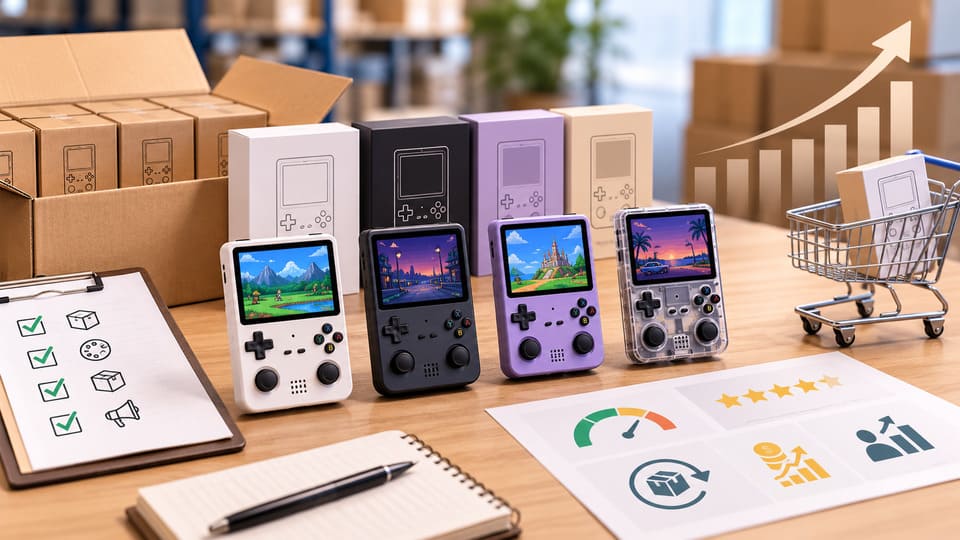
My practical test plan is simple:
-
Keep the core model proven
Start with a stable handheld platform that already passed normal QC checks. -
Change visible value first
Test shell color, logo, packaging, bundle, or limited-edition design before changing too much hardware. -
Limit the first batch
A small batch reduces inventory pressure and creates urgency. -
Compare against a standard model
Track whether the premium SKU improves average order value, margin, or conversion. -
Check returns and reviews
A premium product must feel better, not only look better. -
Scale only after data
If sell-through is strong, reorder. If not, adjust color, price, packaging, or channel.
At Shenzhen Kalefu Electronics, I see premium inquiries mostly around differentiation. Buyers are not only asking, “How cheap can it be?” More buyers now ask, “How can this look like my brand?”
Frequently Asked Questions
Does one gold-plated handheld sellout prove premium retro consoles will sell?
No. One sellout is only a signal, not full market validation. I would treat it as a reason to test a premium handheld tier in small batches, not as proof to replace low-price volume products.
Are premium handheld consoles only for luxury buyers?
No. Many premium handhelds target gift buyers, collectors, e-commerce shoppers, and brand fans. The value usually comes from design, packaging, limited availability, and perceived quality.
Should distributors stop buying low-price retro consoles?
No. Low-price models still support volume and fast turnover. I would add premium models as a complementary tier, not as a replacement.
What should I customize first for a premium handheld?
I would start with shell color, surface effect, logo, packaging, and bundle design. These changes are visible to customers and easier to test than major hardware changes.
Conclusion
The premium retro handheld market is not a guaranteed gold rush, but it is also not something B2B buyers should ignore. A fast-sold gold-plated handheld shows that some customers want more than the cheapest option. I believe the smart move is product-line layering: keep volume models, then test premium editions carefully. If you want to explore OEM/ODM retro handheld customization, Shenzhen Kalefu Electronics can help you build a small-batch test plan.
"Commodification", https://en.wikipedia.org/wiki/Commodification. Research on product differentiation and price competition shows that when offerings are perceived as less differentiated, competition tends to shift toward price and can compress seller margins. Evidence role: general_support; source type: paper. Supports: Economic and marketing research links weak differentiation with stronger price competition and lower margins.. Scope note: The evidence would be general market theory, not data specific to retro handheld consoles. ↩
"Handheld game console", https://en.wikipedia.org/wiki/Handheld_game_console. A contemporaneous report on the named gold-plated handheld documents the limited-edition release and reported sellout, supporting its use as a case reference rather than as proof of broad premium-handheld demand. Evidence role: case_reference; source type: other. Supports: A named gold-plated or gold-finished handheld console was released as a limited edition and reportedly sold out.. Scope note: This would support the occurrence of the event, not the size or durability of the wider market. ↩
"Effects of Design Aesthetics on the Perceived Value of a Product", https://pmc.ncbi.nlm.nih.gov/articles/PMC8359925/. Consumer-behavior studies indicate that scarcity cues, product aesthetics, and gift presentation can raise perceived value and purchase interest in some contexts. Evidence role: mechanism; source type: paper. Supports: Consumer research supports that scarcity cues, aesthetics, and gift-related presentation can affect perceived value and purchase interest.. Scope note: These mechanisms are contextual and do not prove that any specific retro handheld will sell. ↩
"The Impact of Visual Elements of Packaging Design on ... - PMC", https://pmc.ncbi.nlm.nih.gov/articles/PMC11851823/. Marketing research on packaging and brand cues finds that visual packaging design and brand presentation can influence perceived quality and perceived value. Evidence role: general_support; source type: paper. Supports: Packaging design and branding can influence perceived quality, perceived value, and purchase intention.. Scope note: The support is general to consumer goods and may not directly measure retro gaming handhelds. ↩
"The Influence of Price on Purchase Intentions: Comparative Study ...", https://pmc.ncbi.nlm.nih.gov/articles/PMC7911682/. Studies of perceived value and willingness to pay show that consumers are more likely to accept price premiums when they perceive distinct functional, symbolic, or experiential benefits. Evidence role: mechanism; source type: paper. Supports: Perceived value and differentiation are associated with willingness to pay a price premium.. Scope note: The evidence explains the pricing mechanism but does not set an appropriate premium for handheld consoles. ↩
"Consumer behaviour", https://en.wikipedia.org/wiki/Consumer_behaviour. Consumer-behavior literature identifies symbolic consumption, collecting, gifting, and scarcity cues as purchase motives that can increase the appeal of differentiated products. Evidence role: mechanism; source type: paper. Supports: Consumer research recognizes collecting, identity signaling, brand symbolism, gifting, and scarcity as motives that can affect purchase behavior.. Scope note: The support is conceptual and does not quantify demand for premium retro handhelds. ↩
"Online shopping", https://en.wikipedia.org/wiki/Online_shopping. Eye-tracking and e-commerce studies show that product images and visual presentation influence consumer attention and can affect purchase intention during online browsing. Evidence role: general_support; source type: paper. Supports: Product images and visual presentation affect attention and purchase-related behavior in online shopping.. Scope note: This supports the role of visuals generally, not the performance of a specific marketplace listing. ↩
"Customer review", https://en.wikipedia.org/wiki/Customer_review. Research on online reviews and customer satisfaction finds that perceived product quality and performance are associated with review ratings and review content. Evidence role: general_support; source type: paper. Supports: Product quality and post-purchase satisfaction are associated with online review ratings and review sentiment.. Scope note: The evidence would not determine which handheld features matter most without category-specific data. ↩
"Supply Chain Management and Demand Uncertainty", https://scholarworks.uni.edu/cgi/viewcontent.cgi?article=4890&context=grp. Supply-chain and inventory-management research shows that new or differentiated products often involve greater demand uncertainty, which increases the importance of cautious forecasting and inventory control. Evidence role: general_support; source type: paper. Supports: New, differentiated, or higher-variety products are associated with demand uncertainty and inventory-planning risk.. Scope note: This supports the risk logic generally rather than proving that all premium handhelds have higher costs. ↩
"Glossary | WHO - Prequalification of Medical Products (IVDs ...", https://extranet.who.int/prequal/content/glossary. Research on test marketing and lean product experimentation supports the use of limited launches to gather demand evidence before committing to larger-scale inventory decisions. Evidence role: mechanism; source type: paper. Supports: Limited product tests and pilot launches can generate demand information before broader scaling.. Scope note: The citation would support the testing principle, not prescribe the exact batch size or campaign duration. ↩