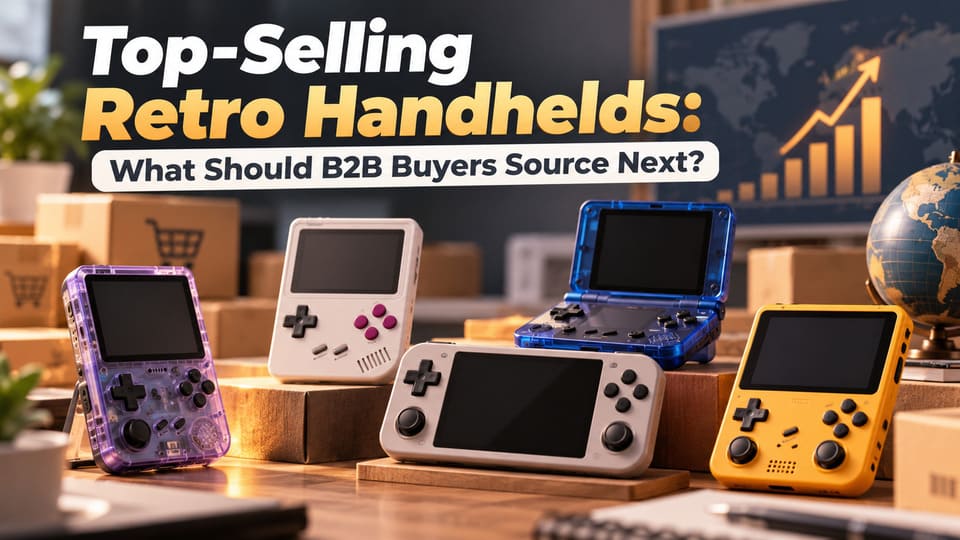

Top-selling retro handhelds are harder to choose now because the “obvious” model is not always the safest one. Buyers can lose margin by chasing bigger screens, lower prices, or old trends. From my daily B2B inquiries, the better answer is matching product format, user demand, price band, and reorder potential.
For B2B buyers, the best top-selling retro handhelds are usually not just the cheapest or largest-screen models. Strong candidates often combine a compact nostalgic design, stable open-source system, acceptable IPS screen quality, good packaging, and clear value within the target price band. Channel fit matters more than one universal “best” model.
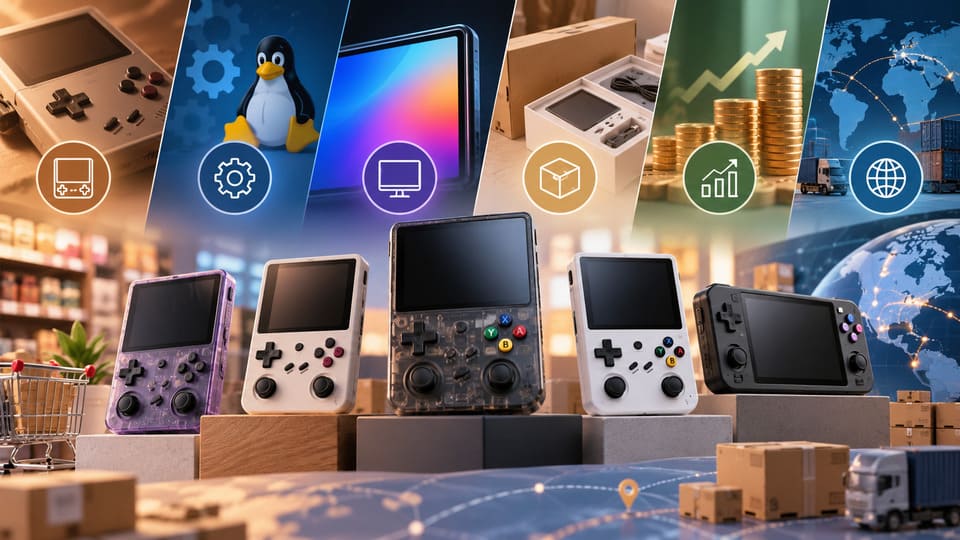
In our recent communication with overseas wholesalers, importers, and online sellers, I have seen more buyers asking about vertical open-source handhelds. Some long-term clients who used to focus on horizontal high-performance devices are now testing compact models for different sales channels.
Why Are Top-Selling Retro Handhelds Moving Toward Vertical Open-Source Models?
Many buyers feel pressure when an old bestseller slows down. Inventory sits longer, ads cost more, and customers ask for something “new but familiar.” Vertical open-source handhelds are gaining attention because they feel nostalgic, simple, and community-friendly.
The shift is not because vertical models are always better. It is because some resale channels now prefer compact design, open-source system appeal1, and a strong value feeling over bigger screens or higher specs. For enthusiast retro players, this format can be easier to market.
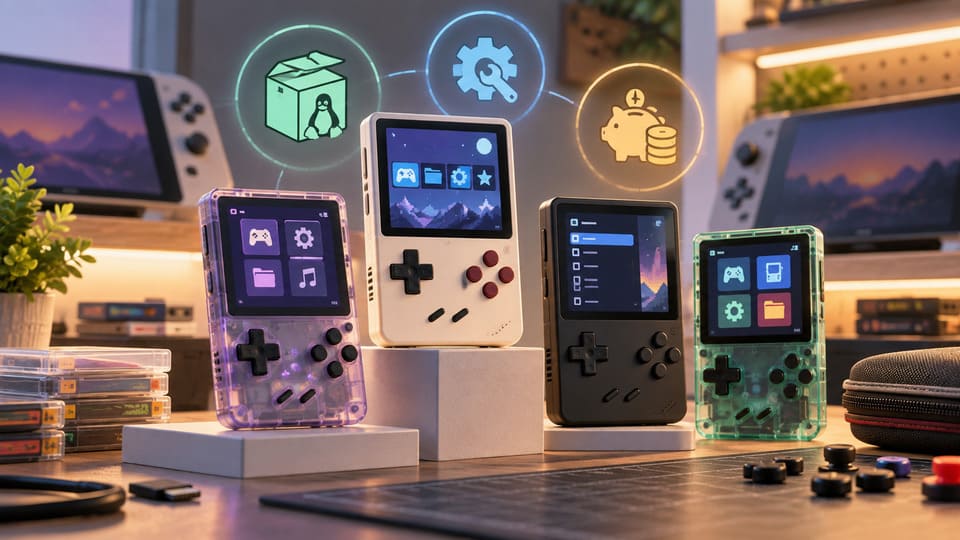
From my supplier side, I notice one clear pattern: buyers are asking more questions about 4-inch IPS screen models, open-source systems, and vertical form factors. I would describe this as our internal order and inquiry observation, not a global market statistic.
What buyers seem to like
- Nostalgic shape: The vertical layout feels close to classic handheld gaming2.
- Open-source appeal: Sellers can market community support, setup flexibility, and DIY interest3.
- Compact size: Smaller devices are easier to ship, display, and gift.
- Price-band value: Buyers can offer a strong product without entering premium pricing.
Simple comparison for sourcing
| Format | Good For | Risk |
|---|---|---|
| Vertical open-source handheld | Retro fans, gift channels, e-commerce bundles | Needs stable firmware and clear product description |
| Horizontal high-performance handheld | Users wanting larger screen and stronger hardware | Higher cost, more spec comparison |
| Low-cost basic handheld | Promotion, gifts, entry-level resale | Higher after-sales risk if quality is weak |
In my view, the real question is not “Which model is hottest?” The better question is: Which model fits your channel and price point with the least after-sales risk?
Are Bigger Screens Always Better for Top-Selling Retro Handhelds?
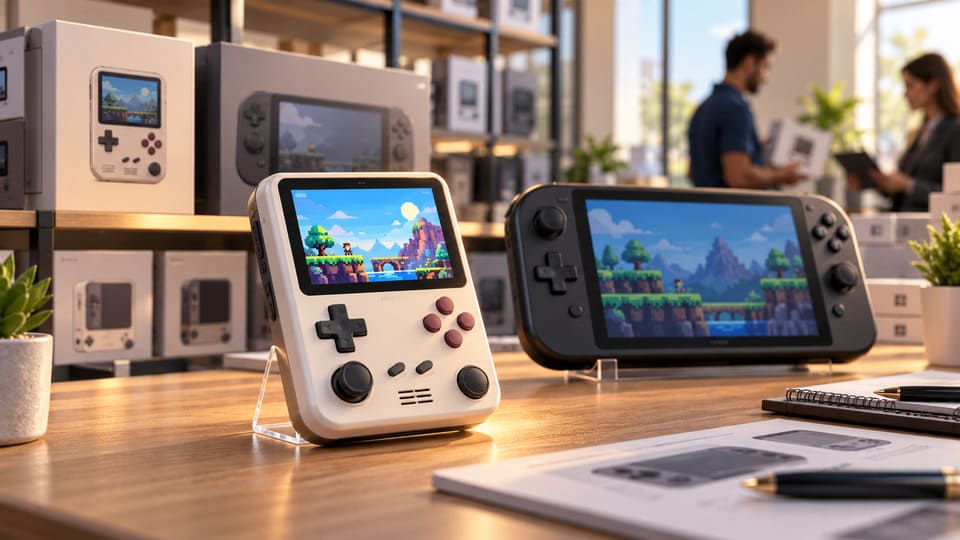
Bigger screens look attractive in product photos, but they can create wrong expectations. Some buyers order large-screen models because they seem more premium, then find that their customers care more about portability, nostalgia, and smooth basic use.
Bigger screens are not always the better B2B choice4. For many resale channels, a compact retro handheld with a clear IPS screen, stable system, and good hand feel can offer stronger perceived value than a larger model at the same price level.
When I talk with repeat buyers, I often hear a practical concern: “Will this product move fast at my selling price?” That question matters more than screen size alone.
Buyers should compare these details
-
Screen quality
IPS screen, brightness, viewing angle, and resolution all affect user satisfaction5. -
System stability
Open-source appeal is useful, but the device still needs smooth booting, stable menus, and clear setup. -
Shell and buttons
A cheap-feeling shell can hurt reviews6, even when the spec sheet looks good. -
Packaging
E-commerce sellers need packaging that looks clean and survives shipping7. -
After-sales risk
A very low unit price can become expensive if defect rates, returns, or unclear instructions increase8.
For example, a buyer comparing two models in the same price band should not choose only by screen size. I would check the full resale equation:
Product cost + shipping + packaging + platform fees + return risk + customer support time = real sourcing cost.
This is why I usually suggest buyers test samples before bulk orders9. A small trial order can show whether the product matches the local audience before committing to larger inventory.
How Should Buyers Price and Position Top-Selling Retro Handhelds?
Pricing is where many new importers make mistakes. They ask for the lowest unit cost first, but they do not always calculate reviews, returns, product page quality, or customer education. Cheap sourcing can look good on paper and still hurt profit10.
The better approach is to choose the best value in the price band. Buyers should compare build quality, screen quality, system stability, accessories, packaging, and supplier support before deciding which retro handheld to source for wholesale or online resale.
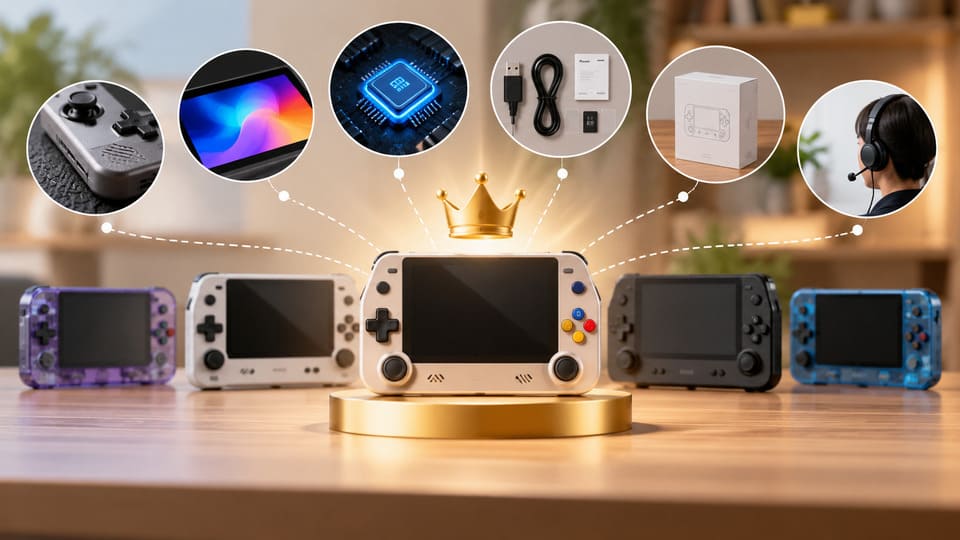
At KLF, we often support buyers with trial orders, OEM/ODM options, logo customization, and packaging customization. I do not treat customization as decoration only. For B2B sellers, it can help create clearer positioning.
Useful positioning angles
- Open-source retro handheld for enthusiast players
- Nostalgic vertical handheld for gift and impulse-buy channels
- 4-inch IPS display model for value-focused online sellers
- Private-label retro console for repeat brand building
- Bundle offer with case, cable, manual, or customized box
Still, no product guarantees repeat orders by itself. Reorder potential depends on market fit, product quality, listing execution, pricing, and after-sales handling11. A strong model can help, but the buyer’s channel strategy still matters.
Frequently Asked Questions
What makes a retro handheld suitable for wholesale?
A good wholesale retro handheld should have stable quality, clear packaging, acceptable screen performance, reliable buttons, and a price that leaves resale margin. Buyers should also check supplier communication, testing process, MOQ flexibility, and after-sales support.
Are vertical open-source handhelds better than horizontal models?
Not always. Vertical open-source handhelds can be strong for nostalgic and enthusiast channels. Horizontal models may still fit buyers who want larger screens or higher performance. The best choice depends on your target users and selling price.
Should I choose the cheapest retro handheld for resale?
I would be careful. The cheapest model may create higher return risk, weaker reviews, or poor customer satisfaction. It is usually better to compare value within the same price band, including quality, packaging, and supplier support.
Can I customize retro handheld packaging for my brand?
Yes, many suppliers, including KLF, can support logo customization, packaging customization, and private-label services. Buyers should confirm MOQ, artwork requirements, lead time, packaging material, and compliance documents before placing bulk orders.
Conclusion
Top-selling retro handhelds are no longer only about bigger screens or the lowest price. From our B2B order and inquiry experience, more buyers are testing vertical open-source models because they match nostalgia, community interest, and value-focused resale channels. If you are sourcing for wholesale, e-commerce, or private label, compare product quality, positioning, packaging, and after-sales risk before ordering. For model recommendations or trial orders, you can contact KLF to discuss your target market and sourcing plan.
"Resilience in the Open Source Software Community: How ...", https://misq.umn.edu/misq/article/47/1/361/2212/Resilience-in-the-Open-Source-Software-Community. Scholarly literature on open-source software communities describes how access to source code and community collaboration can enable modification, peer support, and user participation, which contextualizes the claimed appeal of open-source systems in retro handhelds. Evidence role: general_support; source type: paper. Supports: Open-source software is commonly associated with collaborative communities, modifiability, transparency, and user-driven improvement.. Scope note: The support is about open-source software generally, not specifically retro handheld purchasing behavior. ↩
"Handheld game console", https://en.wikipedia.org/wiki/Handheld_game_console. An encyclopedia or museum history of handheld consoles can document that the Game Boy popularized a vertical portable-console form factor, providing historical context for why modern vertical devices may evoke classic handheld gaming; this supports the association rather than proving current buyer preference. Evidence role: historical_context; source type: encyclopedia. Supports: Iconic classic handheld consoles, especially Nintendo's Game Boy line, used a vertical handheld layout that became strongly associated with portable retro gaming.. Scope note: Contextual support only; it does not prove that today's buyers prefer vertical models. ↩
"Impacts of Open Source Hardware in Science and ...", https://www.nae.edu/174822/Impacts-of-Open-Source-Hardware-in-Science-and-Engineering. Research on open-source hardware and maker communities shows that shared designs, community documentation, and user modification are recurring features of DIY technology cultures, supporting the contextual link between open-source devices and setup flexibility or DIY interest. Evidence role: general_support; source type: research. Supports: Open-source and maker communities often emphasize user modification, shared knowledge, and do-it-yourself participation.. Scope note: This does not directly measure retro handheld customer demand; it supports the broader community and DIY rationale. ↩
"Does Screen Size Matter for Smartphones? Utilitarian ... - PMC", https://pmc.ncbi.nlm.nih.gov/articles/PMC4080862/. Human-computer interaction research on mobile and handheld devices indicates that larger displays can improve viewing but may reduce portability or alter ergonomic comfort, supporting the article's claim that screen size alone is not a sufficient basis for product choice. Evidence role: general_support; source type: paper. Supports: Handheld device usability and preference involve trade-offs among display size, portability, ergonomics, and task context.. Scope note: The evidence is about handheld and mobile devices broadly, not specifically B2B retro handheld sales. ↩
"A Human Factors Design Standard Update of Chapter 5", https://rosap.ntl.bts.gov/view/dot/71695/dot_71695_DS1.pdf. Display ergonomics and human-factors studies report that luminance, viewing angle, resolution, and image quality influence readability, visual comfort, and perceived display performance, supporting the claim that screen quality affects user satisfaction. Evidence role: mechanism; source type: paper. Supports: Display brightness, viewing angle, resolution, and image quality can affect visual comfort, readability, and perceived user experience.. Scope note: The evidence supports the display-quality mechanism generally and may not isolate IPS retro handheld screens. ↩
"The impact of website quality on customer satisfaction and ...", https://pmc.ncbi.nlm.nih.gov/articles/PMC9450807/. Consumer-behavior research links perceived product quality with satisfaction and post-purchase evaluation, providing a basis for the claim that a low-quality-feeling shell may contribute to weaker customer reviews. Evidence role: mechanism; source type: paper. Supports: Perceived product quality is associated with customer satisfaction and review behavior.. Scope note: The support is indirect because it concerns perceived quality and reviews generally, not retro handheld shells specifically. ↩
"Assessing Consumer Preference for Overpackaging Solutions ...", https://pmc.ncbi.nlm.nih.gov/articles/PMC8345421/. Packaging research and distribution-testing guidance describe protective packaging as a factor in reducing transit damage and preserving the delivered product experience, supporting the article's emphasis on packaging that is presentable and shipping-resistant. Evidence role: general_support; source type: institution. Supports: Packaging affects product protection in distribution and can influence consumer experience in e-commerce delivery.. Scope note: The evidence supports packaging principles generally rather than a specific retro handheld packaging standard. ↩
"ESSAYS ON PRODUCT RETURNS IN A CLOSED-LOOP ...", https://etda.libraries.psu.edu/files/final_submissions/15436. Supply-chain and reverse-logistics research shows that product defects and returns create handling, transportation, refurbishment, and customer-service costs, supporting the claim that a low unit price may be offset by higher after-sales costs. Evidence role: mechanism; source type: paper. Supports: Product returns and defects impose reverse-logistics, support, and profitability costs on sellers.. Scope note: The support is general to retail and supply chains, not limited to gaming handhelds. ↩
"ISO 2859-1", https://chemistry.unt.edu/~tgolden/courses/iso2859-1.pdf. Quality-management and procurement guidance describes sampling inspection and supplier evaluation as methods for reducing purchasing risk before committing to larger orders, supporting the article's advice to test samples before bulk buying. Evidence role: general_support; source type: institution. Supports: Procurement and quality-control practice commonly uses sampling, inspection, or supplier evaluation before full-scale purchasing.. Scope note: The support concerns general procurement practice and does not prove the effectiveness of sampling for a particular handheld model. ↩
"Analyzing Costs Using Total Cost of Ownership", https://psep.smeal.psu.edu/short-courses/supply-chain-accelerator/advanced-procurement-analyzing-costs-using-total-cost-of-ownership. Total-cost-of-ownership research in procurement emphasizes that acquisition price is only one component of supplier cost, with quality, logistics, service, and failure costs also affecting profitability; this supports the article's warning about cheap sourcing. Evidence role: mechanism; source type: paper. Supports: Procurement decisions based only on purchase price can overlook quality, logistics, service, and failure costs that affect profitability.. Scope note: The evidence supports the purchasing principle generally rather than a specific retro handheld sourcing case. ↩
"Research on the influence of after-sales service quality ...", https://www.academia.edu/45436821/Research_on_the_influence_of_after_sales_service_quality_factors_on_customer_satisfaction. Marketing research on repeat purchase intention identifies perceived quality, satisfaction, price fairness, and service quality as recurring predictors of repurchase behavior, supporting the article's claim that reorder potential depends on more than the product model alone. Evidence role: general_support; source type: paper. Supports: Repeat purchase intention is influenced by customer satisfaction, perceived quality, price fairness, service quality, and fit with customer needs.. Scope note: The evidence concerns customer repurchase behavior broadly and only indirectly supports B2B reorder potential. ↩